GeezerVisonThe World Wide Web, restored to 800 pixels of glory. |
| Home|About|Gaming cabinet|Archives|How it works|Starter sites |
GeezerVison is showing ardupilot.org — ArduPilot 
What is ArduPilot?ArduPilot is a trusted, versatile, and open source autopilot system supporting many vehicle types: multi-copters, traditional helicopters, fixed wing aircraft, boats, submarines, rovers and more. The source code is developed by a large community of professionals and enthusiasts. New developers are always welcome! The best way to start is by joining the Developer Team Forum, which is open to all and chock-full of daily development goodness. Who Uses ArduPilot?The same firmware serves commercial operators, hobbyists and researchers. What differs is which parts of it they use, and how much of it they customize. Commercial and Industrial OperatorsArduPilot is the autopilot behind a great many commercial vehicles and services. Typical applications include:
The reasons given for choosing ArduPilot over a closed autopilot are usually:
Hobby and Sport RCThe largest group of users by number: RC pilots and makers who want more from a model than manual control.
Education and ResearchUniversities, schools and research institutes use ArduPilot as a ready made, well tested vehicle platform so that their effort goes into their own work rather than into writing an autopilot.
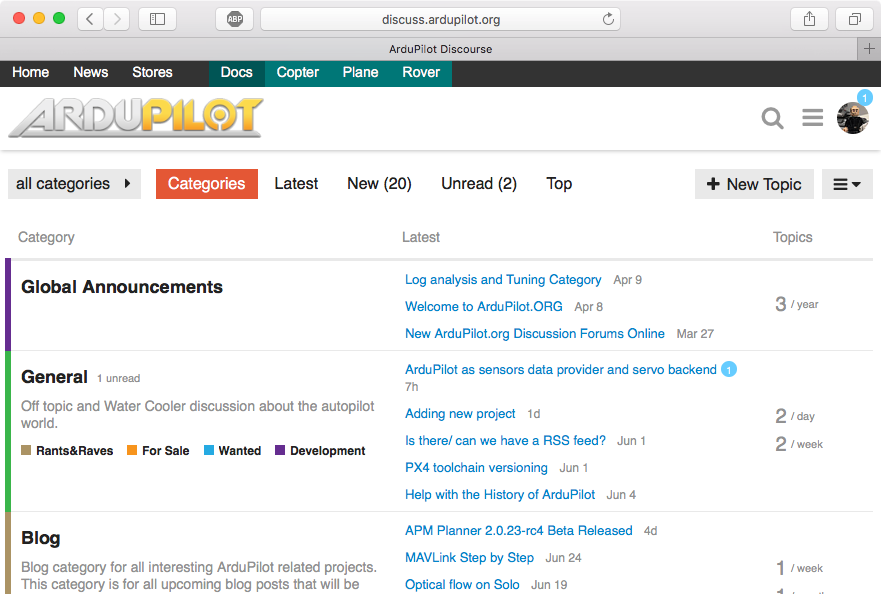
CommunityCommunity is what really sets ArduPilot apart from many other offerings in the market. Here are some of the places you can find ArduPilot users and developers: Latest posts on Community BlogsLatest Community Forums postsDiscussion Forum
Get help and interact with other ArduPilot users on Discussion
Forum and related blogs on ArduPilot.org!
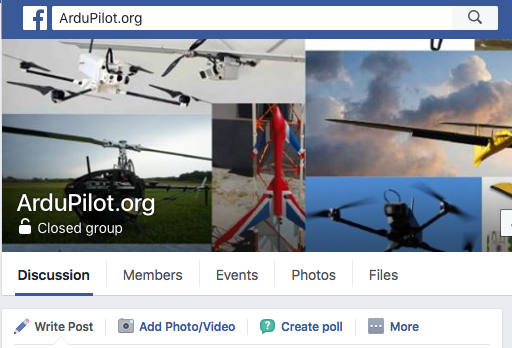
Facebook ArduPilot Group
Facebook ArduPilot Group
have several post with most recent community cases.
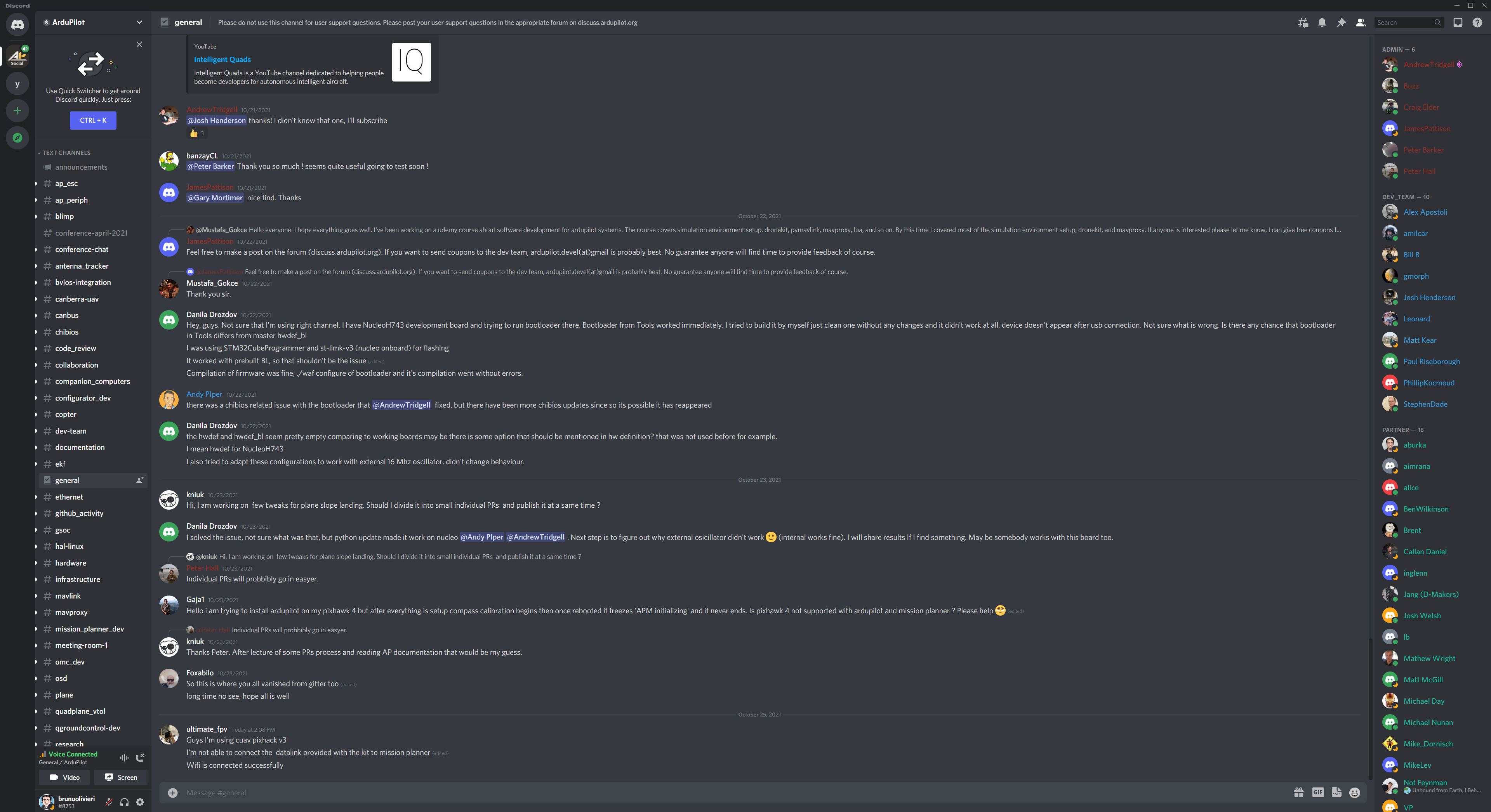
Discord
Developing questions? Check our discord
channels and exchange your coding questions with other developers.
Developer CommunityWorking on the code? You can start with our Developers Guide and chat with other developers at our discord channels One autopilot for any missionArduPilot enables the creation and use of trusted, autonomous, unmanned vehicle systems for the peaceful benefit of all. ArduPilot provides a comprehensive suite of tools suitable for almost any vehicle and application. As an open source project, it is constantly evolving based on rapid feedback from a large community of users. The Development Team works with the community and commercial partners to add functionality to ArduPilot that benefits everyone. Although ArduPilot does not manufacture any hardware, ArduPilot firmware works on a wide variety of different hardware to control unmanned vehicles of all types. Coupled with ground control software, unmanned vehicles running ArduPilot can have advanced functionality including real-time communication with operators. ArduPilot has a huge online community dedicated to helping users with questions, problems, and solutions. The ArduPilot Project provides an advanced, full-featured and reliable open source autopilot software system. The first ArduPilot open code repository was created in 2009 - since then it has been developed by a team of diverse professional engineers, academics, computer scientists, and other members of our global community. It is capable of controlling almost any vehicle system imaginable: conventional and VTOL airplanes, gliders, multirotors, helicopters, sailboats, powered boats, submarines, ground vehicles and even Balance-Bots. The supported vehicle types frequently expand as use cases emerge for new and novel platforms. Installed in over 1,000,000 vehicles world-wide, and with advanced data-logging, analysis and simulation tools, ArduPilot is a deeply tested and trusted autopilot system. The open-source code base means that it is rapidly evolving, always at the cutting edge of technology development, whilst sound release processes provide confidence to the end user. With many peripheral suppliers creating interfaces, users benefit from a broad ecosystem of sensors, companion computers and communication systems. Since the source code is open, it can be audited to ensure compliance with security and secrecy requirements. The software suite is installed in vehicles from many manufacturers, such as many from our Partners, and more broadly throughout the global autonomous systems industry. It is also used for testing and development by large institutions and corporations such as NASA, Intel and Insitu/Boeing, as well as countless colleges and universities around the world. 
Terms & SlicesUnmanned vehicles
ArduPilot can control several types of hardwares such as multi-copters, traditional helicopters,
fixed wing aircraft, boats, submarines, rovers and more.
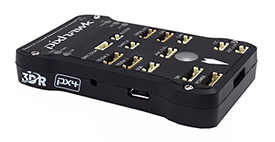
Hardware
Is the peripheral sensors, controller, and output devices that act as the vehicle's eyes, ears,
brain and
arms. Almost any mobile machine can be transformed into an autonomous vehicle, by simply integrating
a small
hardware package into it. Hardware packages begin with a controller. Using inputs from sensors, the
controller is able to send outputs to devices such as ESC's, servos, gimbals and other peripherals.
Firmware
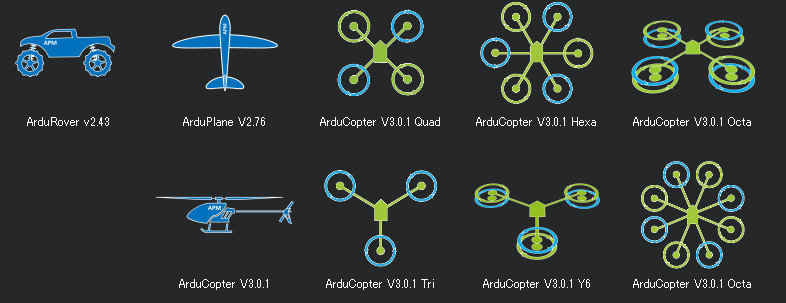
Is the code running on the controller. You choose the firmware to match your vehicle and mission: Copter, Plane, Rover, Sub, or Antenna Tracker.
Software
Is your interface to the controller. Also called a Ground Control Station (GCS), the software can
run on
PC's or mobile devices. A GCS allows users to set-up, configure, test, and tune the vehicle.
Advanced
packages allow autonomous mission planning, operation, and post-mission analysis.
Ground Station
Ground stations for UAVs, or ground control stations for UAVs are land-based communications and
control
systems typically used for direct piloting and communication between the crew and a UAV. These
ground
control systems typically allow for both piloting of the craft and streaming live video and data.
Mission Planner
Is a full-featured GCS supported by ArduPilot. It offers point-and-click interaction with your
hardware, custom scripting, and simulation.

ArduPilot DocumentationArduPilot has a large set of documentation available through its Wiki. See the link DOCS in the top bar to check it. You need to choose your hardware (which you can get help in "AutoPilot Hardware"), then you could follow vehicle's "First Time Setup" for installing the firmware and Ground Station software, connecting the components, and calibration steps. User Cases
Warning! Every country has different regulations governing the operation of remote
controlled
and/or autonomous vehicles. This database has country
specific
information, but it is every operator's responsibility to be seek out and be aware of local, regional, and
federal
regulations.
|
| You are visitor 01402503 — GeezerVison does not store the pages you look up. Best viewed with Netscape Navigator 4.7 or Internet Explorer 6 at 800×600. No cookies required. |
 Underwater exploration for coral reefs, oilpipe inspections
 VTOL QuadPlane for Search & Rescue operations
 Agricultural automatic robot tractors
 Large area aerial mapping with fixedwing drones