GeezerVisonThe World Wide Web, restored to 800 pixels of glory. | ||||||||||||||||||||||||||||||||||||||||||||||||||||||||||||||||||||||||||||||||||||||||||||||||||||
| Home|About|Gaming cabinet|Archives|How it works|Starter sites | ||||||||||||||||||||||||||||||||||||||||||||||||||||||||||||||||||||||||||||||||||||||||||||||||||||
GeezerVison is showing celld.dev — celld: Durable Objects, self-hosted
Get itInstall the 58 MB static executable $ curl -fsSL celld.dev/install.sh | shOr run the Docker container $ docker run ghcr.io/denoland/celldOr tell your agent ❯ create a distributed chat app with vite, use celld.dev and exe.dev, 2 VMsKey characteristics
Monthly cost vs resident fleet size
Supported services
How it worksWorkers handle requests. Durable Objects, KV, Queues, D1, and Workflows keep their state in cells, each with its own SQLite database. Nodes share a bucket for durable storage, and a conditional bucket write assigns cell ownership. The fleet needs no membership protocol, failure detector, or consensus service. One fleet, one bucketHTTP clients Your fleet Your load balancerTLS termination · routes to any instance celld instance AStateless Workers Cells JavaScript + SQLite per cell
Cell routing & write replication celld instance BStateless Workers Cells JavaScript + SQLite per cell
··· Any number of celld instances Cell state (SQLite + LTX) · ownership Your shared bucketDurable state for every cell
SQLite + LTX · ownership · deployments S3-compatible · Google Cloud Storage · Azure Blob Storage Reliabilitycelld keeps the Durable Objects programming model and gives you control over where cells run, how their state is stored, and how you investigate failures. A review and an incident record about Durable Objects from July 2026. 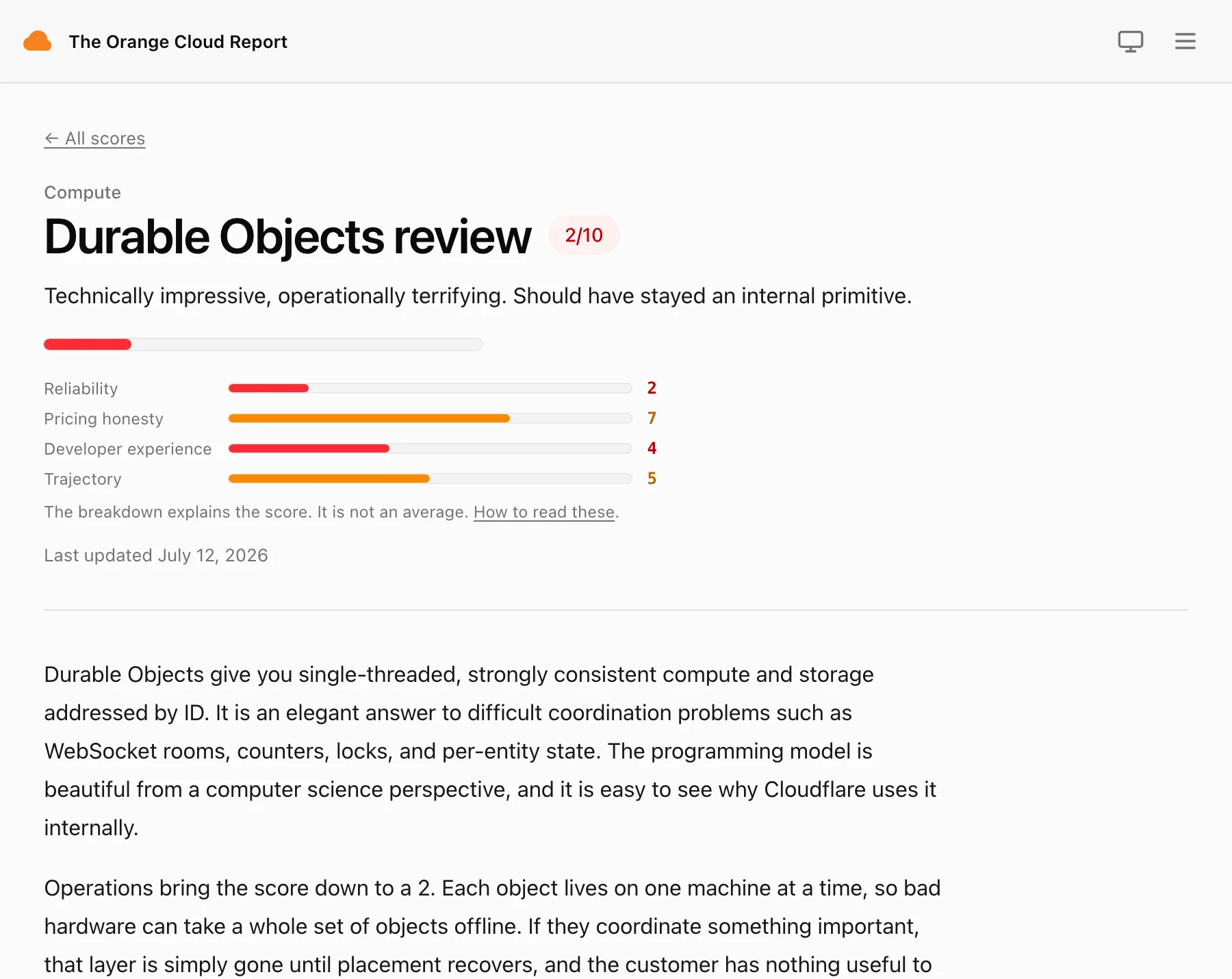 The Orange Cloud Report scores Durable Objects 2 out of 10 for reliability
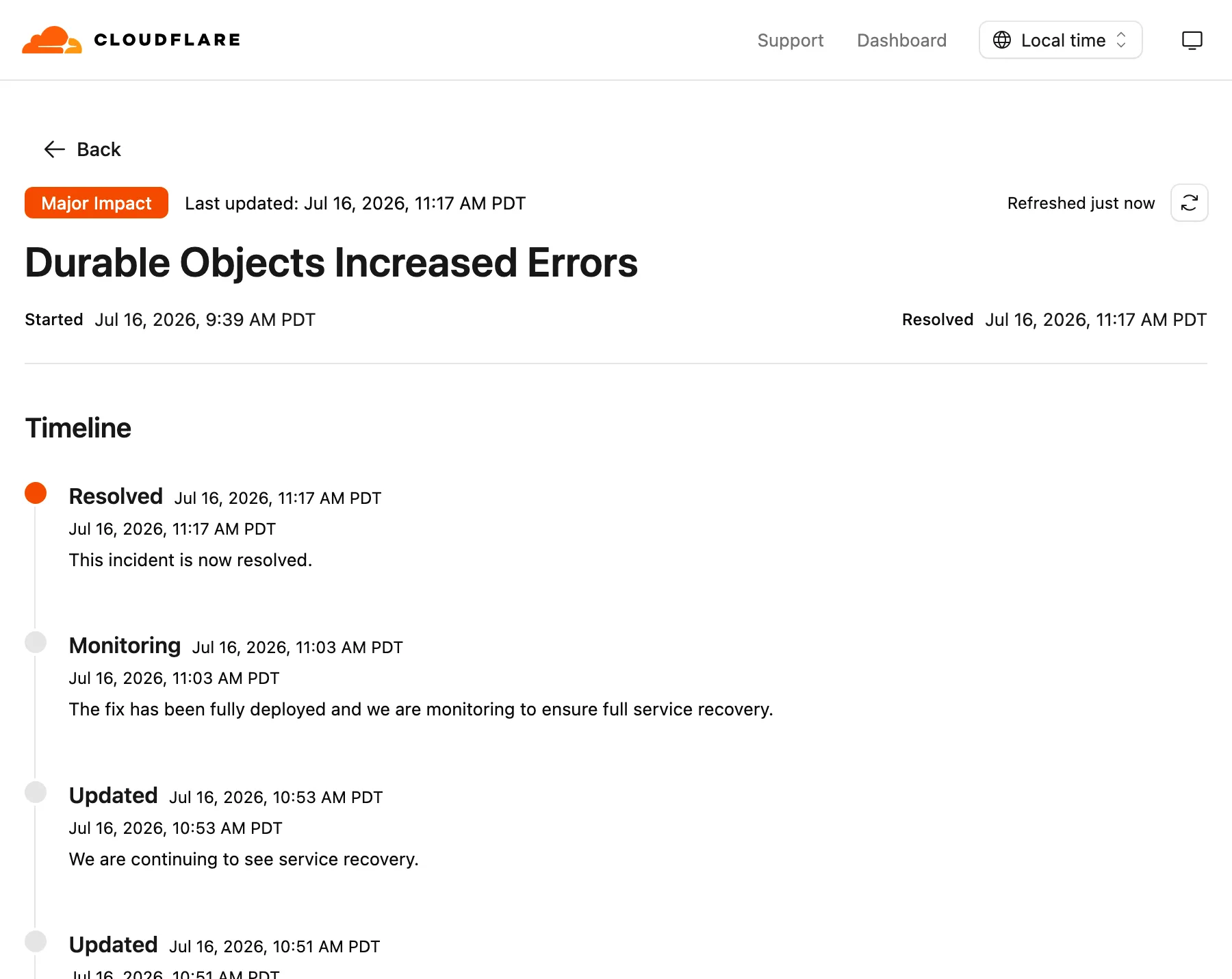 Cloudflare status: Durable Objects increased errors, major impactWhat self-hosting changes: Placement Cells survive node lossA cell belongs to whichever node holds its lease in your bucket. If that node fails, another acquires the lease through compare-and-swap and restores the cell from your storage in seconds. Blast radius A failure domain you chooseYour fleet still depends on its machines, network, and bucket provider. Cell scheduling and placement run within your fleet, separate from other customers' Durable Objects workloads. Diagnostics Failures you can investigateYou can investigate a cell's failures through its ownership record, SQLite and LTX files, and logs, using tools like sqlite3 and grep. Self-hosting puts you in charge of your nodes, bucket provider, and operations, but it doesn't guarantee reliability. We love Cloudflare, and this very page runs on a Cloudflare Worker. The Durable Objects model is one of the best primitives distributed systems has gained in years: a single-threaded object with its own storage, addressed by name. That design belongs to Kenton Varda and the Cloudflare Workers team. celld is a love letter to their idea; a primitive this good deserves to run anywhere. A stateful distributed system built on S3. LTX is Litestream's replica format, from Ben Johnson | ||||||||||||||||||||||||||||||||||||||||||||||||||||||||||||||||||||||||||||||||||||||||||||||||||||
| You are visitor 01402775 — GeezerVison does not store the pages you look up. Best viewed with Netscape Navigator 4.7 or Internet Explorer 6 at 800×600. No cookies required. | ||||||||||||||||||||||||||||||||||||||||||||||||||||||||||||||||||||||||||||||||||||||||||||||||||||