GV

GeezerVison

The World Wide Web, restored to 800 pixels of glory.

Home|About|Gaming cabinet|Archives|How it works|Starter sites

On this site

  • Documentation
  • Programming Guide
  • Tutorials and Samples
  • GPU Support
  • Forum
  • FAQ
  • NeMo Framework
  • Train Your Own Reasoning Model in 48 Hours
  • NVIDIA Dynamo
  • Deploy LLM Inference With NVIDIA Dynamo and vLLM
  • How to Run AI-Powered CAE Simulations
  • NVIDIA PhysicsNeMo™
  • Build an Interactive Data Analytics Dashboard
  • cuDF

This view

  • Original page
  • New address

GeezerVison is showing developer.nvidia.com — NVIDIA CUDA

Get Started With CUDA

 NVIDIA CUDA toolkit

CUDA Toolkit

The NVIDIA® CUDA® Toolkit provides the development environment for creating high-performance, GPU-accelerated applications. The toolkit includes GPU-accelerated libraries, debugging and optimization tools, a C++ compiler, and a runtime library.
Get the CUDA Development Environment
NVIDIA CUDA Python logos

CUDA Python

As one of the most popular programming languages today for AI and high-performance computing (HPC), Python developers can build robust GPU applications directly in Python.


Write GPU-Powered Python
NVIDIA CUDA-X Libraries

CUDA Tile

NVIDIA CUDA Tile is the GPU programming model that simplifies the creation of optimized, tile-based kernels and targets portability for special-purpose hardware including Tensor Cores.

Unlock Peak GPU Performance
NVIDIA Nsight Developer Tools

Nsight Developer Tools

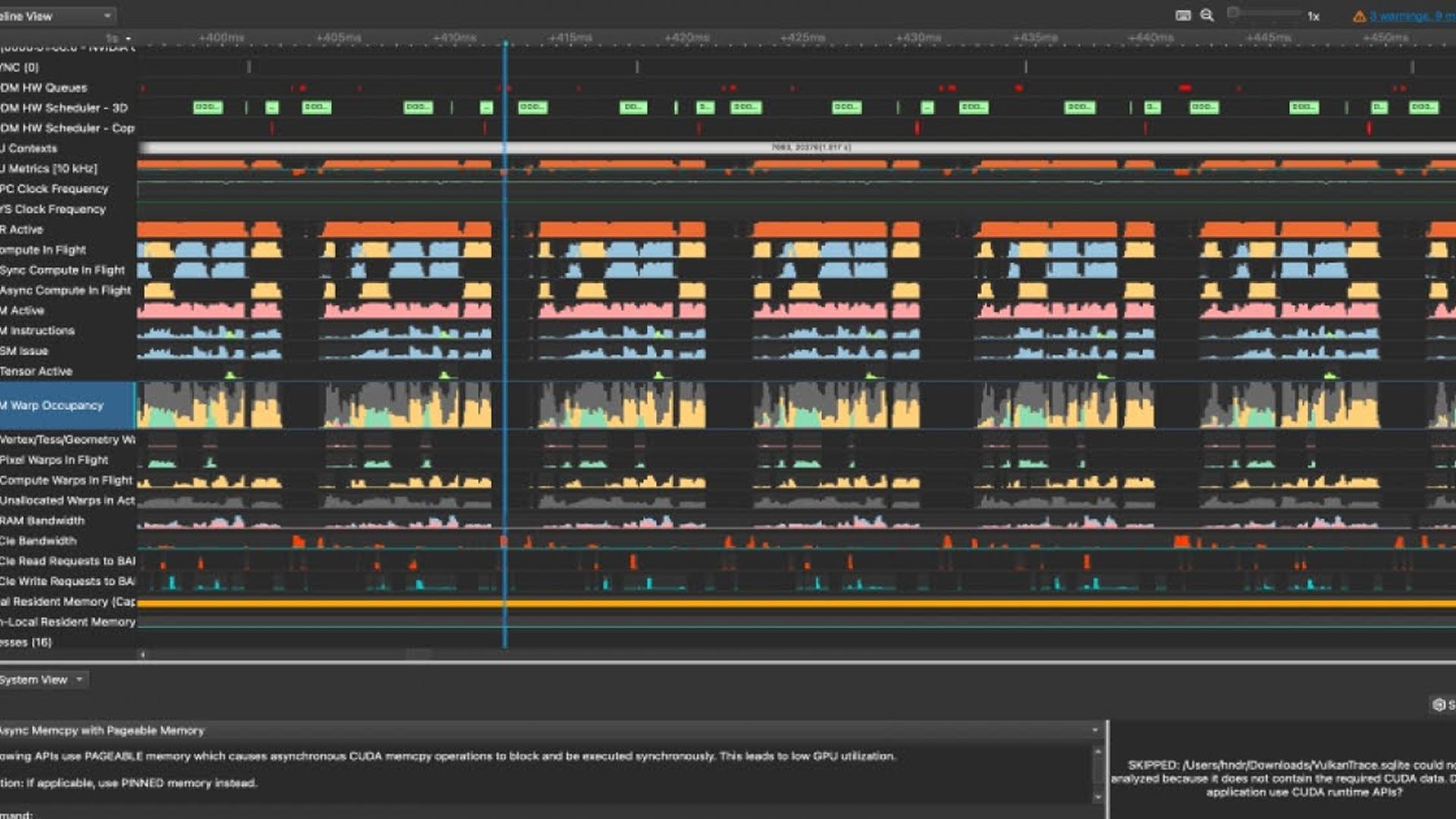
NVIDIA Nsight™ tools are a powerful set of libraries, SDKs, and developer tools spanning across desktop and mobile targets. They enable developers to build, debug, profile, and develop software that utilizes the latest accelerated computing hardware.
Build, Debug, and Profile Software
NVIDIA CUDA Tile

CUDA-X Libraries

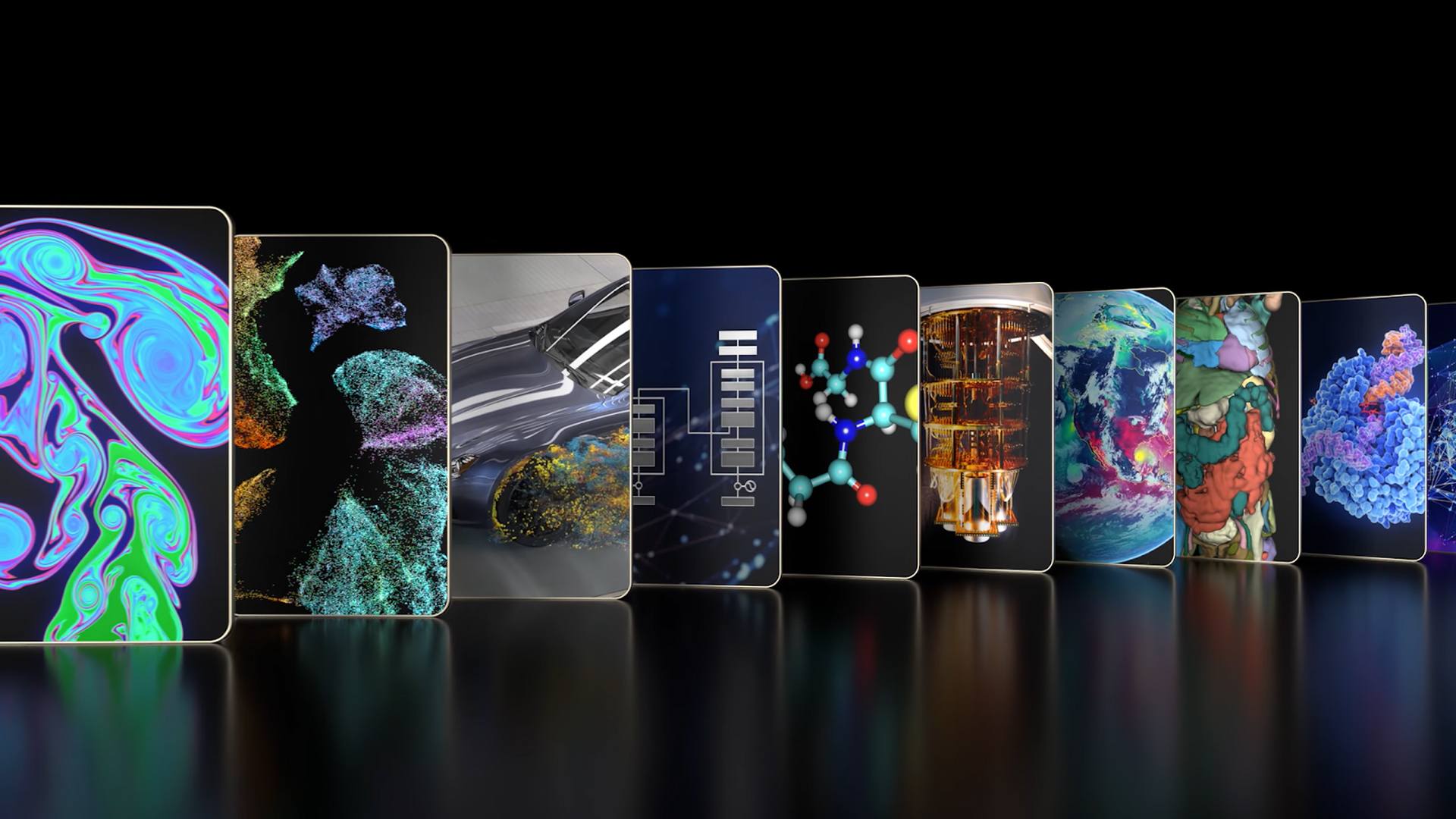
NVIDIA CUDA-X™, built on CUDA, is a collection of libraries that deliver dramatically higher performance across application domains, including AI and HPC.

Explore Prebuilt, Optimized Libraries

CUDA Fundamentals

CUDA Programming Guide
NVIDIA CUDA platform for accelerated computing
Click Image to Enlarge

What Is CUDA?

CUDA is NVIDIA's platform for accelerated computing, providing the software layer that enables applications to harness the power of GPUs. Developers can program in languages such as C++, Python, and Fortran or leverage GPU-accelerated libraries and frameworks like PyTorch. This flexibility lets developers integrate GPU computing into any layer of their software stack to achieve optimal functionality and performance.

The CUDA Toolkit, an integral component of the CUDA platform, provides the compiler, libraries, and developer tools required to develop GPU applications.

What’s CUDA All About Anyway?

Learn about the CUDA ecosystem that helps developers solve real-world challenges.

Watch Video

Learn CUDA C++

Learn the fundamentals of CUDA C++ with a collection of guided notebooks.

Start Learning

Learn CUDA Python

Get started with GPU development using Python with a collection of guided notebooks.

Start Learning

How to Write a CUDA Program

Learn about the CUDA ecosystem and how to write CUDA programs.

Watch Video

Examples of How CUDA Is Used Today

Artificial Intelligence

LLM Training

Train a reasoning module using NVIDIA NeMo™ Framework and NeMo Curator.

  • Blog: Train a Reasoning-Capable LLM in One Weekend With NVIDIA NeMo

  • Code: NeMo Framework

  • Notebook: Train Your Own Reasoning Model in 48 Hours

Artificial Intelligence

LLM Inference

Deploy AI models using NVIDIA Dynamo, an open-source, low-latency, modular inference framework.

  • Blog: NVIDIA Dynamo, A Low-Latency Distributed Inference Framework for Scaling Reasoning AI Models

  • Guide: NVIDIA Dynamo

  • Training: Deploy LLM Inference With NVIDIA Dynamo and vLLM

Computer-Aided Engineering

AI-Powered CAE Simulations

Accelerate your CAE simulations with CUDA-X-accelerated CAE tools, AI emulation, GPU acceleration, and real-time digital twins to design and build new technologies.

  • Blog: How to Run AI-Powered CAE Simulations

  • Guide: NVIDIA PhysicsNeMo™

  • Training: Accelerating Computer-Aided Engineering (CAE) With NVIDIA AI Physics Technology

Data Science

DataFrame and SQL Acceleration With cuDF

cuDF is a GPU-accelerated library that optimizes fundamental DataFrame and SQL operations. It includes drop-in accelerators for popular DataFrame tools like pandas, Polars, and Apache Spark with no code changes required.

  • Notebook: Build an Interactive Data Analytics Dashboard

  • Video: Accelerated Exploratory Data Analysis With pandas on NVIDIA GPUs (16:07)

  • User Guide: cuDF

  • User Guide: Apache Spark Accelerated With cuDF

Quantum Computing

Accelerated Quantum Computing With NVIDIA CUDA-Q

NVIDIA CUDA-Q™ is the quantum processing unit (QPU)-agnostic platform for accelerated quantum supercomputing.

  • Blog: NVIDIA CUDA-Q Powers Quantum Applications Research

  • Docs: CUDA-Q

  • Training: CUDA-Q Academic

Robotics

World Foundation Models With NVIDIA Cosmos

Accelerate physical AI development for autonomous vehicles (AVs), robots, and video analytics AI agents.

  • Blog: AI Foundation Models With NVIDIA Cosmos™ Predict-2

  • Github: Cosmos Predict-2

  • Github: Cosmos

View Accelerated Computing Learning Path

CUDA Resources

Blogs
Sessions
Training

An Even Easier Introduction to CUDA

An interactive accompaniment to Mark Harris's popular blog post “An Even Easier Introduction to CUDA.”

Learn More About CUDA

Getting Started With Accelerated Computing in Modern CUDA C++

Learn how to write, compile, and run GPU-accelerated code.

Learn More About Accelerating C++ Code with CUDA

Accelerated Computing Hub

Learn more about how to use CUDA in the Accelerated Computing Hub, which includes C++ and Python step-by-step tutorials and user guides.

Learn More About Accelerated Computing Hub

View Accelerated Computing Learning Path

Get started with CUDA today.

Download CUDA Toolkit

You are visitor 01402775 — GeezerVison does not store the pages you look up.
Best viewed with Netscape Navigator 4.7 or Internet Explorer 6 at 800×600. No cookies required.