GeezerVisonThe World Wide Web, restored to 800 pixels of glory. |
| Home|About|Gaming cabinet|Archives|How it works|Starter sites |
GeezerVison is showing docs.mage.ai — Abstractions - Mage AI  ProjectA Mage project forms the basis for all the work you do in Mage. It contains the code for your data pipelines, blocks, and other project-specific data. You can think of it like a GitHub repo— it can even track your file history, too. Check out our detailed project structure docs for more info.PipelineA pipeline contains references to all the blocks of code you want to run, charts for visualizing data, and organizes the dependency between each block of code. Each pipeline is represented by a YAML file (here’s an example) in thepipelines folder under the Mage project directory.
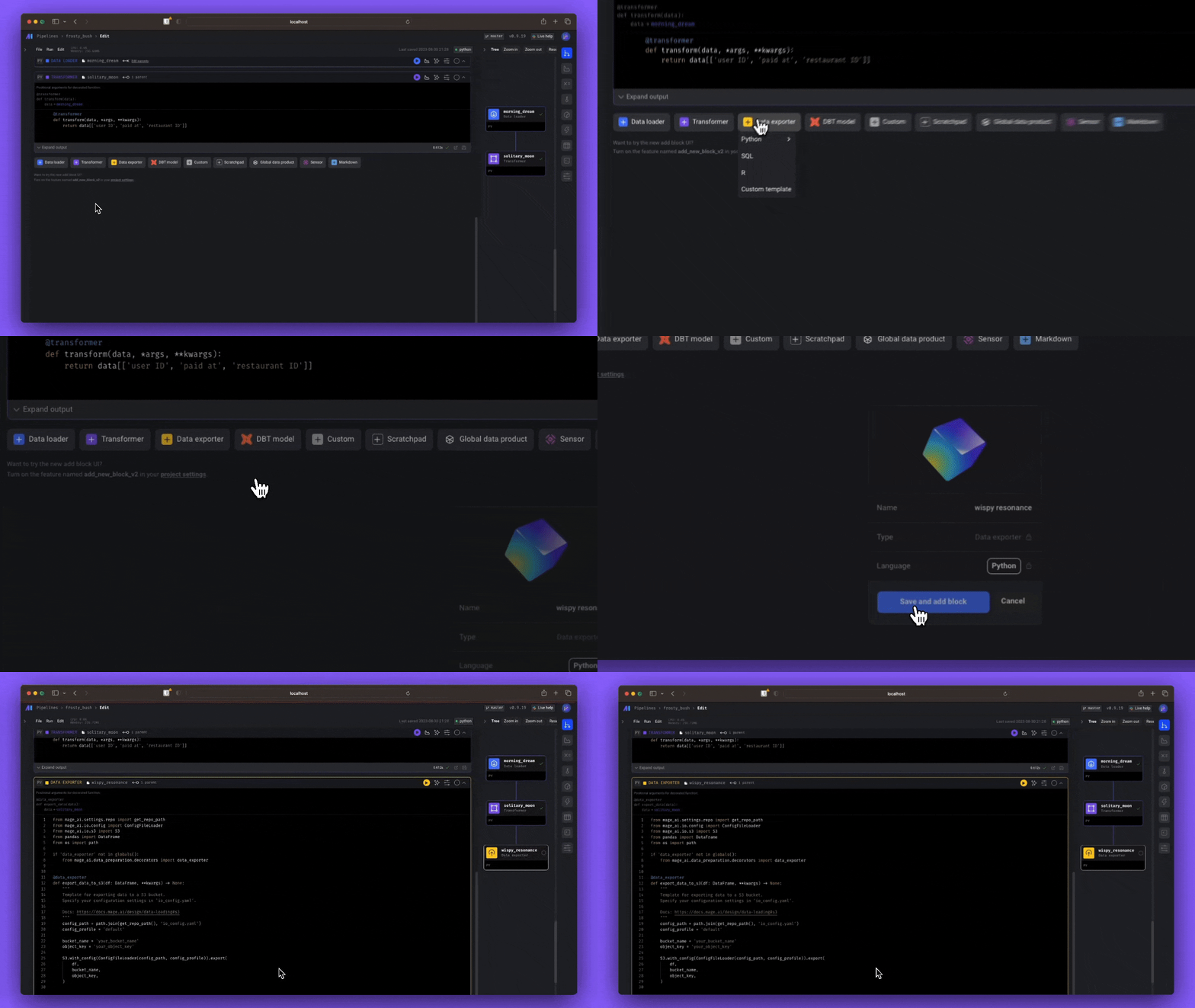 Pipelines can be filtered, tagged, and grouped by various properties. See our docs page for more info. BlockA block is a file with code that can be executed independently or within a pipeline. Together, blocks form a Directed Acyclic Graph (DAG), which we call pipelines. A block won’t start running in a pipeline until all its upstream dependencies are met. There are 8 types of blocks.
[project_name]/transformers/.
SensorA sensor is a block that continuously evaluates a condition until it’s met or until a period of time has elapsed. If there is a block with a sensor as an upstream dependency, that block won’t start running until the sensor has evaluated its condition successfully. Sensors can check for anything. Examples of common sensors check for:
transform_users has finished running successfully for the current execution
date:
This example is using a helper function called check_status that handles the
logic for retrieving the status of a pipeline run for transform_users on the
current execution date. You can optionally pass block uuid and hours
parameters to check_status to check the status of a block run or within a
interval of time.Data productEvery block produces data after it’s been executed. These are called data products in Mage. Data validation occurs whenever a block is executed. Additionally, each data product produced by a block can be automatically partitioned, versioned, and backfilled. Some examples of data products produced by blocks:
TriggerA trigger is a set of instructions that determine when or how a pipeline should run. A pipeline can have 1 or more triggers. New trigger creation supports 2 trigger types:
ScheduleA schedule-type trigger will instruct the pipeline to run after a start date and on a set interval. Currently, the frequency pipelines can be scheduled for include:
Deprecated EventEvent triggers are deprecated for new trigger creation. Use API triggers for new event-driven or webhook-style workflows. Existing legacy event triggers may still appear in older projects.APIAn API-type trigger will instruct the pipeline to run after a specific API call is made. You can make a POST request to an endpoint provided in the UI when creating or editing a trigger. You can optionally include runtime variables in your request payload.RunA run record stores information about when it was started, its status, when it was completed, any runtime variables used in the execution of the pipeline or block, etc. Every time a pipeline or a block is executed (outside of the notebook while building the pipeline and block), a run record is created in a database. There are 2 types of runs:Pipeline runThis contains information about the entire pipeline execution.Block runEvery time a pipeline is executed, each block in the pipeline will be executed and potentially create a block run record.LogA log is a file that contains system output information. It’s created whenever a pipeline or block is ran. Logs can contain information about the internal state of a run, text that is outputted by loggers orprint statements in blocks, or errors and stack traces
during code execution.
Here is an example of a log in the
Data pipeline management UI:
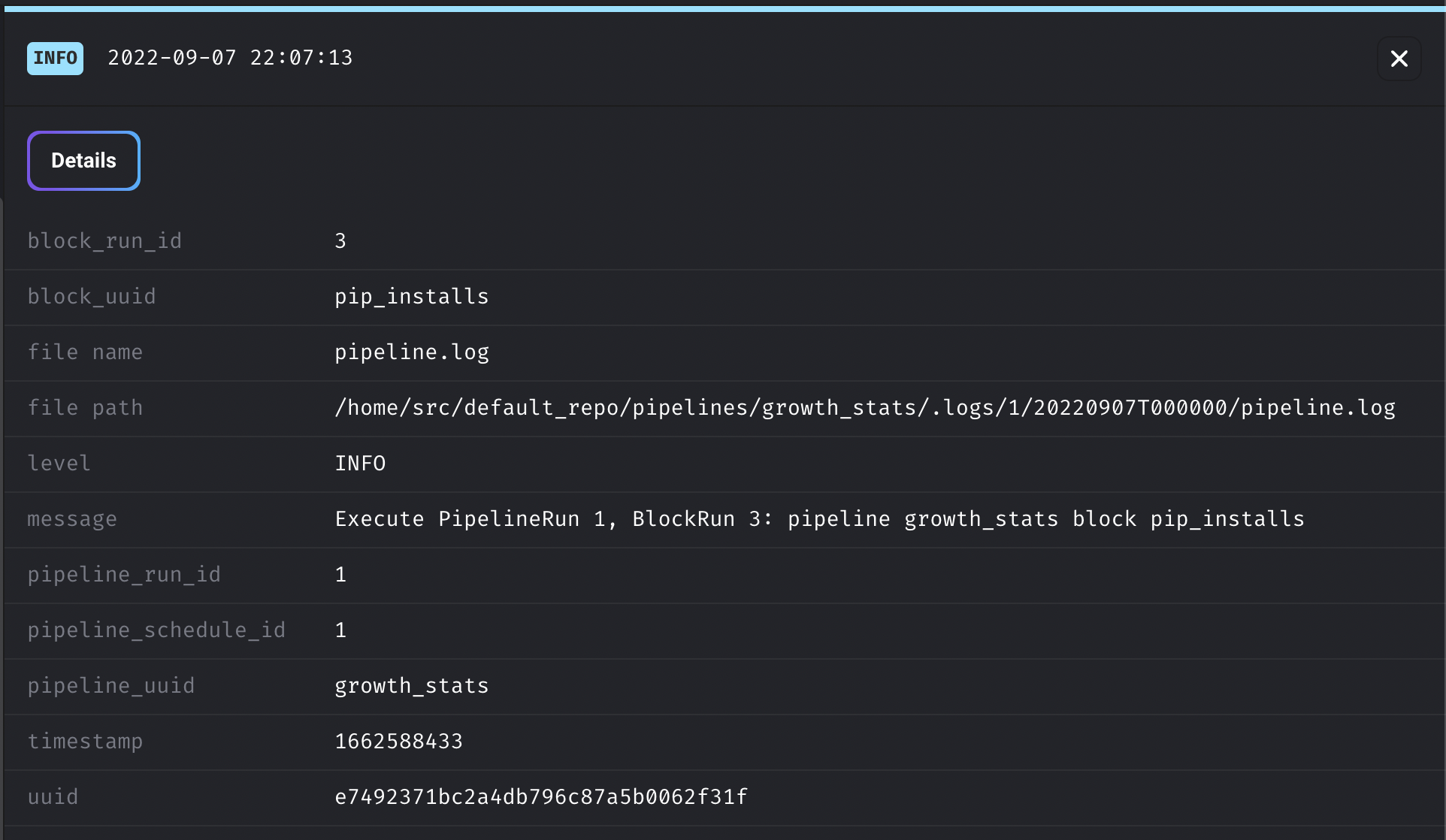 Logs are stored on disk wherever Mage is running. However, you can configure
where you want log files written to (e.g. Amazon S3, Google Storage, etc). BackfillA backfill creates 1 or more pipeline runs for a pipeline.Was this page helpful? ⌘I |
| You are visitor 01402792 — GeezerVison does not store the pages you look up. Best viewed with Netscape Navigator 4.7 or Internet Explorer 6 at 800×600. No cookies required. |