GeezerVisonThe World Wide Web, restored to 800 pixels of glory. | ||||||||||||||||||||||||||||||||||||||||||||||||||||||||||||||||||||||||||||||||||||
| Home|About|Gaming cabinet|Archives|How it works|Starter sites | ||||||||||||||||||||||||||||||||||||||||||||||||||||||||||||||||||||||||||||||||||||
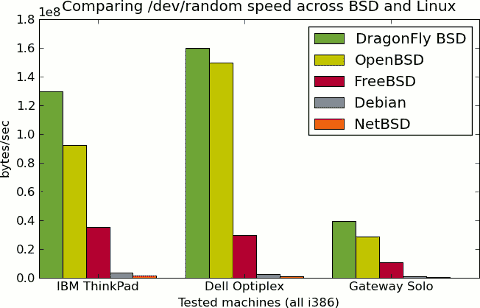
GeezerVison is showing ianix.com — A comparison of /dev/random speed on Linux and BSD The Test: Comparing /dev/random speed on Linux and BSDDate: January 6, 2012
Operating systems tested:
Methodology: I downloaded and burned ISO installation images for
DragonFly, FreeBSD, Debian, and NetBSD, and used my existing (official release)
OpenBSD CDs to perform fresh, bare-metal installs on three different computers:
a 1.8GHz IBM ThinkPad, a 2.54GHz Dell OptiPlex, and a 600MHz Gateway Solo. No
VMs were used, and default installation parameters were accepted. (Only
non-default choice: The UFS filesystem was chosen over HAMMER on DragonFly,
given the small disks of the test machines.) I rebooted each machine after
installation, logged in, and ran dd if=/dev/random bs=32k
of=/dev/null, experimenting with different blocksize values before
picking the fastest in each case. I then ran dd, using the count
parameter in conjunction with the blocksize to write an equal number of bytes
for each OS to /dev/null, thereby getting the purest numbers on /dev/random device
speed.
Discussion: DragonFly has the highest /dev/random performance with OpenBSD following close behind. The /dev/random devices on DragonFly and OpenBSD are so fast that when wiping drives on these test machines, /dev/zero would not offer a performance improvement over /dev/random, as the disk itself is the limiting factor. Please note that:
| ||||||||||||||||||||||||||||||||||||||||||||||||||||||||||||||||||||||||||||||||||||
| You are visitor 01402503 — GeezerVison does not store the pages you look up. Best viewed with Netscape Navigator 4.7 or Internet Explorer 6 at 800×600. No cookies required. | ||||||||||||||||||||||||||||||||||||||||||||||||||||||||||||||||||||||||||||||||||||