GeezerVison is showing mq.sc — MQSC — From the Metal to the User
MUNICH QUANTUM SOFTWARE COMPANY
From the Metal to the User
System Software for Quantum Computing
Quantum computing is becoming a reality. But as hardware scales, the gap between quantum processors and end users keeps growing.
MQSC closes this gap.
We build the system software layer that connects the metal to the user: through hardware interfaces, fault-tolerant compilation with verified circuits and real-time execution, and orchestration within existing hyperscaler stacks and HPC centers.
Open. Vendor-neutral. Performance-driven.
Hyperscalers
HPC Centers
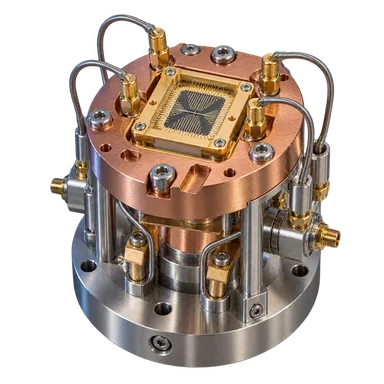
Superconducting
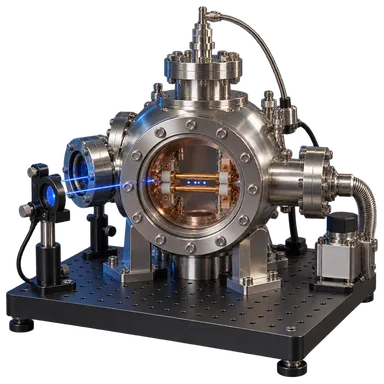
Trapped Ions
Neutral Atoms
Photonics
Spin Qubits
QDMI is the hardware-software interface for quantum computing: one standardized way for a device to declare what it is, what it can do, and what it costs to use right now. We build and maintain the implementation that connects your device.
The MQT Compiler Collection delivers performance where it matters most: right above the metal. Designed for fault tolerance from day one and based on state-of-the-art compiler infrastructure, it delivers verified circuits and ensures your quantum hardware spends its time computing, not waiting.
The MQSC Orchestrator makes a fleet of different QPUs behave like any other accelerator resource in a hyperscaler stack or high-performance computing (HPC) center. Users can access quantum resources through the workflows, schedulers, and interfaces they already know.
The right answer won’t come from one vendor. It will come from everyone who runs, breaks, and improves the stack.
Community-Driven
Great software does not emerge in isolation. We build in the open, contribute to the ecosystem, and bring the community together to advance quantum computing.
No Lock-Ins
We don’t build hardware, so we have no reason to lock you into any. Write once, run anywhere. No lock-in. Not even to us.
From Research to Practice
We turn scientific advances into software for real hardware, real constraints, and real workloads.
Performance, Every Time
High performance is a requirement, on every run and at every layer. We build from the metal up to meet that standard.
Correctness, Verified
Correctness matters at every layer. We apply verification methods, so you can rely on the results.
Our Highlights
We have15+15+ Years of experience
Rests on200+200+ Scientific publications
Our team has won20+20+ International awards
Trusted by the Community
MQT PyPI Downloads
4.5M4.5M
MQT GitHub Stars
1,3711,371
Scientific Citations
10,000+10,000+
Actually Deployed
Production-grade software deployed and maintained at hardware providers, HPC centers, and hyperscalers.
Building an Ecosystem
Driving open-source projects, standards, and community initiatives such as MQSF.
QDMI
Easy integration for your quantum devices.
Every quantum platform comes with its own capabilities and operational characteristics. QDMI (the Quantum Device Management Interface) provides the standardized, open-source, and vendor-neutral way for software to discover, access, and manage quantum devices.
Through it, devices can communicate not only how they are accessed, but also what capabilities they provide, what resources are currently available, and how they should be utilized.
MQSC develops, tests, and maintains QDMI implementations for quantum hardware providers, cloud services, and HPC environments, ensuring seamless integration into the growing quantum software ecosystem.
One Interface, Multiple Backends
Frontend examples
Qiskit
CUDA-Q
Cirq
Quantum Device Management Interface
IQM
Connect IQM hardware through IQM’s QDMI implementation.
Built on MLIR. Designed for quantum. Ready for fault tolerance. Verified.
Built on MLIR, the MQT Compiler Collection leverages modern, state-of-the-art compiler infrastructure while being designed for quantum capabilities and fault tolerance from day one. We verify that optimization, mapping, and native synthesis preserve the input program’s behavior and meet the target’s requirements.
Loops and classically controlled operations, the foundations of fault-tolerant quantum computing, remain explicit throughout the compilation flow. Repeated rounds of error correction stay loops, and corrections derived from decoder results remain runtime-controlled operations.
At the lowest layer, the compiler generates device-native schedules tailored to the actual machine and its measured parameters, whether that means scheduling pulses on superconducting devices or moving atoms in neutral-atom systems.
MQT Compiler Collection
Distill
T
resourceMagic state
InjectCNOTData → resource
MeasureZ basisResource qubit
0No correction
1S correction
Circuit verificationVerified
MQSC Orchestrator
Turn quantum processors into first‑class HPC resources.
Quantum computing should integrate into existing infrastructures, not require entirely new ones.
The MQSC Orchestrator enables quantum workloads to be executed through existing cloud and HPC schedulers and workflow managers. Quantum jobs are submitted, queued, monitored, and accounted for just like any other job, making QPUs true first‑class citizens within the computing stack.
From one QPU to an entire fleet, quantum computing becomes just another accelerator resource, seamlessly integrated into production environments.
Building software is only part of the job. Building the community is the other.
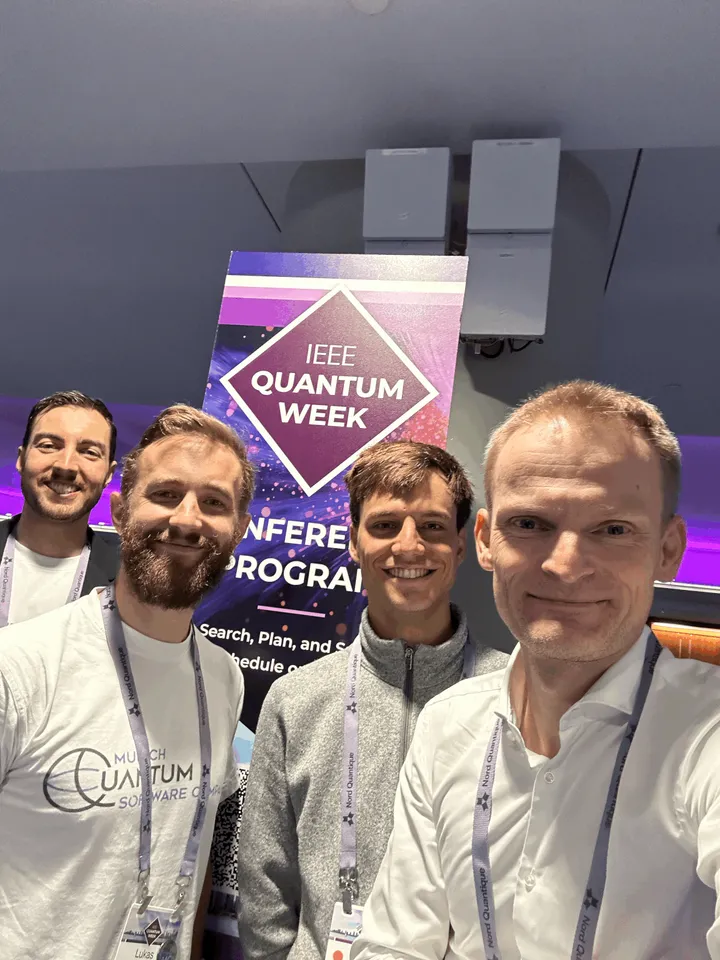
That’s why we organized the fourth Munich Quantum Software Forum — bringing together the “who’s who” of the quantum computing software community in Munich.
Look back at MQSF 2026 and explore recordings and materials from previous editions.
Have questions or need more information? We’re here to help! Whether you’re interested in exploring our software tools, discovering our services, or want to know more about what we do, feel free to reach out!
You are visitor 01402792 — GeezerVison does not store the pages you look up. Best viewed with Netscape Navigator 4.7 or Internet Explorer 6 at 800×600. No cookies required.



 Qiskit

 CUDA-Q

 Cirq
 Quantum Device Management Interface