GeezerVisonThe World Wide Web, restored to 800 pixels of glory. |
| Home|About|Gaming cabinet|Archives|How it works|Starter sites |
GeezerVison is showing networkencyclopedia.com — Data-Link Layer (second layer of the OSI Model) - NETWORK ENCYCLOPEDIA 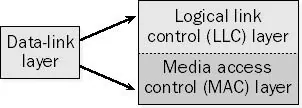 Data-link Layer is the second layer of the 7 layers OSI model, which converts frames of data into raw bits for the physical layer and is responsible for framing, flow control, error correction, and retransmission of frames. MAC addresses are used at this layer, and bridges and network interface cards (NICs) operate at this layer. The data-link layer establishes and maintains the data link for the network layer above it. It ensures that data is transferred reliably between two stations on the network. A number of protocols can be implemented at this layer depending on whether you are establishing local area network (LAN) or wide area network (WAN) connections between stations. Data-link protocols are responsible for functions such as addressing, frame delimiting and sequencing, error detection and recovery, and flow control. For LANs, the Project 802 standards of the Institute of Electrical and Electronics Engineers (IEEE) separate the data-link layer into two sublayers:
Data-Link Layer examplesExamples of data-link protocols for local area networking include the following:
For WANs, data-link layer protocols encapsulate LAN traffic into frames suitable for transmission over WAN links. Common data-link encapsulation methods for WAN transmission include the following:
Explore the attacks, vulnerabilities, and exploits that can be found at each one of the seven layers: Hack the Stack: Using Snort and Ethereal to Master The 8 Layers of An Insecure Network (Amazon Store) 
Network Encyclopedia Editorial Team Every entry is written, reviewed and kept up to date by our editors. Spotted a mistake? We fix it in the open. Editorial Mission · Correction Policy · Suggest a correction Related entries |
| You are visitor 01402503 — GeezerVison does not store the pages you look up. Best viewed with Netscape Navigator 4.7 or Internet Explorer 6 at 800×600. No cookies required. |