# 实例方法、类方法和静态方法有什么区别?
面试官问:"Python的实例方法、类方法和静态方法有什么区别?"
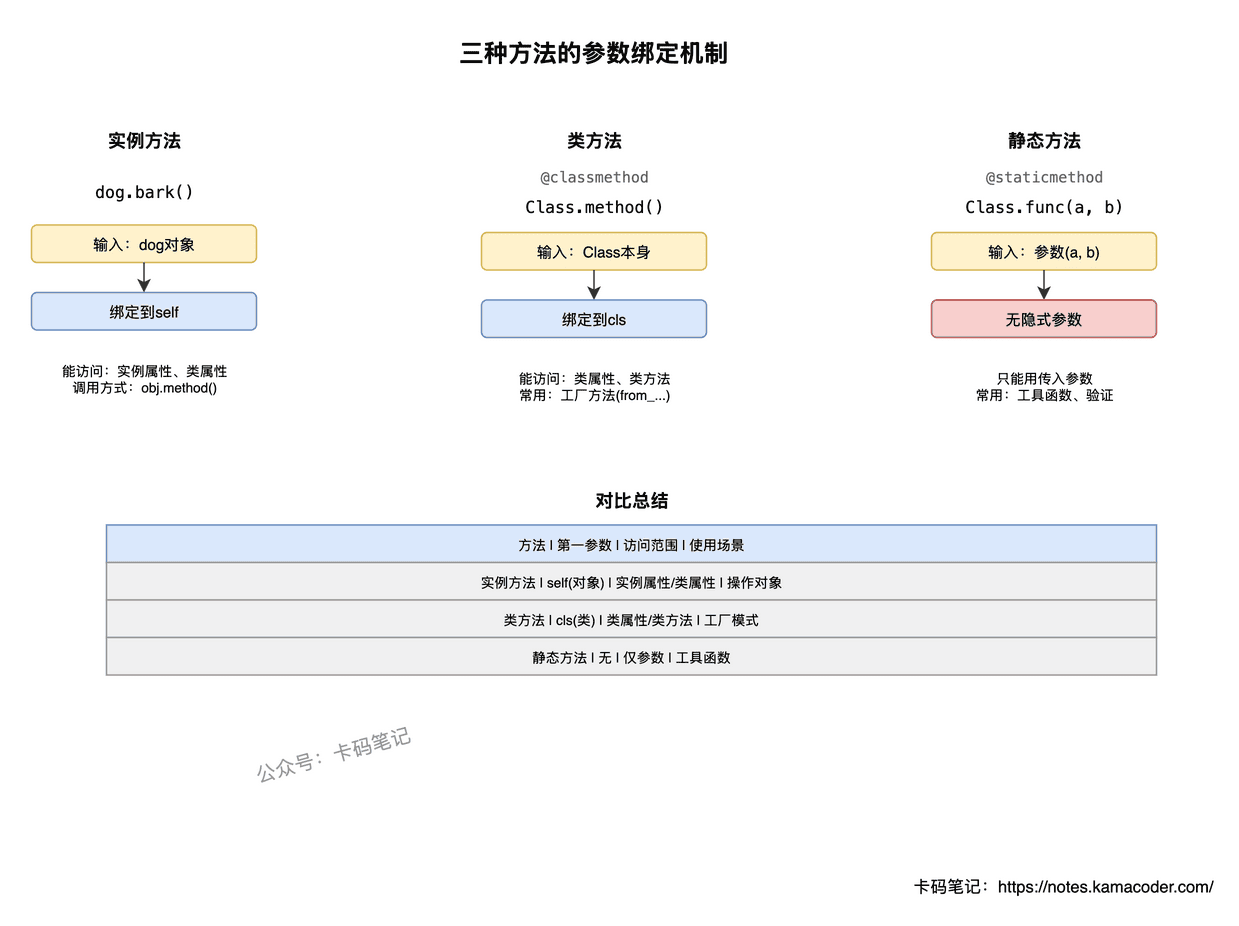
多数人会说"一个用self,一个用cls,一个什么都不用",但没说清楚为什么要这样设计。真正要讲清楚的是:实例方法需要访问对象的属性,类方法需要访问类本身(常用于工厂模式),静态方法不需要访问对象或类(只是把函数放在类的命名空间里)。 装饰器@classmethod和@staticmethod改变了方法的绑定行为。
# 简要回答
实例方法的第一个参数是self,指向调用它的对象。 定义时不加装饰器,调用时通过obj.method(),Python自动传递obj作为self。实例方法可以访问对象的实例属性和类属性。
类方法的第一个参数是cls,指向类本身。 定义时用@classmethod装饰,调用时通过Class.method()或obj.method(),Python自动传递类作为cls。类方法常用于工厂函数,根据不同参数创建对象。
静态方法没有隐式的第一个参数。 定义时用@staticmethod装饰,调用时像普通函数一样传参。静态方法不能访问实例属性或类属性,只是逻辑上属于这个类的工具函数。
# 详细回答
# 实例方法
最常见的方法,通过对象调用,自动传递对象作为self:
class Dog:
    def __init__(self, name):
        self.name = name

    def bark(self):  # 实例方法
        return f"{self.name} says: Woof!"

dog = Dog("Buddy")
print(dog.bark())  # Buddy says: Woof!
1
2
3
4
5
6
7
8
9
bark是实例方法,dog.bark()会被转换成Dog.bark(dog),所以self接收到dog对象。
实例方法可以访问实例属性(self.name)和类属性(self.__class__或Dog.species)。
# 类方法
通过@classmethod装饰,第一个参数是类本身:
class Person:
    population = 0

    def __init__(self, name):
        self.name = name
        Person.population += 1

    @classmethod
    def get_population(cls):  # 类方法
        return f"Total population: {cls.population}"

    @classmethod
    def from_birth_year(cls, name, birth_year):  # 工厂方法
        age = 2025 - birth_year
        return cls(name)  # 创建并返回对象

print(Person.get_population())  # Total population: 0
p1 = Person("Alice")
print(Person.get_population())  # Total population: 1

# 通过类方法创建对象
p2 = Person.from_birth_year("Bob", 1990)
print(p2.name)  # Bob
1
2
3
4
5
6
7
8
9
10
11
12
13
14
15
16
17
18
19
20
21
22
23
@classmethod装饰器让方法接收类作为第一个参数。调用Person.get_population()时,cls就是Person。
类方法常用于工厂模式:根据不同的输入格式创建对象,而不是只靠__init__。比如from_birth_year接收出生年份,内部计算年龄再调用cls(name)创建对象。
# 静态方法
通过@staticmethod装饰,没有隐式参数:
class MathUtils:
    @staticmethod
    def add(a, b):  # 静态方法
        return a + b

    @staticmethod
    def is_even(n):
        return n % 2 == 0

# 通过类调用
print(MathUtils.add(3, 5))      # 8
print(MathUtils.is_even(4))     # True

# 也可以通过对象调用,但没有意义
obj = MathUtils()
print(obj.add(1, 2))  # 3,但不会传递obj
1
2
3
4
5
6
7
8
9
10
11
12
13
14
15
16
静态方法像普通函数,只是放在类的命名空间里。它不能访问self或cls,只能使用传入的参数。
静态方法适合工具函数,逻辑上属于这个类,但不需要访问对象或类的状态。
# 三种方法的对比
| 方法类型 | 装饰器 | 第一个参数 | 能访问 | 常见用途 |
|---|
| 实例方法 | 无 | self(对象) | 实例属性、类属性 | 操作对象状态 |
| 类方法 | @classmethod | cls(类) | 类属性 | 工厂函数、类级别操作 |
| 静态方法 | @staticmethod | 无 | 无(只能用参数) | 工具函数、辅助逻辑 |
# 为什么类方法用于工厂模式
类方法接收cls,所以可以调用cls(...)创建对象。这样做的好处是:如果有子类继承了这个类,子类调用类方法时,cls会是子类本身,返回的也是子类的对象:
class Animal:
    def __init__(self, name):
        self.name = name

    @classmethod
    def create(cls, name):
        return cls(name)

class Dog(Animal):
    pass

dog = Dog.create("Buddy")  # cls是Dog,返回Dog对象
print(type(dog))  # <class '__main__.Dog'>
1
2
3
4
5
6
7
8
9
10
11
12
13
如果用普通函数或静态方法,就无法自动适配子类。
# 为什么静态方法还要放在类里
静态方法不访问对象或类,为什么不直接写成模块级函数?
主要是命名空间和逻辑分组。如果有一堆跟Person相关的工具函数,放在Person类里能让代码更清晰:
class Person:
    @staticmethod
    def is_valid_age(age):
        return 0 < age < 150

    def __init__(self, name, age):
        if not Person.is_valid_age(age):
            raise ValueError("Invalid age")
        self.name = name
        self.age = age
1
2
3
4
5
6
7
8
9
10
is_valid_age不需要对象或类,但逻辑上属于Person的验证规则,放在类里更合理。
# 知识拓展
Q1:实例方法能通过类调用吗?
可以,但必须手动传递对象:
class Dog:
    def bark(self):
        print("Woof!")

dog = Dog()
Dog.bark(dog)  # 等价于 dog.bark()
1
2
3
4
5
6
类方法和静态方法也能通过对象调用,但没有额外好处。
Q2:类方法能访问实例属性吗?
不能直接访问。类方法的cls是类,不是对象。如果要访问实例属性,必须先创建或接收一个对象:
class Person:
    @classmethod
    def greet(cls, person):
        return f"Hello, {person.name}"

p = Person()
p.name = "Alice"
print(Person.greet(p))  # Hello, Alice
1
2
3
4
5
6
7
8
Q3:能在静态方法里调用实例方法吗?
不能直接调用,因为静态方法没有self或cls。如果需要,必须先创建对象:
class Test:
    def instance_method(self):
        return "instance"

    @staticmethod
    def static_method():
        obj = Test()
        return obj.instance_method()
1
2
3
4
5
6
7
8
Q4:@classmethod和@staticmethod的实现原理是什么?
它们是描述符。装饰器返回一个特殊对象,这个对象实现了__get__方法,能在属性访问时返回绑定了cls或不绑定任何参数的可调用对象。这是Python描述符协议的应用。
Q5:什么时候该用类方法而不是__init__?
当你需要多种初始化方式时。__init__只有一个签名,如果想支持"从字典创建""从JSON创建""从出生年份创建",可以用多个类方法:
class Person:
    def __init__(self, name, age):
        self.name = name
        self.age = age

    @classmethod
    def from_dict(cls, data):
        return cls(data['name'], data['age'])

    @classmethod
    def from_birth_year(cls, name, birth_year):
        return cls(name, 2025 - birth_year)
1
2
3
4
5
6
7
8
9
10
11
12
上一篇:实例属性和类属性有什么区别?
下一篇:__new__和__init__有什么区别?