GeezerVisonThe World Wide Web, restored to 800 pixels of glory. | |||||||||||||||||||||||||||||||||
| Home|About|Gaming cabinet|Archives|How it works|Starter sites | |||||||||||||||||||||||||||||||||
GeezerVison is showing octave.sourceforge.io — Function Reference: shading
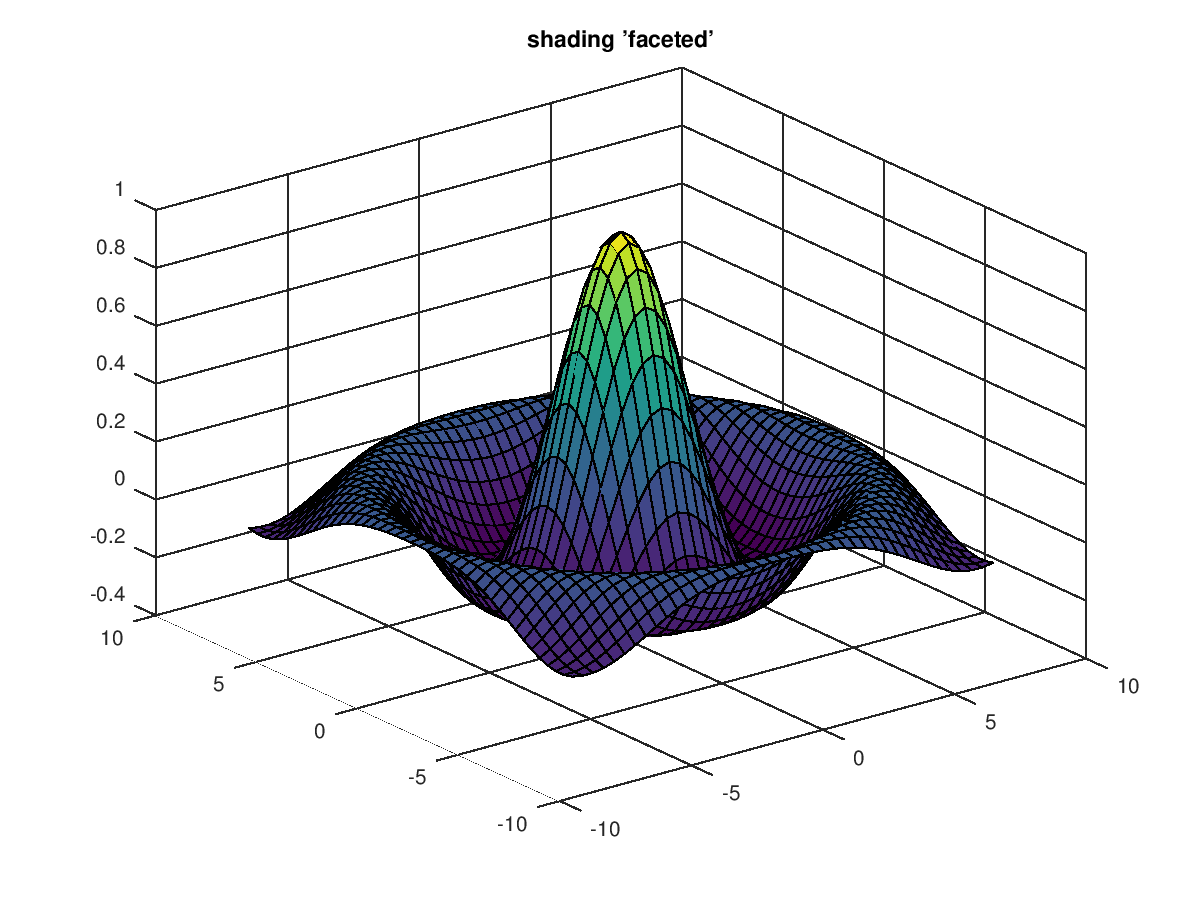
Demonstration 1The following code clf;
colormap ("default");
sombrero ();
shading faceted;
title ('shading ''faceted''');
Produces the following figure
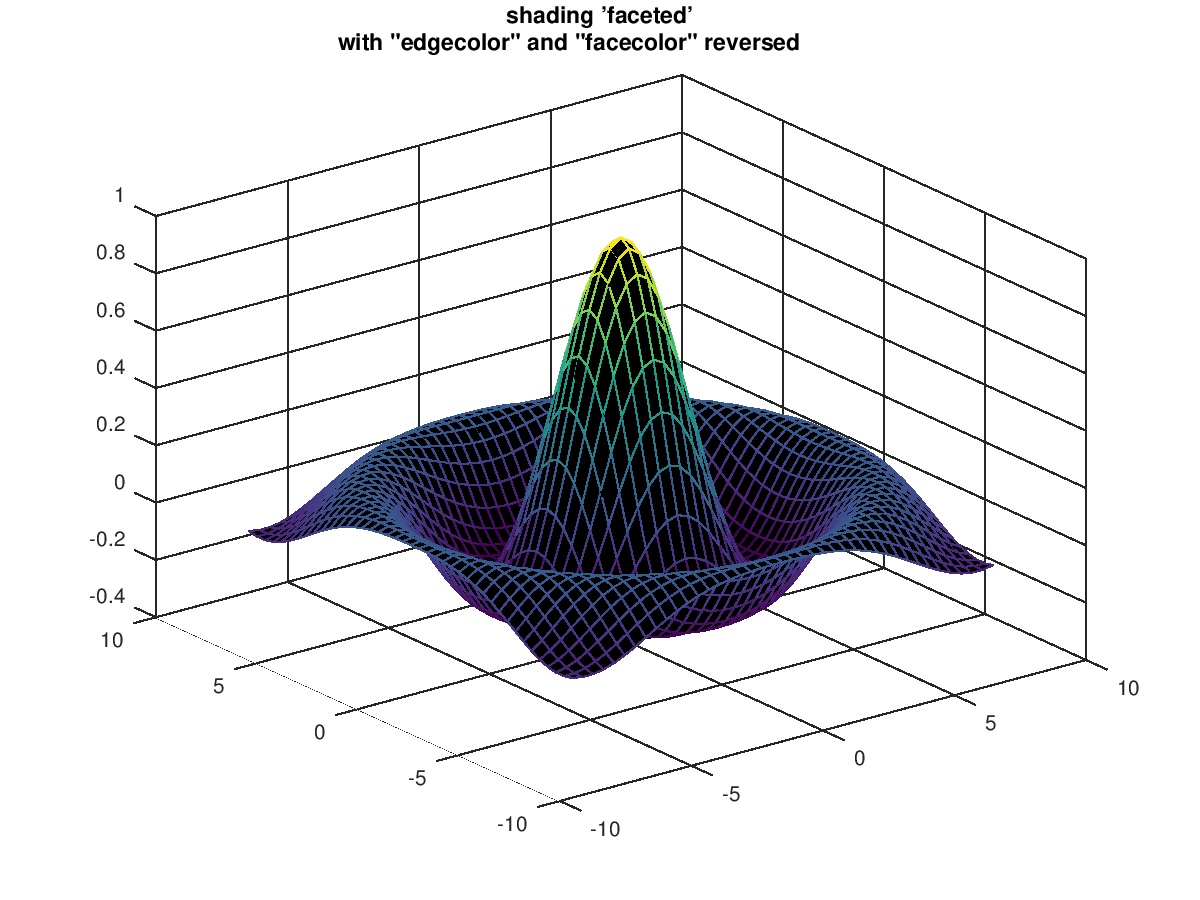
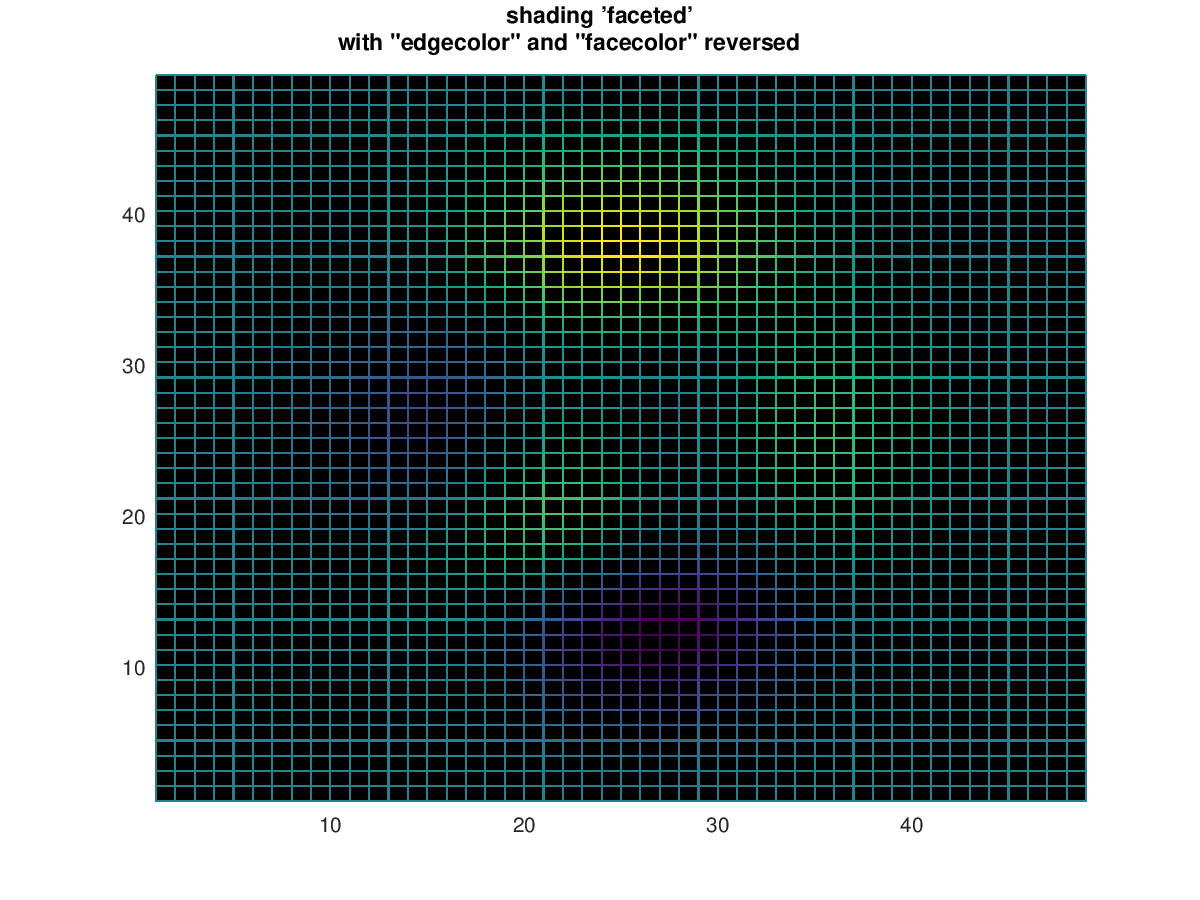
Demonstration 2The following code clf;
colormap ("default");
sombrero ();
shading faceted;
h = findobj (gca (), "type", "surface");
facecolor = get (h, "facecolor");
edgecolor = get (h, "edgecolor");
set (h, "edgecolor", facecolor, "facecolor", edgecolor);
title ({'shading ''faceted''', 'with "edgecolor" and "facecolor" reversed'});
Produces the following figure
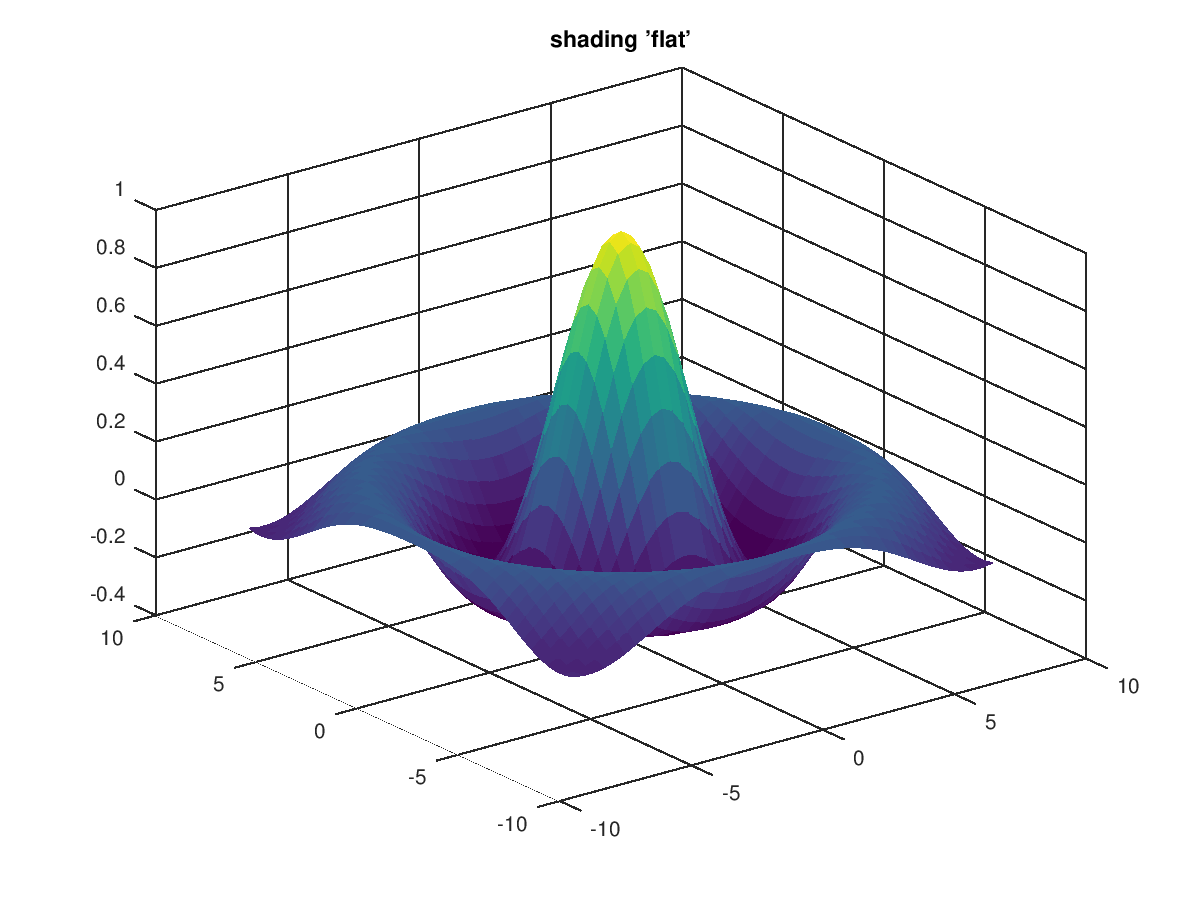
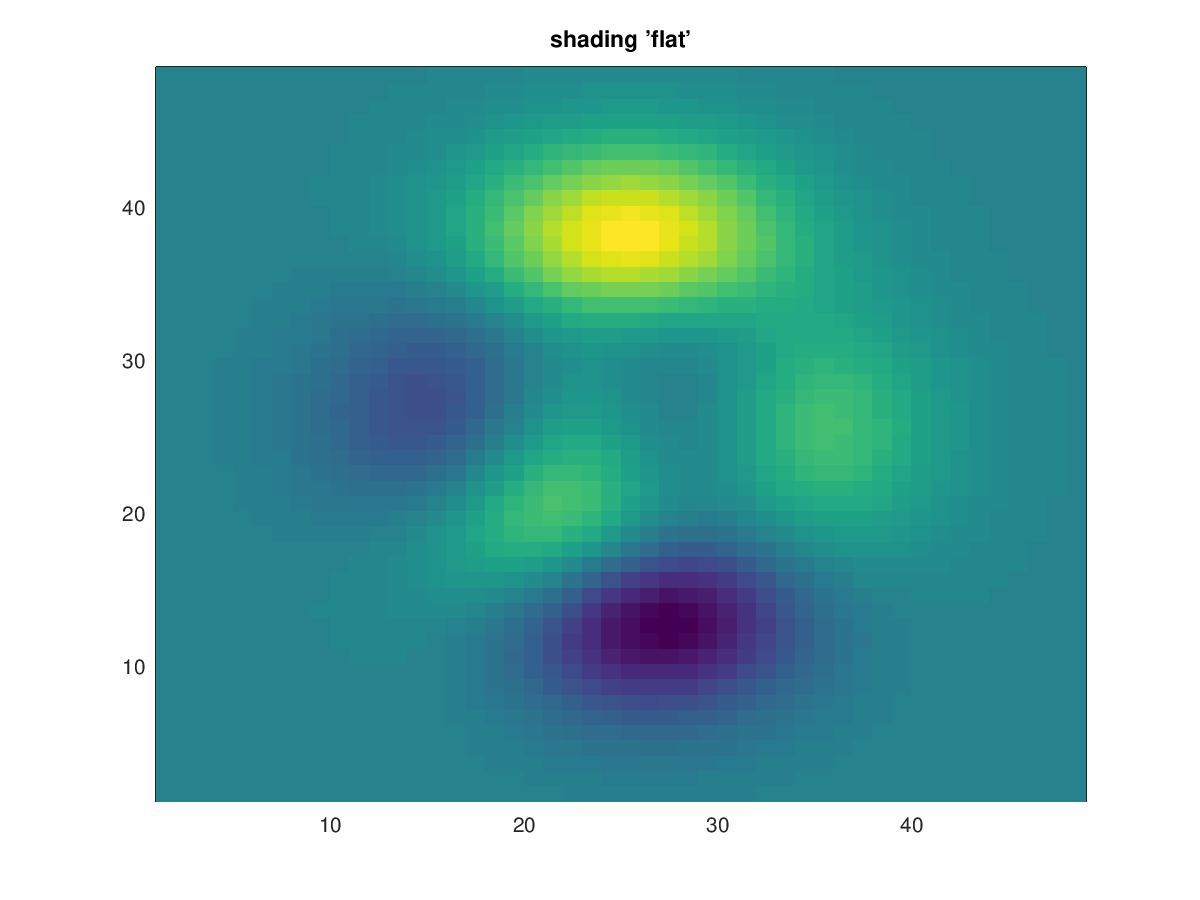
Demonstration 3The following code clf;
colormap ("default");
sombrero ();
shading flat;
title ('shading ''flat''');
Produces the following figure
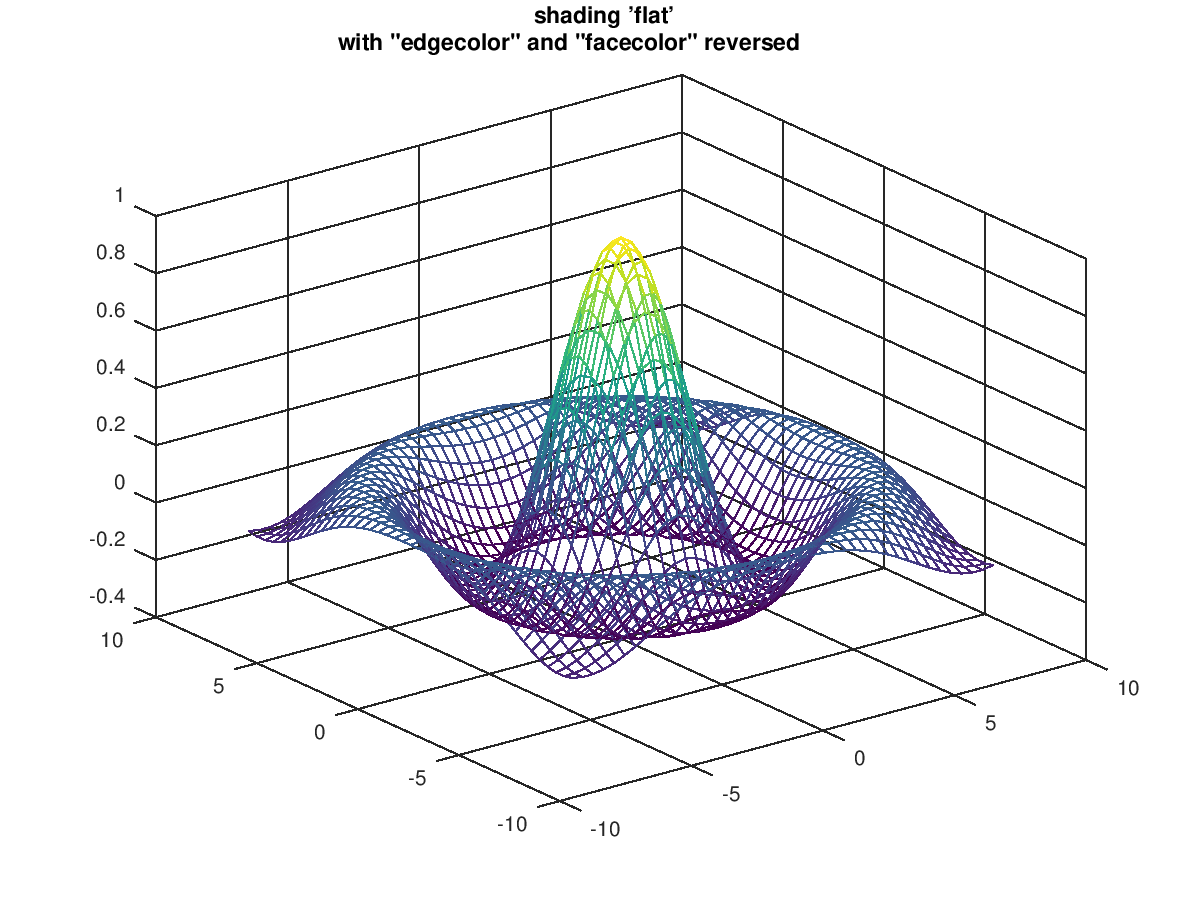
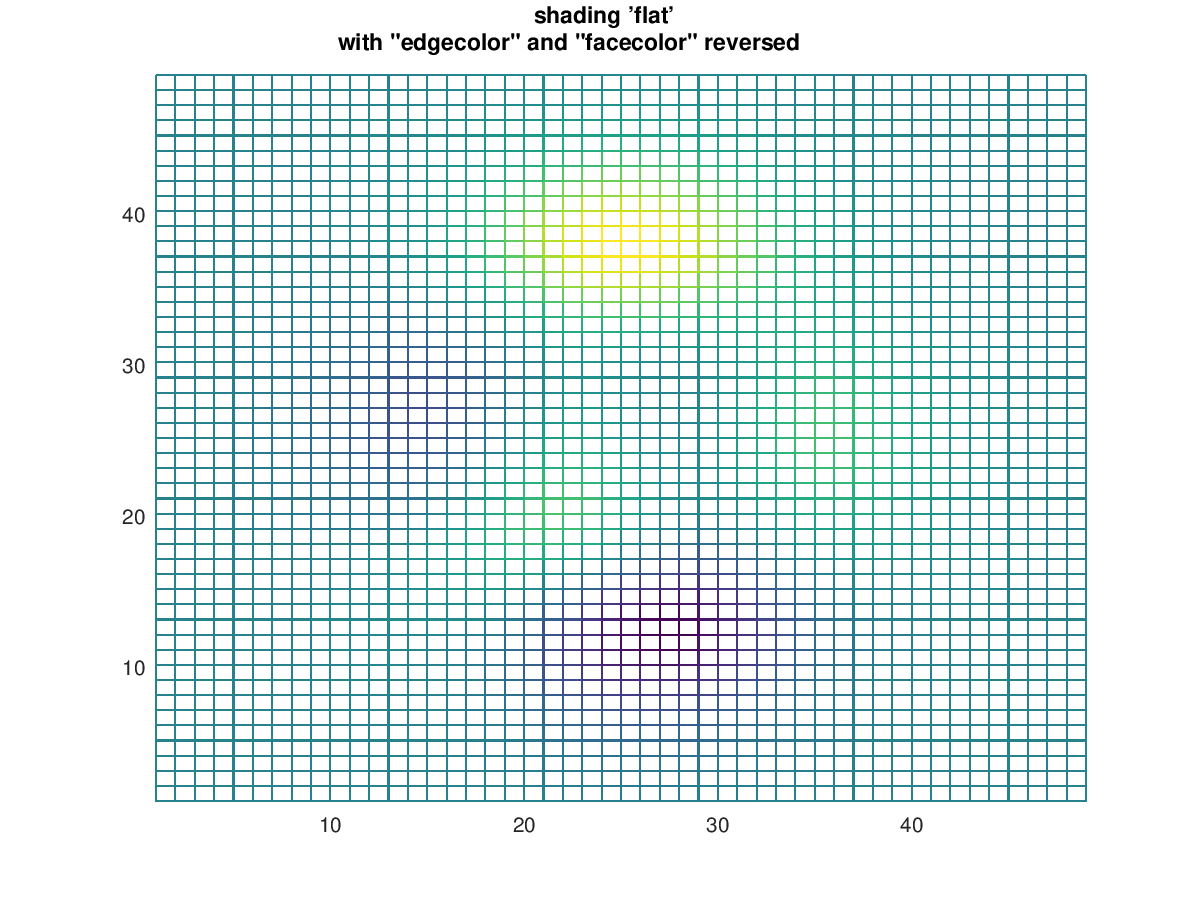
Demonstration 4The following code clf;
colormap ("default");
sombrero ();
shading flat;
h = findobj (gca (), "type", "surface");
facecolor = get (h, "facecolor");
edgecolor = get (h, "edgecolor");
set (h, "edgecolor", facecolor, "facecolor", edgecolor);
title ({'shading ''flat''', 'with "edgecolor" and "facecolor" reversed'});
Produces the following figure
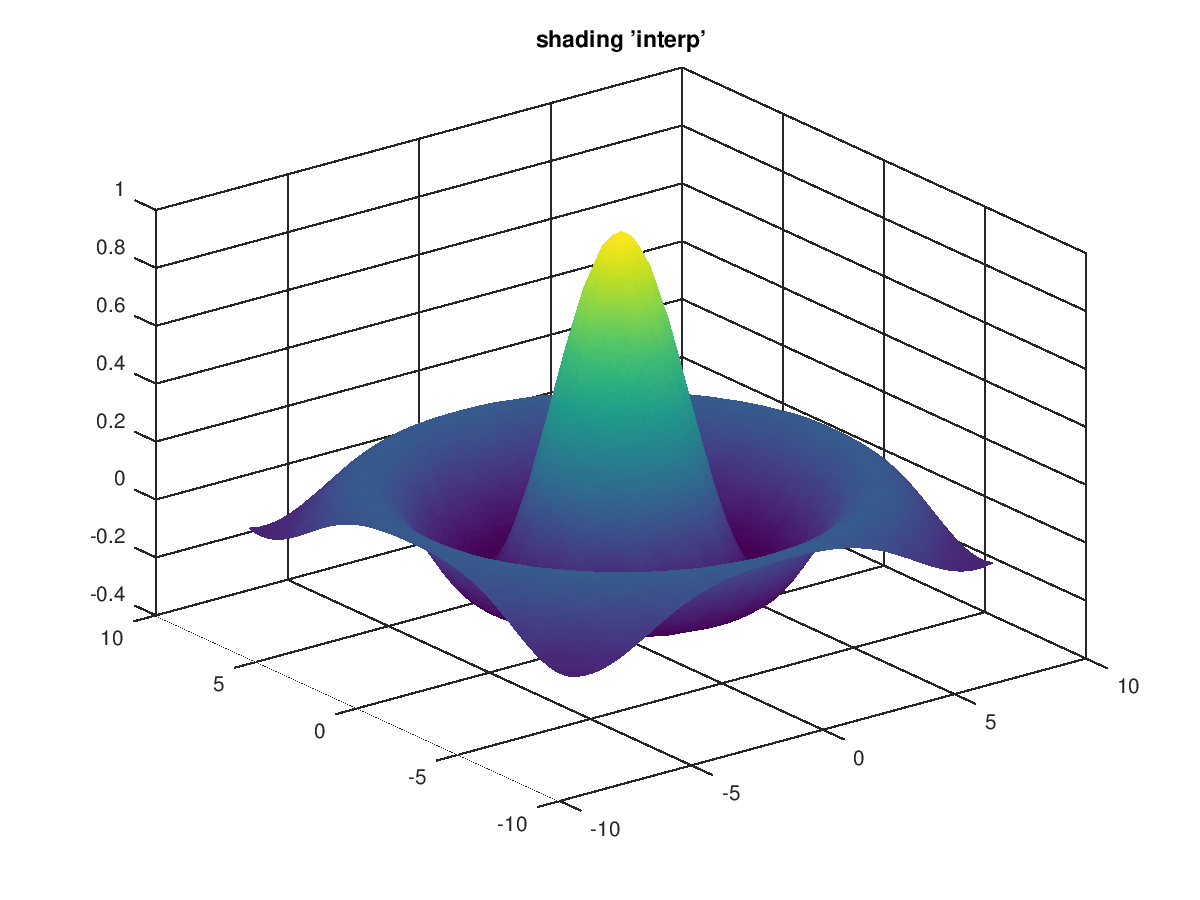
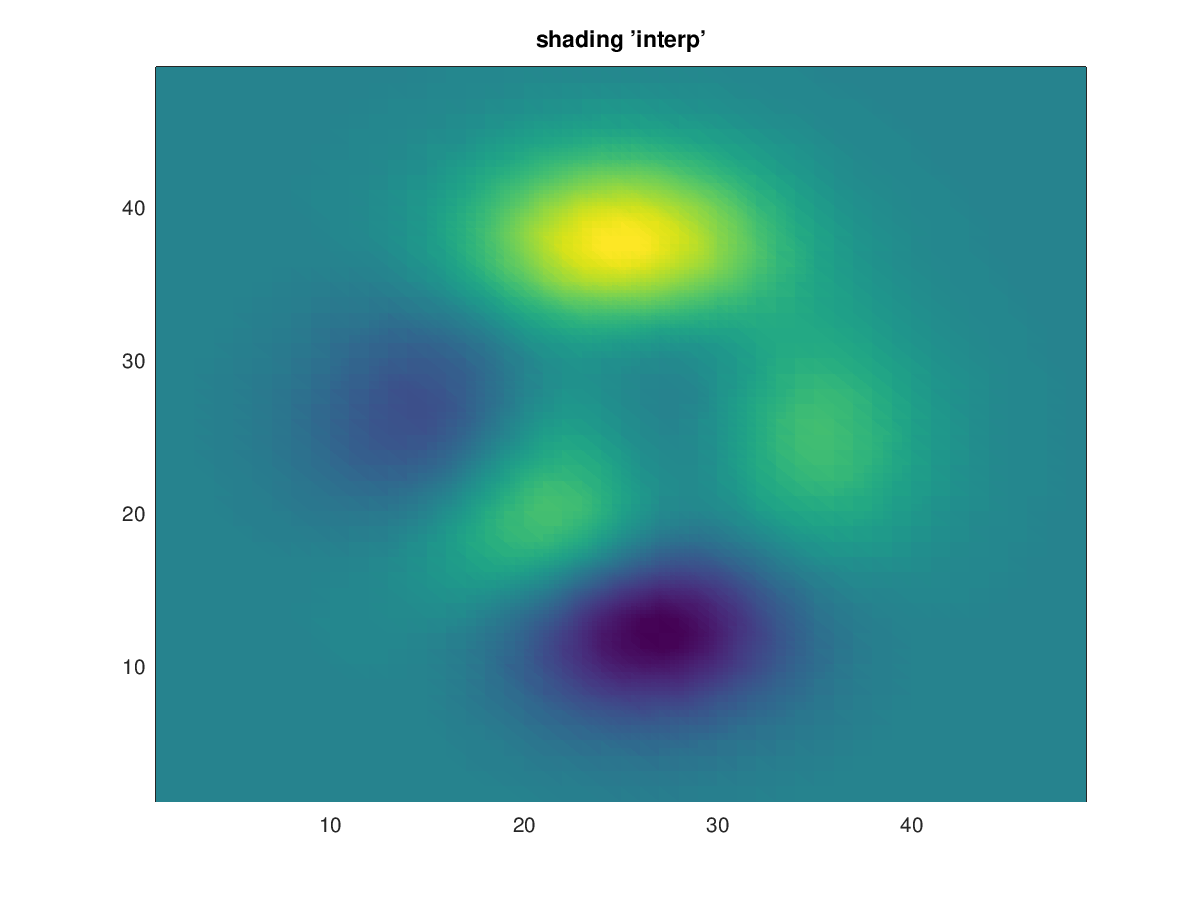
Demonstration 5The following code clf;
colormap ("default");
sombrero ();
shading interp;
title ('shading ''interp''');
Produces the following figure
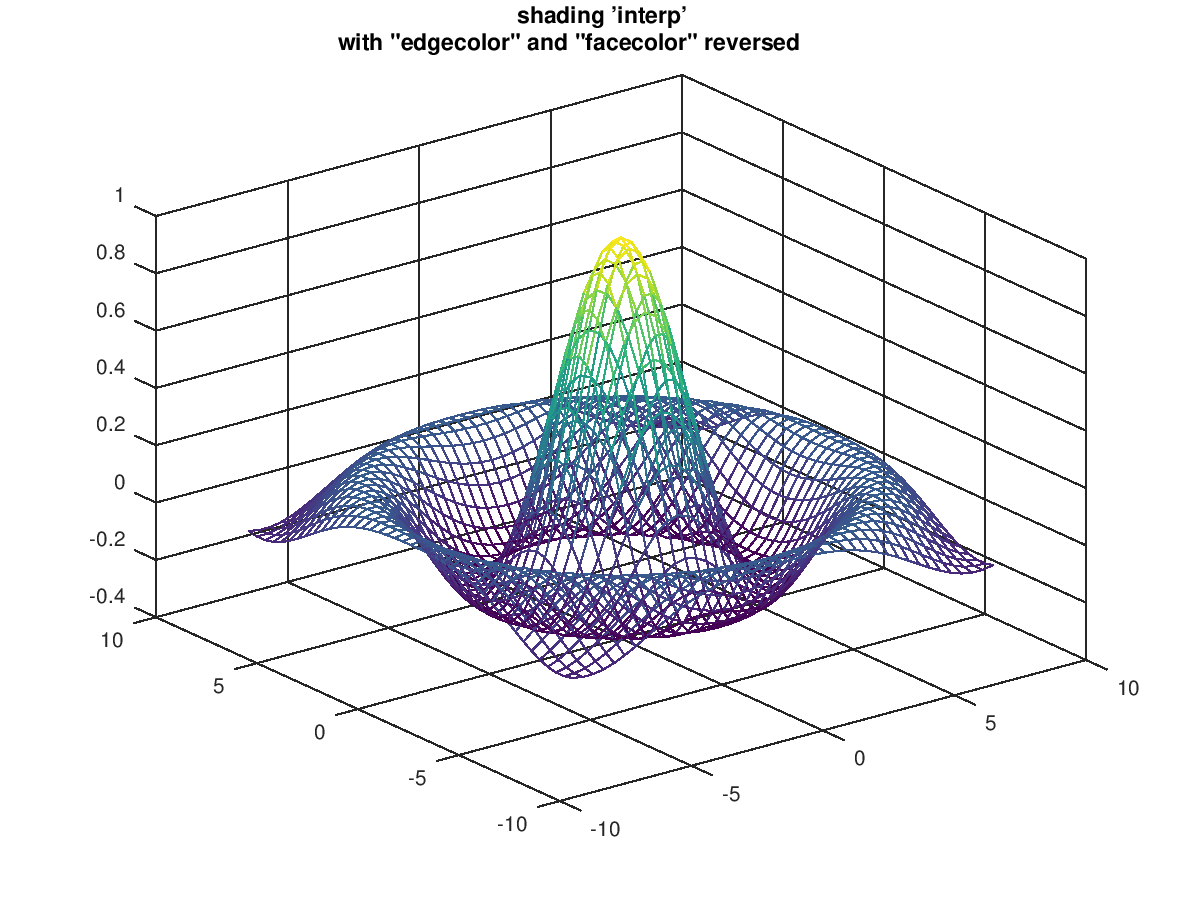
Demonstration 6The following code clf;
colormap ("default");
sombrero ();
shading interp;
h = findobj (gca (), "type", "surface");
facecolor = get (h, "facecolor");
edgecolor = get (h, "edgecolor");
set (h, "edgecolor", facecolor, "facecolor", edgecolor);
title ({'shading ''interp''', 'with "edgecolor" and "facecolor" reversed'});
Produces the following figure
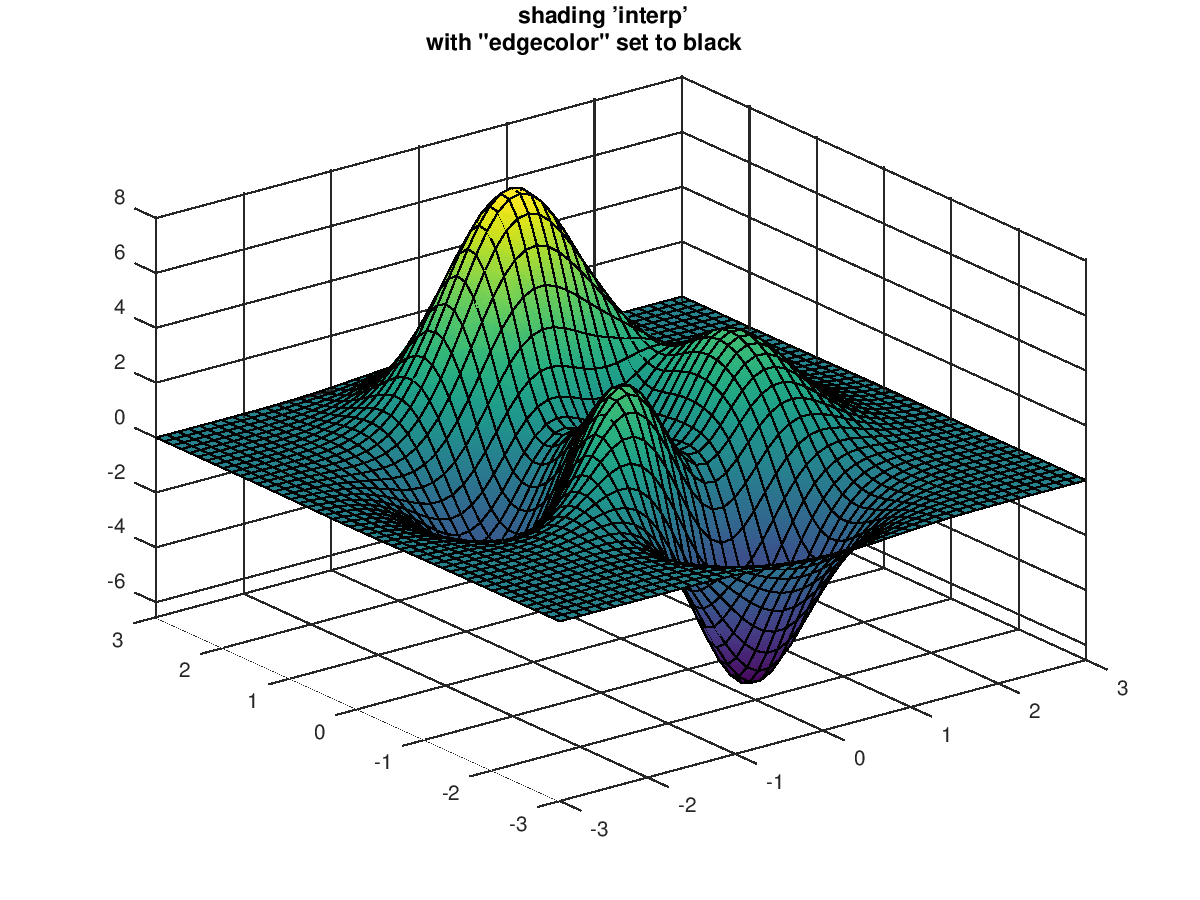
Demonstration 7The following code clf;
colormap ("default");
peaks ();
shading interp;
h = findobj (gca (), "type", "surface");
set (h, "edgecolor", "k");
title ({'shading ''interp''', 'with "edgecolor" set to black'});
Produces the following figure
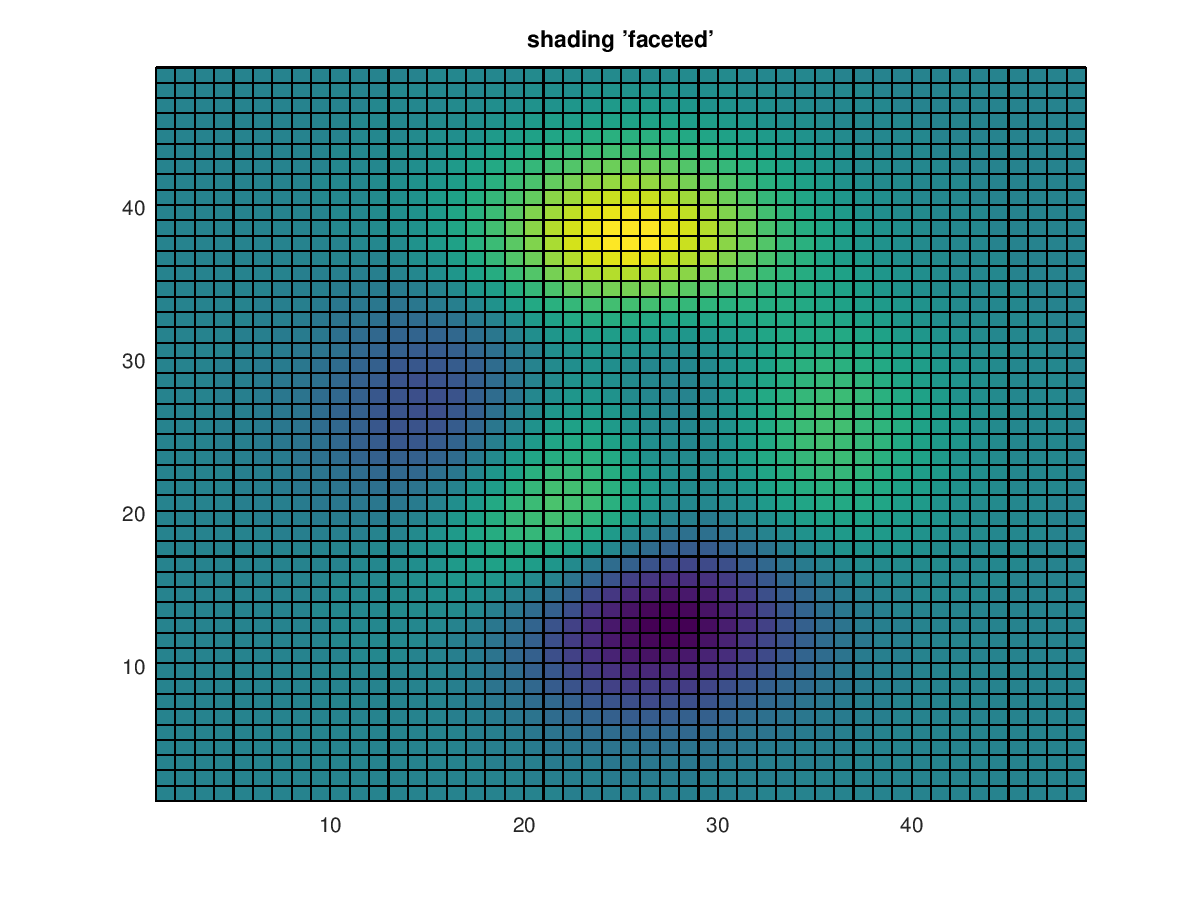
Demonstration 8The following code clf;
colormap ("default");
pcolor (peaks ());
shading faceted;
title ('shading ''faceted''');
Produces the following figure
Demonstration 9The following code clf;
colormap ("default");
pcolor (peaks ());
shading faceted;
h = findobj (gca (), "type", "surface");
facecolor = get (h, "facecolor");
edgecolor = get (h, "edgecolor");
set (h, "edgecolor", facecolor, "facecolor", edgecolor);
title ({'shading ''faceted''', 'with "edgecolor" and "facecolor" reversed'});
Produces the following figure
Demonstration 10The following code clf;
colormap ("default");
pcolor (peaks ());
shading flat;
title ('shading ''flat''');
Produces the following figure
Demonstration 11The following code clf;
colormap ("default");
pcolor (peaks ());
shading flat;
h = findobj (gca (), "type", "surface");
facecolor = get (h, "facecolor");
edgecolor = get (h, "edgecolor");
set (h, "edgecolor", facecolor, "facecolor", edgecolor);
title ({'shading ''flat''', 'with "edgecolor" and "facecolor" reversed'});
Produces the following figure
Demonstration 12The following code clf;
colormap ("default");
pcolor (peaks ());
shading interp;
title ('shading ''interp''');
Produces the following figure
Demonstration 13The following code clf;
colormap ("default");
pcolor (peaks ());
shading interp;
h = findobj (gca (), "type", "surface");
facecolor = get (h, "facecolor");
edgecolor = get (h, "edgecolor");
set (h, "edgecolor", facecolor, "facecolor", edgecolor);
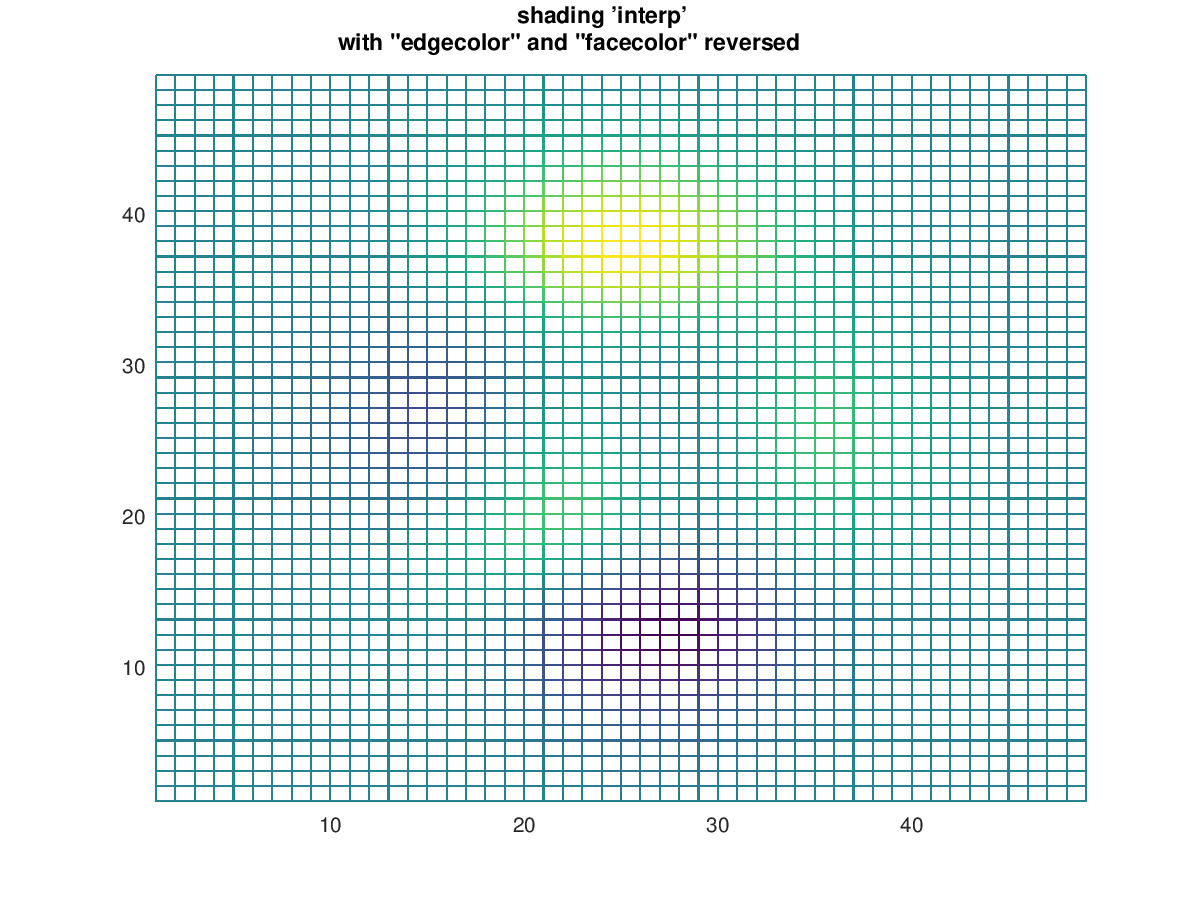
title ({'shading ''interp''', 'with "edgecolor" and "facecolor" reversed'});
Produces the following figure
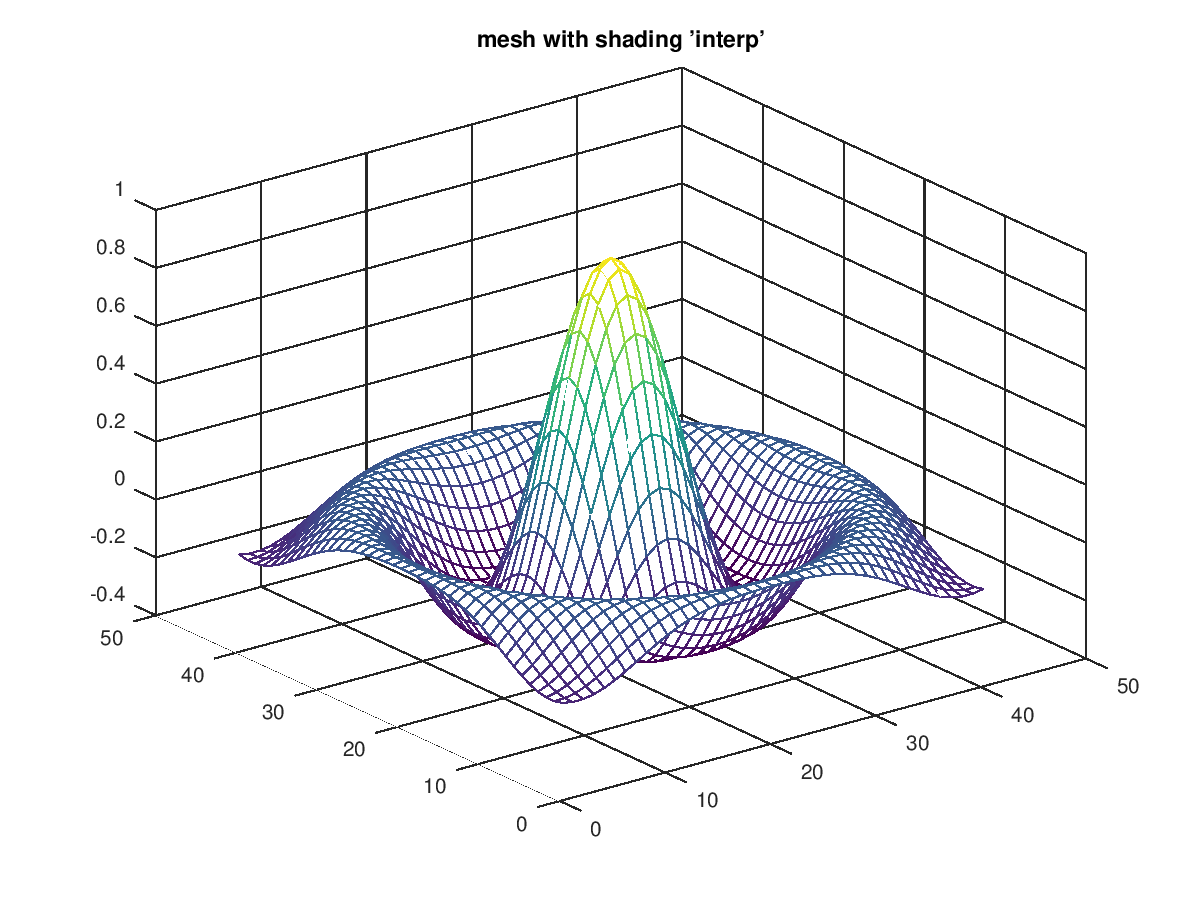
Demonstration 14The following code clf;
colormap ('default');
mesh (sombrero ());
shading interp;
title ('mesh with shading ''interp''');
Produces the following figure
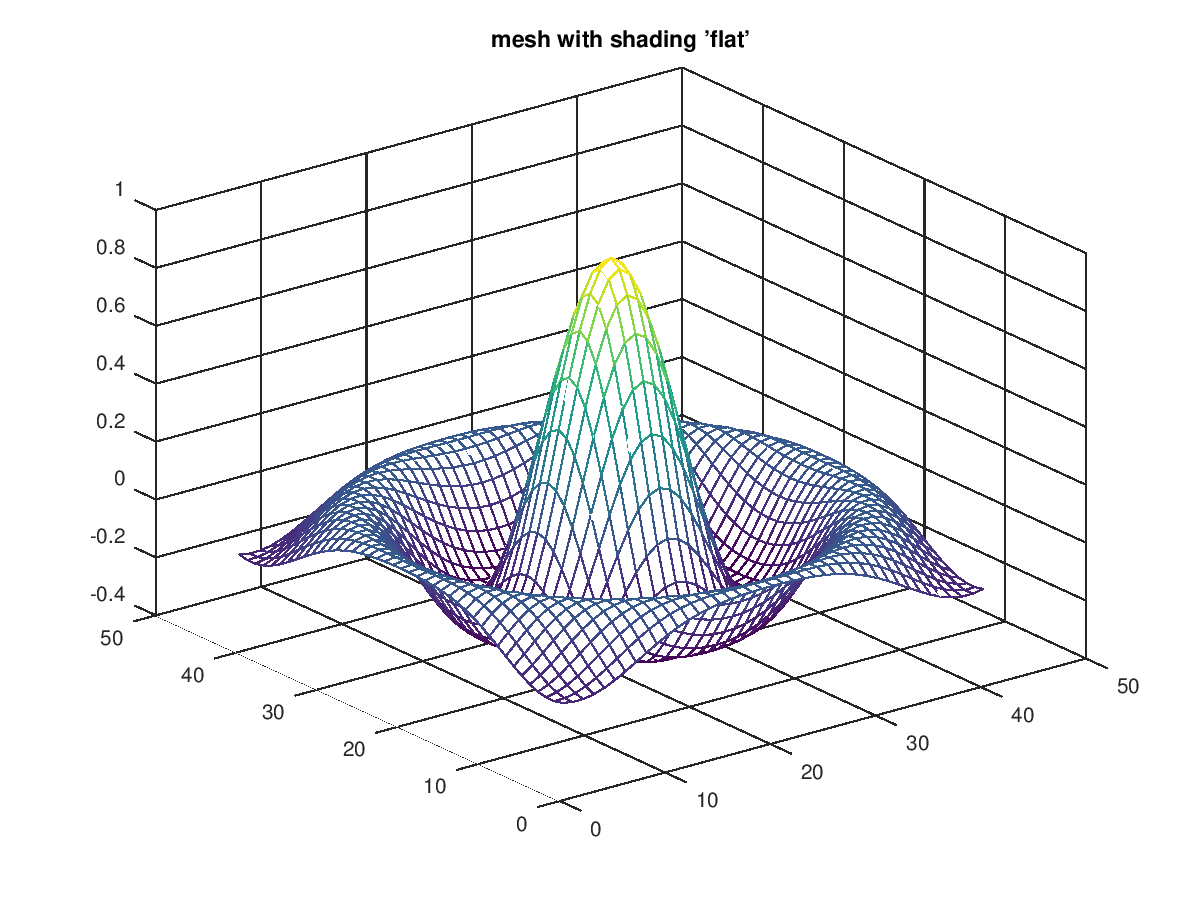
Demonstration 15The following code clf;
colormap ('default');
mesh (sombrero ());
shading flat;
title ('mesh with shading ''flat''');
Produces the following figure
Package: octave | |||||||||||||||||||||||||||||||||
| You are visitor 01402503 — GeezerVison does not store the pages you look up. Best viewed with Netscape Navigator 4.7 or Internet Explorer 6 at 800×600. No cookies required. |