GV

GeezerVison

The World Wide Web, restored to 800 pixels of glory.

Home|About|Gaming cabinet|Archives|How it works|Starter sites

On this site

  • v2.15.0+cu132
  • Intro
  • Learn the Basics
  • Introduction to PyTorch - YouTube Series
  • Deep Learning with PyTorch: A 60 Minute Blitz
  • Learning PyTorch with Examples
  • What is torch.nn really?
  • NLP from Scratch
  • Data Loading Optimization in PyTorch
  • Visualizing Gradients
  • Compilers
  • Introduction to torch.compile
  • torch.compile End-to-End Tutorial
  • Inductor CPU backend debugging and profiling

This view

  • Original page
  • New address

GeezerVison is showing docs.pytorch.org — Welcome to PyTorch Tutorials — PyTorch Tutorials 2.15.0+cu132 documentation

index
Run in Google Colab Colab Download Notebook Notebook View on GitHub GitHub

Welcome to PyTorch Tutorials#

What’s new in PyTorch tutorials?

  • Data Loading Optimization in PyTorch

  • Distributed Training with Ray Train

  • Serve PyTorch models at scale with Ray Serve

  • Hyperparameter tuning using Ray Tune

  • Memory Profiling with Mosaic

  • Using Variable Length Attention in PyTorch

  • DebugMode: Recording Dispatched Operations and Numerical Debugging

Learn the Basics

Familiarize yourself with PyTorch concepts and modules. Learn how to load data, build deep neural networks, train and save your models in this quickstart guide.

Get started with PyTorch


PyTorch Recipes

Bite-size, ready-to-deploy PyTorch code examples.

Explore Recipes


Learn the Basics

A step-by-step guide to building a complete ML workflow with PyTorch.

Getting-Started

Introduction to PyTorch on YouTube

An introduction to building a complete ML workflow with PyTorch. Follows the PyTorch Beginner Series on YouTube.

Getting-Started

Learning PyTorch with Examples

This tutorial introduces the fundamental concepts of PyTorch through self-contained examples.

Getting-Started

What is torch.nn really?

Use torch.nn to create and train a neural network.

Getting-Started

Visualizing Models, Data, and Training with TensorBoard

Learn to use TensorBoard to visualize data and model training.

Interpretability,Getting-Started,TensorBoard

Good usage of `non_blocking` and `pin_memory()` in PyTorch

A guide on best practices to copy data from CPU to GPU.

Getting-Started

Data Loading Optimization in PyTorch

Optimize DataLoader configuration with num_workers, pin_memory, persistent_workers for maximum training throughput.

Getting-Started,Best-Practice

Understanding requires_grad, retain_grad, Leaf, and Non-leaf Tensors

Learn the subtleties of requires_grad, retain_grad, leaf, and non-leaf tensors

Getting-Started

Visualizing Gradients in PyTorch

Visualize the gradient flow of a network.

Getting-Started

TorchVision Object Detection Finetuning Tutorial

Finetune a pre-trained Mask R-CNN model.

Image/Video

Transfer Learning for Computer Vision Tutorial

Train a convolutional neural network for image classification using transfer learning.

Image/Video

Adversarial Example Generation

Train a convolutional neural network for image classification using transfer learning.

Image/Video

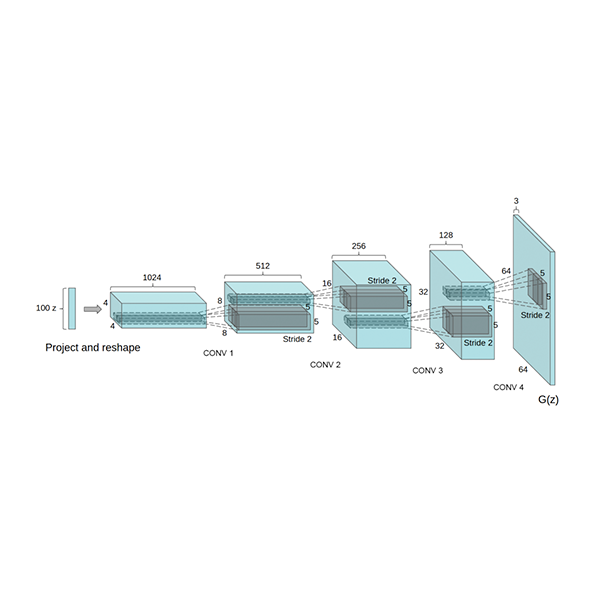
DCGAN Tutorial

Train a generative adversarial network (GAN) to generate new celebrities.

Image/Video

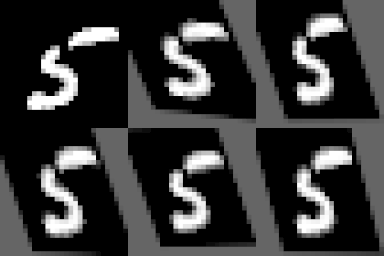
Spatial Transformer Networks Tutorial

Learn how to augment your network using a visual attention mechanism.

Image/Video

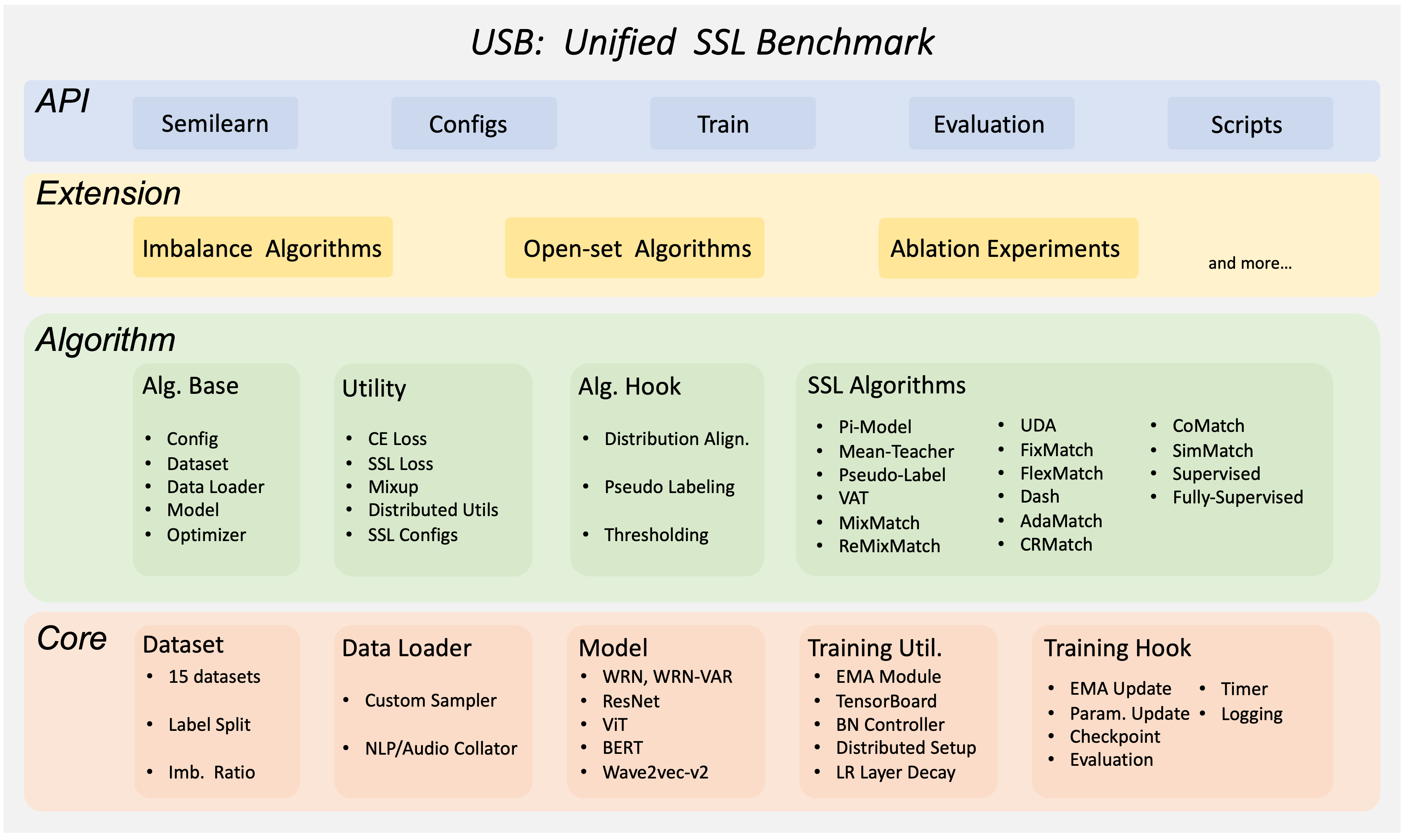
Semi-Supervised Learning Tutorial Based on USB

Learn how to train semi-supervised learning algorithms (on custom data) using USB and PyTorch.

Image/Video

Distributed Training with Ray Train

Pre-train a transformer language model across multiple GPUs using PyTorch and Ray Train.

Text,Best-Practice,Ray-Distributed,Parallel-and-Distributed-Training

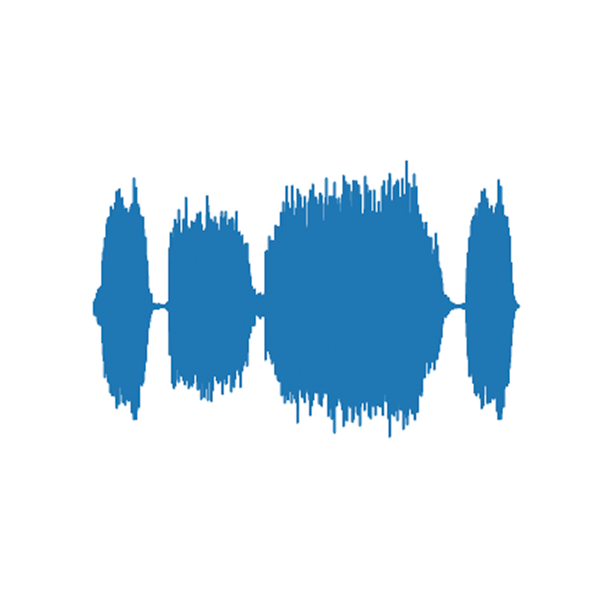
Audio IO

Learn to load data with torchaudio.

Audio

Audio Resampling

Learn to resample audio waveforms using torchaudio.

Audio

Audio Data Augmentation

Learn to apply data augmentations using torchaudio.

Audio

Audio Feature Extractions

Learn to extract features using torchaudio.

Audio

Audio Feature Augmentation

Learn to augment features using torchaudio.

Audio

Audio Datasets

Learn to use torchaudio datasets.

Audio

Automatic Speech Recognition with Wav2Vec2 in torchaudio

Learn how to use torchaudio's pretrained models for building a speech recognition application.

Audio

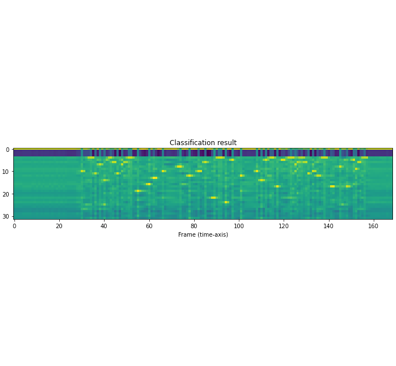
Speech Command Classification

Learn how to correctly format an audio dataset and then train/test an audio classifier network on the dataset.

Audio

Text-to-Speech with torchaudio

Learn how to use torchaudio's pretrained models for building a text-to-speech application.

Audio

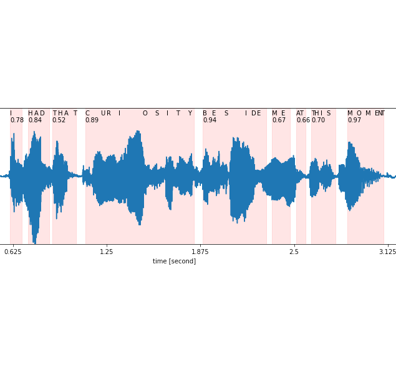
Forced Alignment with Wav2Vec2 in torchaudio

Learn how to use torchaudio's Wav2Vec2 pretrained models for aligning text to speech

Audio

NLP from Scratch: Classifying Names with a Character-level RNN

Build and train a basic character-level RNN to classify word from scratch without the use of torchtext. First in a series of three tutorials.

NLP

NLP from Scratch: Generating Names with a Character-level RNN

After using character-level RNN to classify names, learn how to generate names from languages. Second in a series of three tutorials.

NLP

NLP from Scratch: Translation with a Sequence-to-sequence Network and Attention

This is the third and final tutorial on doing “NLP From Scratch”, where we write our own classes and functions to preprocess the data to do our NLP modeling tasks.

NLP

Exporting a PyTorch model to ONNX using TorchDynamo backend and Running it using ONNX Runtime

Build a image classifier model in PyTorch and convert it to ONNX before deploying it with ONNX Runtime.

Production,ONNX,Backends

Extending the ONNX exporter operator support

Demonstrate end-to-end how to address unsupported operators in ONNX.

Production,ONNX,Backends

Exporting a model with control flow to ONNX

Demonstrate how to handle control flow logic while exporting a PyTorch model to ONNX.

Production,ONNX,Backends

Reinforcement Learning (DQN)

Learn how to use PyTorch to train a Deep Q Learning (DQN) agent on the CartPole-v0 task from the OpenAI Gym.

Reinforcement-Learning

Reinforcement Learning (PPO) with TorchRL

Learn how to use PyTorch and TorchRL to train a Proximal Policy Optimization agent on the Inverted Pendulum task from Gym.

Reinforcement-Learning

Train a Mario-playing RL Agent

Use PyTorch to train a Double Q-learning agent to play Mario.

Reinforcement-Learning

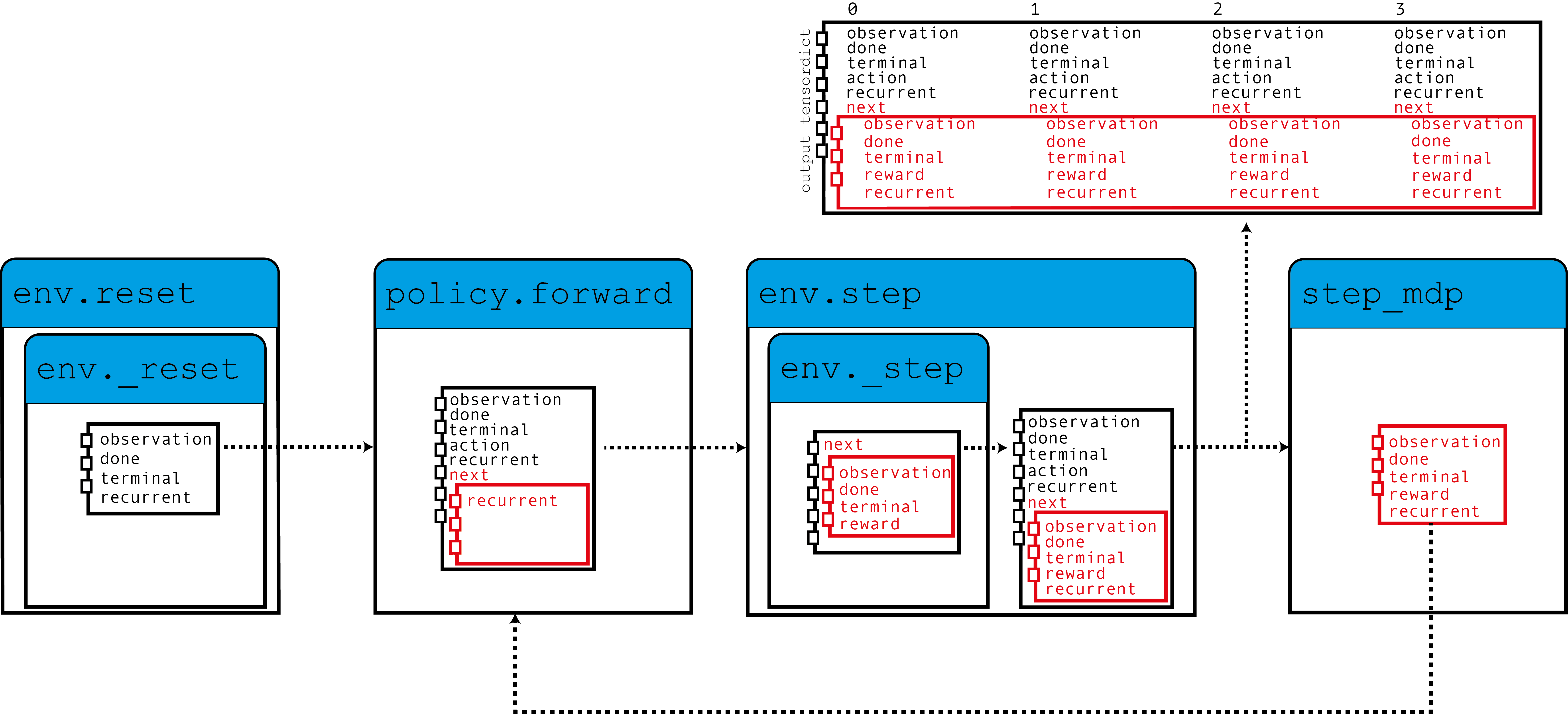
Recurrent DQN

Use TorchRL to train recurrent policies

Reinforcement-Learning

Code a DDPG Loss

Use TorchRL to code a DDPG Loss

Reinforcement-Learning

Writing your environment and transforms

Use TorchRL to code a Pendulum

Reinforcement-Learning

Serving PyTorch Tutorial

Deploy and scale a PyTorch model with Ray Serve.

Production,Best-Practice,Ray-Distributed,Ecosystem

Profiling PyTorch

Learn how to profile a PyTorch application

Profiling

Profiling PyTorch

Introduction to Holistic Trace Analysis

Profiling

Profiling PyTorch

Trace Diff using Holistic Trace Analysis

Profiling

Memory Profiling with Mosaic

Learn how to use the Mosaic memory profiler to visualize GPU memory usage and identify memory optimization opportunities in PyTorch models.

Model-Optimization,Best-Practice,Profiling

Building a Simple Performance Profiler with FX

Build a simple FX interpreter to record the runtime of op, module, and function calls and report statistics

FX

(beta) Channels Last Memory Format in PyTorch

Get an overview of Channels Last memory format and understand how it is used to order NCHW tensors in memory preserving dimensions.

Memory-Format,Best-Practice,Frontend-APIs

Using the PyTorch C++ Frontend

Walk through an end-to-end example of training a model with the C++ frontend by training a DCGAN – a kind of generative model – to generate images of MNIST digits.

Frontend-APIs,C++

PyTorch Custom Operators Landing Page

This is the landing page for all things related to custom operators in PyTorch.

Extending-PyTorch,Frontend-APIs,C++,CUDA

Custom Python Operators

Create Python custom operators with correct mutation behavior, fake kernels, autograd, and opcheck.

Extending-PyTorch,Frontend-APIs,C++,CUDA

Compiled Autograd: Capturing a larger backward graph for ``torch.compile``

Learn how to use compiled autograd to capture a larger backward graph.

Model-Optimization,CUDA

Custom C++ and CUDA Operators

How to extend PyTorch with custom C++ and CUDA operators.

Extending-PyTorch,Frontend-APIs,C++,CUDA

Autograd in C++ Frontend

The autograd package helps build flexible and dynamic neural netorks. In this tutorial, explore several examples of doing autograd in PyTorch C++ frontend

Frontend-APIs,C++

Registering a Dispatched Operator in C++

The dispatcher is an internal component of PyTorch which is responsible for figuring out what code should actually get run when you call a function like torch::add.

Extending-PyTorch,Frontend-APIs,C++

Extending Dispatcher For a New Backend in C++

Learn how to extend the dispatcher to add a new device living outside of the pytorch/pytorch repo and maintain it to keep in sync with native PyTorch devices.

Extending-PyTorch,Frontend-APIs,C++

Facilitating New Backend Integration by PrivateUse1

Learn how to integrate a new backend living outside of the pytorch/pytorch repo and maintain it to keep in sync with the native PyTorch backend.

Extending-PyTorch,Frontend-APIs,C++

Custom Function Tutorial: Double Backward

Learn how to write a custom autograd Function that supports double backward.

Extending-PyTorch,Frontend-APIs

Custom Function Tutorial: Fusing Convolution and Batch Norm

Learn how to create a custom autograd Function that fuses batch norm into a convolution to improve memory usage.

Extending-PyTorch,Frontend-APIs

Forward-mode Automatic Differentiation

Learn how to use forward-mode automatic differentiation.

Frontend-APIs

Jacobians, Hessians, hvp, vhp, and more

Learn how to compute advanced autodiff quantities using torch.func

Frontend-APIs

Model Ensembling

Learn how to ensemble models using torch.vmap

Frontend-APIs

Per-Sample-Gradients

Learn how to compute per-sample-gradients using torch.func

Frontend-APIs

Neural Tangent Kernels

Learn how to compute neural tangent kernels using torch.func

Frontend-APIs

Performance Profiling in PyTorch

Learn how to use the PyTorch Profiler to benchmark your module's performance.

Model-Optimization,Best-Practice,Profiling

CUDA Graph Kernel Annotations and Profiling

Learn how to annotate CUDA graph kernels for semantic profiling traces with custom visualization lanes.

Model-Optimization,Best-Practice,Profiling,CUDA

Hyperparameter Tuning Tutorial

Learn how to use Ray Tune to find the best performing set of hyperparameters for your model.

Model-Optimization,Best-Practice,Ray-Distributed,Parallel-and-Distributed-Training

Parametrizations Tutorial

Learn how to use torch.nn.utils.parametrize to put constraints on your parameters (e.g. make them orthogonal, symmetric positive definite, low-rank...)

Model-Optimization,Best-Practice

Pruning Tutorial

Learn how to use torch.nn.utils.prune to sparsify your neural networks, and how to extend it to implement your own custom pruning technique.

Model-Optimization,Best-Practice

How to save memory by fusing the optimizer step into the backward pass

Learn a memory-saving technique through fusing the optimizer step into the backward pass using memory snapshots.

Model-Optimization,Best-Practice,CUDA,Frontend-APIs

(beta) Accelerating BERT with semi-structured sparsity

Train BERT, prune it to be 2:4 sparse, and then accelerate it to achieve 2x inference speedups with semi-structured sparsity and torch.compile.

Text,Model-Optimization

Multi-Objective Neural Architecture Search with Ax

Learn how to use Ax to search over architectures find optimal tradeoffs between accuracy and latency.

Model-Optimization,Best-Practice,Ax,TorchX

torch.compile Tutorial

Speed up your models with minimal code changes using torch.compile, the latest PyTorch compiler solution.

Model-Optimization

torch.compile End-to-End Tutorial

An example of applying torch.compile to a real model, demonstrating speedups.

Model-Optimization

Building a Convolution/Batch Norm fuser in torch.compile

Build a simple pattern matcher pass that fuses batch norm into convolution to improve performance during inference.

Model-Optimization

Inductor CPU Backend Debugging and Profiling

Learn the usage, debugging and performance profiling for ``torch.compile`` with Inductor CPU backend.

Model-Optimization

(beta) Implementing High-Performance Transformers with SCALED DOT PRODUCT ATTENTION

This tutorial explores the new torch.nn.functional.scaled_dot_product_attention and how it can be used to construct Transformer components.

Model-Optimization,Attention,Transformer

Knowledge Distillation in Convolutional Neural Networks

Learn how to improve the accuracy of lightweight models using more powerful models as teachers.

Model-Optimization,Image/Video

Accelerating PyTorch Transformers by replacing nn.Transformer with Nested Tensors and torch.compile()

This tutorial goes over recommended best practices for implementing Transformers with native PyTorch.

Transformer

PyTorch Distributed Overview

Briefly go over all concepts and features in the distributed package. Use this document to find the distributed training technology that can best serve your application.

Parallel-and-Distributed-Training

Distributed Data Parallel in PyTorch - Video Tutorials

This series of video tutorials walks you through distributed training in PyTorch via DDP.

Parallel-and-Distributed-Training

Single-Machine Model Parallel Best Practices

Learn how to implement model parallel, a distributed training technique which splits a single model onto different GPUs, rather than replicating the entire model on each GPU

Parallel-and-Distributed-Training

Getting Started with Distributed Data Parallel

Learn the basics of when to use distributed data paralle versus data parallel and work through an example to set it up.

Parallel-and-Distributed-Training

Writing Distributed Applications with PyTorch

Set up the distributed package of PyTorch, use the different communication strategies, and go over some the internals of the package.

Parallel-and-Distributed-Training

Large Scale Transformer model training with Tensor Parallel

Learn how to train large models with Tensor Parallel package.

Parallel-and-Distributed-Training

Customize Process Group Backends Using Cpp Extensions

Extend ProcessGroup with custom collective communication implementations.

Parallel-and-Distributed-Training

Introduction to Distributed Pipeline Parallelism

Demonstrate how to implement pipeline parallelism using torch.distributed.pipelining

Parallel-and-Distributed-Training

Getting Started with Fully Sharded Data Parallel (FSDP2)

Learn how to train models with Fully Sharded Data Parallel (fully_shard) package.

Parallel-and-Distributed-Training

Introduction to Libuv TCPStore Backend

TCPStore now uses a new server backend for faster connection and better scalability.

Parallel-and-Distributed-Training

Interactive Distributed Applications with Monarch

Learn how to spin up distributed applications using Monarch's singler controller model

Parallel-and-Distributed-Training

Interactive Distributed Applications with Monarch

Learn how to use Monarch's actor framework with TorchTitan to simplify large-scale distributed training across SLURM clusters.

Parallel-and-Distributed-Training

Debugging Hangs with Flight Recorder Using TorchComms and Debug Server

Diagnose hangs using the TorchComms Flight Recorder and Debug Server periodic dumps.

Parallel-and-Distributed-Training,Debugging

Exporting to ExecuTorch Tutorial

Learn about how to use ExecuTorch, a unified ML stack for lowering PyTorch models to edge devices.

Edge

Running an ExecuTorch Model in C++ Tutorial

Learn how to load and execute an ExecuTorch model in C++

Edge

Using the ExecuTorch SDK to Profile a Model

Explore how to use the ExecuTorch SDK to profile, debug, and visualize ExecuTorch models

Edge

Building an ExecuTorch iOS Demo App

Explore how to set up the ExecuTorch iOS Demo App, which uses the MobileNet v3 model to process live camera images leveraging three different backends: XNNPACK, Core ML, and Metal Performance Shaders (MPS).

Edge

Building an ExecuTorch Android Demo App

Learn how to set up the ExecuTorch Android Demo App for image segmentation tasks using the DeepLab v3 model and XNNPACK FP32 backend.

Edge

Lowering a Model as a Delegate

Learn to accelerate your program using ExecuTorch by applying delegates through three methods: lowering the whole module, composing it with another module, and partitioning parts of a module.

Edge

Introduction to TorchRec

TorchRec is a PyTorch domain library built to provide common sparsity & parallelism primitives needed for large-scale recommender systems.

TorchRec,Recommender

Exploring TorchRec sharding

This tutorial covers the sharding schemes of embedding tables by using EmbeddingPlanner and DistributedModelParallel API.

TorchRec,Recommender


Additional Resources#

Examples of PyTorch
A set of examples around PyTorch in Vision, Text, Reinforcement Learning that you can incorporate in your existing work.

Check Out Examples

Run Tutorials on Google Colab

Learn how to copy tutorial data into Google Drive so that you can run tutorials on Google Colab.

Open

On this page
Edit on GitHub
Show Source
PyTorch Libraries

  • ExecuTorch
  • Helion
  • torchao
  • kineto
  • torchtitan
  • TorchRL
  • torchvision
  • torchaudio
  • tensordict
  • PyTorch on XLA Devices

You are visitor 01402503 — GeezerVison does not store the pages you look up.
Best viewed with Netscape Navigator 4.7 or Internet Explorer 6 at 800×600. No cookies required.