GeezerVisonThe World Wide Web, restored to 800 pixels of glory. |
| Home|About|Gaming cabinet|Archives|How it works|Starter sites |
GeezerVison is showing teamtrees.org — Help Us Plant 24 Million Trees - Join #TeamTrees 

Join #TeamTrees!$1 plants a tree Details
We’ll send a certificate to your email address, which you can forward along or print. (here’s an example)

PaymentSelect a month
Select a year
Select a country
$XXUSD DonationThis site is protected by reCAPTCHA and the Google Privacy Policy and Terms of Service apply.
$XXUSD DonationThis site is protected by reCAPTCHA and the Google Privacy Policy and Terms of Service apply. Please complete the verification below to complete your donation
Thank YouYou’re a good human and are now officially a member of #TeamTrees!Together, we’re planting millions of trees!  If you gave your trees as a gift, please check your inbox for the certificate to share!
Team name 
0
Trees Planted

Every dollar plants one tree You just joined the team Archrival!
Copy
Take a screenshot, share it on social, and tag 3 friends to join #TeamTrees Leaderboard
Search

Most Recent Most Trees 


Delise M. Simmons 1 tree
2026-11-12T11:20:28.2070000Z 
Sebastian 20 trees
2026-11-12T10:50:19.8570000Z
loraxsnoringlax 10 trees
2026-11-12T07:29:12.6830000Z
Gideon I am Thankful for the trees! 6 trees
2026-11-12T00:40:34.3570000Z
FedeMatte Matteo e Feder6 We love nature 5 trees
2026-11-11T19:48:09.1930000Z
Anonymous 1 tree
2026-11-11T16:38:46.8370000Z 
Solway Homes 1447 Transcoro 300 trees
2026-11-11T15:15:15.6130000Z
“Zia” 5 trees
2026-11-11T02:46:19.5130000Z
GAIAS2050.com GAIAS 100% BAMBOO TOILET PAPER #GaiaSustainability donation w/ purchase 1 tree
2026-11-10T23:10:17.1600000Z
Anonymous 1 tree
2026-11-10T22:39:45.5330000Z 

Tobi Lutke For the Lorax 1,000,001 trees
2019-10-30T21:00:00.0000000Z
Elon Musk For Treebeard 1,000,000 trees
2019-10-30T00:00:00.0000000Z
Marc Benioff Inspired by Treelon 900,000 trees
2019-11-06T22:41:09.4200000Z
Plants Vs. Zombies In the spirit of Feastivus 500,000 trees
2019-12-03T15:11:16.8630000Z
Scott Chacon 250,001 trees
2019-12-17T22:26:32.5600000Z
ELF Development A/S Because we care! 250,000 trees
2019-10-30T19:58:50.0230000Z
Susan Wojcicki 200,000 trees
2019-10-30T20:00:00.0000000Z
Jack Dorsey 200,000 trees
2019-10-31T07:11:23.2300000Z
Jack Dorsey 150,000 trees
2019-10-30T01:01:24.9070000Z
Random Character Collective From the Golden Invisible Friend charity 108,500 trees
2023-01-09T21:55:14.0170000Z
OneRecipeOneTree 🥗=🌲 260,999 total Go Cookpad Community 105,020 trees
2019-12-30T17:54:28.2170000Z
Bitcasino.io Let's keep the world fun, fast & fair 101,010 trees
2019-12-13T16:20:55.4370000Z
Sneaker Trees A foundation with sole 100,300 trees
2019-12-19T21:30:46.4300000Z
Discovery Channel From Discovery Watch & Plant viewers! 100,200 trees
2019-12-04T16:54:50.2200000Z
Jean-Michel Lemieux We are groot. For sneaker twitter. 100,100 trees
2019-10-31T15:00:00.0000000Z
MrBeast Someone PLEASE Take This Spot :) 100,002 trees
2019-10-26T15:45:00.0000000Z
Alan Walker I want to plant one of the trees! 100,001 trees
2019-10-26T08:49:18.2630000Z
MrBeast I dare you to take this space from me :) 100,000 trees
2019-10-25T19:00:00.0000000Z
Verizon Green Team Tree-rific initiative! @VerizonGreen is happy to be a part! 100,000 trees
2019-10-31T15:10:00.0000000Z
RAK 100,000 trees
2019-11-20T19:13:47.3630000Z
Verizon Green Team Tree-mendous! Doubling down for Earth 100,000 trees
2019-12-17T22:56:17.2670000Z
Anonymous 100,000 trees
2023-03-31T19:47:00.0000000Z
poopiepie 69,420 trees
2019-10-31T13:39:46.0530000Z
OneRecipeOneTree From the Cookpad community 63,235 trees
2019-11-15T11:06:54.1670000Z
Anonymous 60,640 trees
2020-04-24T17:28:04.3030000Z
Clash for Nature - Team Trees Clash of Clans Clash for Nature WINNERS! LET’S GO! 53,400 trees
2023-12-21T13:37:11.5470000Z
Mark Rober So stoked to be part of this! #TeamTrees 51,132 trees
2019-10-25T19:00:00.0000000Z
SSLs.com On behalf of SSLs.com Customers 50,171 trees
2019-12-26T14:50:27.4830000Z
DROP.COM Treecaps from Mech. Keyboards Community 50,170 trees
2019-12-12T14:22:14.4800000Z Planet-Shaping ImpactWhat began as a challenge from MrBeast and Mark Rober inspired millions of people to help plant trees around the world. Arbor Day Foundation continues to turn that support into lasting impact. 
25M+ Trees funded and counting 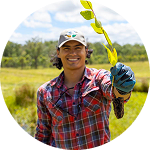
800K+ Donors worldwide 
104 Planting Locations 
What We’re GrowingIn partnership with the Around the world, a brighter, greener future is taking root thanks to supporters like you. The work to get trees in the ground happens fast, but it’s not overnight. Explore the map to see where trees go from being funded to planted and how #TEAMTREES is regrowing forests, enriching soil, and strengthening communities around the globe. North America
complete Arkansas, Louisiana, Mississippi, United States Mississippi River Valley 1,000,000 trees The Mississippi Delta was once a 24-million-acre forested wetland. Today only 4.4 million forested acres remain, mostly in small patches, leading to water quality and habitat issues. Tree planting efforts will improve critical habitat for threatened and endangered species and protect the water quality of the rivers and streams within the delta.
complete British Columbia, Canada 320,000 trees 

In 2017, the Hanceville Fire raged through British Columbia, burning 240,000 hectares of land. Because of the extreme heat, portions of burned forestland cannot regenerate naturally and must be replanted. Replanting will ensure that area residents will continue to enjoy all the benefits of the forest, including clean air and water.
complete California, United States California Wildfire Restoration 100,000 trees 
This reforestation effort aims to help residents recover from the many wildfires that have burned through California, including the Carr and Camp Fires. The 2018 wildfire season saw an estimated 8,000 fires burning through more than 1.8 million acres of forestland between July and December. Replanting will ensure that communities around the state won’t face increasing challenges such as mudslides and degraded soil, water, and air quality.
complete Dominican Republic 200,000 trees Helping plant thousands of new trees on agricultural land in the Dominican Republic, this project is part of a wider program that empowers farmers throughout the country to transform historically degraded land into thriving agroforestry plots. These new trees will not only improve the local environment — but also improve these individuals’ crop yields, nutrition, income, and quality of life.
complete Florida, United States Tyndall Air Force Base 983,000 trees In October of 2018, Hurricane Michael passed directly over Tyndall Air Force Base near Panama City, Florida. The Category 5 hurricane caused major wind and water damage including 12,000 acres of mature slash pine trees snapped in half. While funding was available for the cleanup effort following the severe storm damage, support is needed to replace the trees and ensure a healthy, forested future for this ground.
complete Florida, United States Gulf Coast Restoration 208,826 trees The Gulf Coast has a rich and diverse history, where reliance on healthy habitats and natural resources often defines the communities themselves. Reforestation work is needed to address a vast array of environmental needs in this region, including hurricane recovery, wildfire recovery, watershed restoration, and habitat and biodiversity. A mix of pines and hardwoods will be planted on public and private lands to improve water quality, provide critical habitat, and rewild public spaces.
complete Florida, United States Florida Longleaf Pine Restoration 91,778 trees The longleaf pine ecosystem supports a wide variety of plant and animal species, many relying solely on this type of habitat. But over time, longleaf pine forests have dwindled. Replanting work is underway in South Carolina to restore longleaf pine stands and support rare wildlife including the gopher tortoise and red-cockaded woodpecker.
complete Georgia, United States Georgia Watersheds 450,000 trees The health of our waterways often begins with forested watersheds. In Georgia, we are working with several local partners to improve tree cover in four areas of the state, protecting waterway health and providing critical habitat for local wildlife.
complete Haiti 1,050,000 trees Haiti’s mangrove forests help to stabilize shorelines, improve the quality of the water, and provide a natural habitat for fish and other coastal sea life in addition to supporting coral reef health. These mangrove areas are in need of replanting, as this project helped to restore mangrove trees in coastal marsh systems in southern Haiti.
complete Idaho, United States 66,320 trees In recent years, a harsh bout of white pine blister rust and severe root disease infection have swept across the Idaho Panhandle National Forest. What remains is a forest heavily populated by a few dominant species of trees. This project will focus on restoring a diverse mix of blister rust-resistant species of western white pine, ponderosa pine, and western larch to boost resilience against disease, fire, and drought.
complete Michigan, United States Michigan State Forest Lands 2,907,067 trees By planting more than 4 million red pine and jack pine trees, forests across Michigan will see improved habitat for wildlife including deer, turkey, grouse, and — most notably — the Kirtland’s warbler. These birds nest in young jack pine forest stands that are created by tree planting. The pine trees will also help to manage carbon sequestration and storage. 
New in 2026 Minnesota, United States 170,000 trees Minnesota’s forests are facing growing pressure from historic land use, wildfire, pests, and a changing climate. Additionally, many historically forested areas along the state’s prairie‑forest border remain treeless after decades of agricultural use. This project is helping support reforestation and forest resilience by restoring diverse, site‑appropriate tree cover. Planting long‑lived conifers and climate‑resilient hardwoods will help strengthen forest structure, improve watershed and stream health, and reduce runoff from agricultural systems.
complete Montana, United States Bitterroot National Forest 63,800 trees Mountain pine beetle outbreaks have severely damaged the forest cover in the Ambrose Saddle area of Bitterroot National Forest over the years. Reforestation in this area with a mix of tree species will promote insect and disease resiliency, restore habitat for wildlife, reduce soil erosion, and return this area to its original forested state.
complete Montana, United States Custer Gallatin National Forest 275,000 trees Large wildfires have plagued this forest since 2000, and much of the forest cover is struggling to regenerate on its own due to the intensity of the fires. Tree planting efforts will speed up the recovery of the forest habitat for area wildlife as well as improve area watershed health.
complete Montana, United States Flathead & Kootenai National Forests 295,132 trees Wildfires, bark beetles, and root disease have created widespread tree mortality in Montana’s Kootenai and Flathead National Forests. This project is replanting the area with trees species that are resistant to all three of those issues. In doing so, it will restore critical wildlife habitat and ensure the forests are more resilient for the years ahead.
complete Nebraska, United States Nebraska National Forest 40,000 trees The rugged landscape of the Nebraska National Forest’s Pine Ridge District is a treat amid the central plains. Catastrophic wildfires, however, blazed through this National Forest in 2006 and again in 2012, wiping out much of the area’s Ponderosa Pine stands. Aggressive reforestation is needed to reestablish this tree species in the high-intensity burn areas that are incapable of natural regeneration.
complete Nicaragua 975,000 trees To help support small-scale farming families in Nicaragua, the Arbor Day Foundation worked with local leaders to help build financial security and sustainable livelihoods — along with a stronger tree canopy — by reforesting previously underused land.
complete North Carolina, United States Bladen Lakes State Forest 147,555 trees 
In September of 2018, North Carolina was hit by Hurricane Florence. With it came flooding of the Cape Fear River that destroyed young forest trees in Bladen Lakes State Forest. This project will replant forest areas affected by flooding, restore critical habitat for area wildlife, and ensure that new forest plantings can withstand potential future flooding events.
complete Oregon, United States Rogue River-Siskiyou National Forest 23,100 trees In 2017, the Chetco Bar Fire burned more than 170,000 acres of the Rogue River-Siskiyou National Forest, leaving in its wake limited opportunity for successful natural regeneration. This replanting work is critical to ensure a resilient tree line and habitat for wildlife.
complete Oregon, United States Willamette River Basin 500,000 trees 
The iconic Willamette River is 187 miles in length, drains a 11,478-square-mile area (12% of Oregon’s landscape), and serves as a major tributary of the Columbia River. Tree planting efforts here will protect the watershed area of a basin that is home to two-thirds of Oregon’s population and generates 75% of its economic output. This project will reestablish forests to ensure clean drinking water for residents as well as improve water quality and habitat for wildlife dependent upon this area.
complete Pennsylvania, United States Pennsylvania State Game Lands Restoration 65,880 trees Declining tree populations and thinning canopy cover have reduced species diversity, weakened forest structure, and, in some areas, diminished shade along high quality cold water trout streams. This project will support targeted understory tree planting to help introduce a diverse mix of native conifers, hardwoods, and shrubs to rebuild forest complexity, strengthen vertical structure, and replace trees lost to past and ongoing stressors. These new trees will also help reconnect fragmented wildlife corridors to support a wide range of birds, mammals, and aquatic species across the landscape, including the endangered Indiana and northern long-eared bats.
complete South Carolina, United States 1,350,000 trees The longleaf pine ecosystem supports a wide variety of plant and animal species, many relying solely on this type of habitat. But over time, longleaf pine forests have dwindled. Replanting work is underway in South Carolina to restore longleaf pine stands and support rare wildlife including the gopher tortoise and red-cockaded woodpecker.
complete Southeastern United States Alabama, Florida, Georgia, and South Carolina 1,000,000 trees Longleaf pine forests have been disappearing at an alarming rate throughout the southeastern portion of the U.S., leading to a decline in the quality of area watersheds and wildlife habitat. Work is underway to reestablish these trees on both public and private land.
complete Virginia, United States Rappahannock River Watershed 50,000 trees The Rappahannock River watershed encompasses 2,700 square miles. Within this area, thousands of miles of streams are without riparian buffers and suffer from high levels of nitrogen and phosphorus. The watershed faces additional challenges due to urban development. Trees must be planted to prevent erosion, provide wildlife habitat, and reduce pollution levels in waterways.
complete Washington, United States Washington State Lands 650,000 trees This project worked to improve overall forest health throughout the State of Washington. Replanting efforts focused on providing forest resiliency for areas affected by disease and insect damage, restoring riparian zones, improving habitat for the threatened northern spotted owl, and ensuring healthy and diverse mixed-species tree stands.
complete Guatemala Mazatenango Coastal Restoration Project 25,000 trees For decades, Guatemala’s southern coast has experienced degradation due to unsustainable agricultural practices that have led to the desertification of the region. The quality of the soil has made traditional agriculture difficult, and pollution and erosion have damaged the water channels in the mangrove estuaries, leading to decreased natural seafood sources. Trees were planted to return the forest canopy back to its natural state. As it is considered a biodiversity hotspot, reestablishing the mangrove estuary benefits the rich diversity of birds, fish, and shellfish that rely on the estuary. Africa
complete Burundi 100,000 trees Burundi is one the poorest and most deforested countries in the world — with a vicious cycle of ever-increasing poverty, deforestation, and land degradation. In addition to establishing tree nurseries and planting trees, this project works to break the cycle through education. Farmers can learn about sustainable farming and the benefits of trees for their families and their communities.
complete The Great Green Wall Senegal, Mali, Chad 3,840,000 trees The Great Green Wall is a new swath of trees being planted across the African Sahel, one of the poorest regions in the world. It aims to restore 100 million hectares of degraded land and combat the area’s increased desertification, drought, and food insecurity. Once complete, it will improve the lives of millions of Africans for generations to come.
complete Kenya 950,000 trees 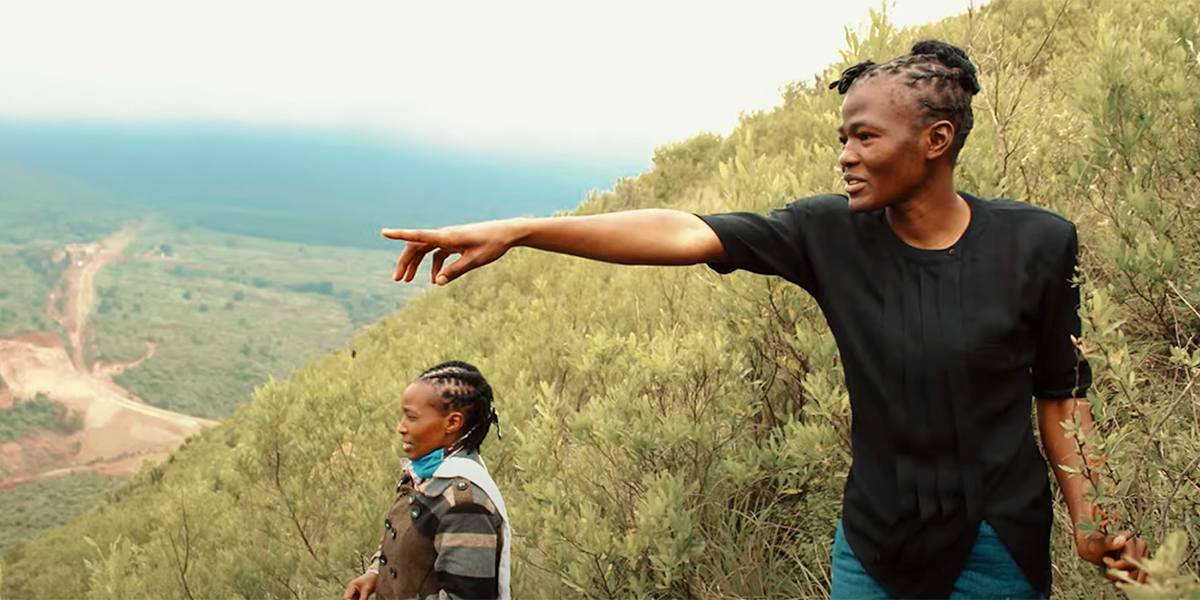
Kenya’s Kijabe Forest has historically been one of Kenya’s five nationally important water towers, which provide an estimated 75 percent of the country’s water resources. Over the past 15 years, however, the forest has been cleared for charcoal and timber, creating dramatic and damaging impacts for wildlife, infrastructure, and quality of life. The goal of planting 1.5 million trees will help reestablish a sustainable water supply through protecting and replanting around springs and rivers. These trees will also restore, habitat for wildlife, stabilize steep slopes prone to landslides, and secure livelihoods.
complete Kenya Kenya Mangrove Reforestation Project 25,000 trees Due to urbanization and a lack of effective governance, the mangroves of coastal Kenya have been overexploited and overharvested. Local communities depend on these mangrove ecosystems for employment, livelihood, and nutrition. Partnering with Veritree, this project will help restore the mangrove forests with the goal of empowering the impoverished coastal community to break the poverty cycle. The restored forests will help defend against storm surges and support local biodiversity.
complete Madagascar Mangroves 600,000 trees In the coastal zones of Madagascar, mangroves are critical. With increasing mangrove deforestation, these areas are facing destabilized coastline and an increased vulnerability to storms and severe weather events. We are working to strategically restore mangroves along the coast of Madagascar to help preserve this unique ecosystem.
complete Madagascar Kianjavato Mountain Range 422,000 trees 
Our partnership with Omaha’s Henry Doorly Zoo and Aquarium and the Madagascar Biodiversity Partnership is focused on reversing the destruction of forest habitat that is home to critically endangered lemurs and other wildlife species found nowhere else on Earth. Tree planting efforts are underway to rebuild the lush landscape. Locals are becoming actively involved in reestablishing the rain forest canopy there, creating habitat for lemurs and a better way of life for the people of Madagascar.
complete Mozambique Eden Reforestation 1,252,007 trees 
In response to the large-scale loss of mangroves in Mozambique, we are working with partners to provide support for local communities to plant and manage mangrove forests.This offers long - term employment and livelihood improvements – particularly the empowerment of women – while helping to protect coastal communities from environmental disasters, improving fisheries, and removing carbon from the atmosphere.
complete Sierra Leone Freetown Peninsula 80,000 trees Now facing the alarming effects of deforestation, including catastrophic mudslides, officials in this area are working to provide the benefits of trees to urban and suburban areas. Efforts through this project are focused on providing residents with the opportunity to plant and care for a tree within their community to build greater environmental resiliency. Asia
complete China 25,000 trees China is one of the most affected countries in the world by desertification. In Minquin County alone, the desertification area accounts for nearly 95% of the total land area. As the young workforce leaves for an urban life, local residents face the reality of becoming ecological refugees. By planting indigenous trees, stabilizing sand dunes, training local community members and creating job opportunities, the fate of Minquin County can be improved significantly.
complete China Liaoning Province 45,000 trees Tree planting efforts are underway near the city of Gaizhou, China. The area currently has some forest cover, but it is in poor condition, which has led to soil depletion and erosion. New trees are needed to reverse those conditions, restore habitat for wildlife, and bring back a beautiful outdoor space for the people of Gaizhou to enjoy. This evolution in the ecosystem will also contribute to promoting social stability and sustainable economic development.
complete India 905,439 trees Southern India’s Cauvery River Basin is in crisis. The river has shrunk by an estimated 40% from its historical flows over 70 years. This is resulting in drinking water scarcity. A loss of tree cover has also contributed to poor soil health. Reforesting this river basin and educating farmers about agroforestry practices will help to stabilize the river and improve soil conditions over time.
complete Indonesia 450,000 trees West Papua, Indonesia, situated in the Coral Triangle, is an area recognized as the global center of marine biodiversity and a global priority for conservation. Biak Island is one of the poorest areas of Indonesia where subsistence farmers and fishers make up approximately 75% of the population. This project will focus on restoring mangroves and tropical forests in this area and to promote food security by helping local people plant agroforestry trees.
complete Laos Xe Sap and Xe Pian National Protected Areas 30,000 trees With ecosystems not common in Laos, both Xe Sap and Xe Pian National Protected Areas are intrinsically significant. This forest region provides habitat for a wide variety of plant and animal species, many found nowhere else on Earth. Reforestation efforts are focused on enhancing existing tree canopy while also improving degraded areas and supporting agroforestry efforts. This work will foster biodiversity, create economic opportunities for local residents, and improve overall resilience to climate change.
complete Nepal 885,000 trees Chitwan National Park hosts more than 700 species of wildlife including leopards and the elusive Bengal tiger. Replanting efforts here are focused on improving livelihoods for those who call Nepal home and restoring forests in areas of critical importance. The planting sites are located in upland areas of the mountainous Nawalparasi District, along lowland alluvial plains, and around Chitwan National Park as a means of developing a buffer zone around this national treasure.
complete Nepal Jalthal Forest 72,000 trees Located in Nepal’s Jhapa district, the Jalthal Forest is a 6,000-hectare remnant of the once-extensive Charkose Jhadi forest. Today, habitat loss, expanding grasslands, and declining biodiversity threaten vulnerable and endangered species like the Burmese python, Asiatic elephant, gharial, Indian pangolin, and great hornbill. At the same time, local communities — many of whom depend on farming — struggle with degraded soils and weakened watershed health. This strategic reforestation effort is working to restore the landscape by planting native tree species and supporting local livelihoods through employment in forest restoration, fruit cultivation, and beekeeping. These efforts aim to improve biodiversity, enhance climate resilience, and empower community-led stewardship for long-term ecological and social benefits.
complete Thailand Mae Hong Son Province 50,000 trees Unsustainable logging practices and changes in land use have left Thailand with a significant loss of rain forest canopy. Replanting is underway, with a goal of restoring forestlands while improving the quality of life for local residents. The newly planted trees will also grow to serve as habitat for endangered species such as tortoises and Asian elephants.
complete Türkiye Adana Province 60,000 trees A massive wildfire swept across southern Türkiye in August of 2020, leaving its landscape unable to naturally regenerate. These new trees will restore the area’s beauty and bring back much-needed environmental benefits for Turkish villagers. They will also create long-term jobs, primarily for local women, who will help plant and maintain them long-term.
complete Türkiye İzmir Province 50,000 trees After generations of deforestation and land use change, this region of Türkiye is facing a real need for forest restoration. Red pines are being planted in an effort to return the land to its natural state — ensuring cleaner air, cleaner water, carbon storage, better flood prevention, and habitat for area wildlife.
complete Türkiye Manisa Province 3,500 trees This afforestation project is located on minelands within the Manisa, Aegean Region of western Türkiye, where mining operations have caused significant deterioration to soil cover, ground and drinking water resources, wildlife habitats, and regional air quality. This tree planting project aims to reduce the destructive effects of mining activity on the natural environment and improve the quality of life for residents in the area. Additionally, the new trees will also help improve the quality of river and surface water collected in the Kül Dam as well as groundwater within and surrounding the planting site. Australia
complete Central and Northern Victoria 75,000 trees Over the years, this area has faced a tremendous amount of deforestation due to various industries and rapid population growth. The result is very fragmented forestland that is struggling to support area wildlife. Replanting efforts will create forested corridors to connect three area National Parks — providing better habitat for animal species and a healthier ecosystem overall.
complete East Queensland 200,000 trees 
Many forested areas in Queensland, Australia have been cleared for surface mining and agricultural use. Our ongoing replanting efforts will help protect the area’s rare wildlife populations, including turtle species, wallabies, kangaroos, wombats, and koalas, as well as water leading to the Great Barrier Reef. New Zealand
complete Auckland Council 41,789 trees Auckland, New Zealand has a goal to reach 30% tree canopy by 2050. As part of this goal, new trees are being planted across four different regional sites — Totara Park, Puhinui Reserve, Hoskin Reserve, and Hunua Domain — in 2022. These trees will create new, thriving forests for New Zealanders to enjoy. And they will provide countless benefits — including cleaner water, cleaner air, greater biodiversity, and carbon sequestration.
complete Te Uru Rakau 32,590 trees Project Mahitahi is a collaborative effort aimed at restoring the terrestrial ecosystem of New Zealand’s Mahitahi/Maitahi/Maitai valley. The area has great cultural importance, as well as supports threatened species like the Nelson green gecko and Kakariki parrot. The new trees planted through this project will support wildlife, sequester carbon, improve water quality for the local community, and create dozens of jobs. Europe
complete France 150,000 trees While France currently has the fourth-largest forested area in Europe, it is experiencing an annual decline of 80 million trees planted compared to the 1990s. This is a sign of aging and lack of renewal. In order to meet the challenges of climate change, natural disasters, and disease, reforestation is imperative. This project helped to ensure a resilient tree cover that provides a full range of ecological services.
complete Hungary Dömös 5,000 trees Snow and ice have taken a toll on the lush forests of Dömös, Hungary. The landscape once covered in a sea of green now has large open spaces and uprooted trees. Tree planting efforts are underway to help support natural regeneration and restore the tree canopy. A mix of hardwood trees will be planted to produce a forest more resilient and better adapted to a changing climate while also providing habitat for a wide range of wildlife.
complete Ireland 100,000 trees Tree planting efforts throughout Ireland are helping to establish tree cover and woodland in both rural and urban areas. These newly planted forests will grow and provide valuable resources, ecosystem services, and a lasting legacy for future generations.
complete Portugal 10,000 trees Efforts in Portugal helped plant trees across the country through the ‘Free Trees for Portugal’ initiative. This project aimed to restore more than 30 sites affected by fire, deforestation, and invasive species back to their natural beauty. Areas benefiting from the work include Alentejo, Central Portugal, Lisbon, and Algarve.
complete Spain Palencia 4,200 trees Spanning 18.4 million hectares, the Spanish forest is the third largest forest area in Europe. Invaluable in every way, it is highly beneficial to its environment: preserving local biodiversity, filtering water, preventing soil erosion, and more. However, diseases, fires, and storms have taken a toll on Spanish forestland. Support is needed so replanting efforts can continue.
complete United Kingdom Woodland Sites 50,000 trees This project was designed to support private landowners interested in planting trees on barren sites in need of tree cover. The goal of this reforestation effort was to engage local landowners in the benefits of tree planting and agroforestry and create new woodland in one of the least-forested regions in Europe.
complete United Kingdom Urban Sites 24,000 trees Cities throughout the United Kingdom are looking for ways to expand their urban tree canopy. Planting efforts will focus on areas with the greatest need for trees, and local residents will be included in the tree plantings where possible. These new trees will help to not only green the cities in which they are planted but also improve the lives of those who live there.
complete United Kingdom Mersey Forest 270,000 trees The Mersey Forest is one of England's 12 Community Forests, which together form the country’s largest environmental regeneration initiative. Tree planting efforts here will help fight climate change, clean the region’s air and water, and ultimately create healthier communities. South America
complete Argentina, Bolivia, Chile, Ecuador, Peru Andes Mountains 300,000 trees 
This large-scale restoration initiative in the Andes Mountains is focused on replanting an overlooked, yet critically important ecosystem within the world’s longest continental mountain range. Native trees will be planted to ensure long-term climate resilience and water security for those who call this region home.
complete Brazil Amazon Rain Forest 600,000 trees In the face of deforestation and devastation, this project was dedicated to helping restore indigenous lands in the Brazilian Amazon. Your support is providing food security and income alternatives for thousands of indigenous people while contributing to conservation efforts and helping mitigate climate change.
complete Brazil Atlantic Forest 170,000 trees 
The country’s Atlantic Forest has faced centuries of degradation due to agriculture, illegal logging, and development. This tropical jungle has lost nearly 90% of its original footprint. Restoration of this tropical landscape will mean clean water for more than 100 million South Americans.
complete Peru 235,800 trees Peru’s rain forest lands have faced large-scale deforestation due to inefficient agricultural practices. Tree planting efforts here will help to restore deforested land and create opportunities for shade-grown crops such as coffee and cocoa. Through this approach, the rain forest can remain intact and local farmers gain a sustainable source of income.
complete Colombia 1,667 trees Partnering with local implementing partners, this pilot project seeks to scale planting operations and establish a long-term management plan for the larger Sembrando Futuro (Planting the Future) project. Located in the Suroeste Antioqueño (Southwest Antioquia) region and the Tropical Andes biodiversity hotspot in Colombia, this project aims to restore montane forest cover and connectivity between forests, leading to more wildlife habitat, increased biodiversity over time, and benefits for the local community including employment opportunities and improved access to safe drinking water.
These benefits are estimated over 40 years using data from the i-Tree API. Want to make a difference?Join #TEAMTREES today. $1 plants a tree. #TeamTrees Social



×
|
| You are visitor 01402503 — GeezerVison does not store the pages you look up. Best viewed with Netscape Navigator 4.7 or Internet Explorer 6 at 800×600. No cookies required. |