GeezerVisonThe World Wide Web, restored to 800 pixels of glory. | ||||||||||||||||||||||||||||||||||||||||||||
| Home|About|Gaming cabinet|Archives|How it works|Starter sites | ||||||||||||||||||||||||||||||||||||||||||||
GeezerVison is showing ttcl-agents.github.io — NeurIPS 2026 TTCL Workshop: Towards Test-Time Continual Learning Agents About the WorkshopThe rapid progress of foundation models has produced agents with remarkable capabilities in perception, language understanding, reasoning, and tool use, while advances in post-training, reinforcement learning, retrieval-augmented generation, and agentic scaffolding now let both virtual and embodied agents tackle complex tasks in coding, web navigation, scientific discovery, and robotic control. Yet today's agents remain largely static: after costly pre- and post-training, their knowledge, skills, and behaviors are mostly fixed, and once deployed they adapt through prompting, retrieval, or external tools rather than genuine internal learning and memory consolidation. This contrasts sharply with human intelligence, where people continuously acquire knowledge, refine representations, and reorganize beliefs through interaction. Current agents, whether virtual or embodied, instead cannot continually learn at test time: they struggle to internalize new information after deployment, fail to improve from repeated mistakes, and can forget prior knowledge and skills when updated naively (catastrophic forgetting). The NeurIPS 2026 Workshop on Towards Test-Time Continual Learning Agents (TTCL) brings together researchers across continual learning, large language models, reinforcement learning, embodied AI, memory systems, cognitive science, robotics, and multimodal learning. We define Test-Time Continual Learning Agents as AI systems that continuously acquire, consolidate, and refine knowledge and capabilities during deployment, without catastrophic forgetting or repeated large-scale retraining. This goes beyond updating facts: it asks how agents improve perception, reasoning, planning, exploration, skill acquisition, and long-term decision-making through ongoing experience in virtual and physical worlds. These capabilities are especially important for robotics, scientific discovery, personalized assistants, education, healthcare, and human–AI collaboration.
Our central vision is to catalyze progress toward next-generation cognitive agents that
learn continually at test time, consolidate experience over long horizons, improve through
interaction, and remain reliable in dynamic physical and virtual worlds, rethinking the
boundaries between training and inference, memory and learning, adaptation and reasoning.
Call for PapersWe invite contributions at the intersection of test-time learning, continual learning, and agentic AI. Relevant topics include (but are not limited to): Topics
Submissions are managed via OpenReview; see the Submission Guidelines below. Submission TrackGeneral Research Track 4–9 pagesNovel frameworks, empirical studies, algorithmic advances, benchmarks, position papers, or system demonstrations at the test-time × continual × agentic intersection. AwardsThanks to the generous sponsorship of Lambda, the workshop will present:
Awards recognize the strongest contributions to the workshop. Submission GuidelinesFormatting. Submissions must be in English, follow the NeurIPS 2026 LaTeX template, and be submitted as a single PDF via OpenReview. The page limits above apply to the main text; references and appendices are not included in the page limit, but the main text must be self-contained, and reviewers are not required to read beyond it. Submissions exceeding the page limit will be desk-rejected. Anonymity. The workshop follows a double-blind review process. Submissions must be anonymized by removing author names, affiliations, and acknowledgments. Prior work should be cited in the third person, and identifying information, including in supplementary materials, must be omitted. Reviewing follows the NeurIPS conflict-of-interest guidelines, and organizers will not submit papers to TTCL. Dual Submission & Non-Archival Policy. The workshop is non-archival: we welcome submissions that are under review at, or have been accepted by, other venues. Papers already accepted to the NeurIPS 2026 main conference will undergo an expedited review process primarily evaluating their relevance to the workshop themes. Accepted papers will be made publicly available on OpenReview, and all accepted papers will be presented in a poster session. Important Dates
All deadlines are 11:59 PM, Anywhere on Earth (AoE). Invited SpeakersCM
 Christopher MacLellanGeorgia Tech ML
 Manling LiNorthwestern University ZK
 Zsolt KiraGeorgia Tech YW
 Yu-Xiang WangUniversity of California San Diego KA
 Kelsey AllenUniversity of British Columbia CS
 Cansu SancaktarMax Planck Institute for Intelligent Systems JD
 Jiafei DuanNational University of Singapore ScheduleAll workshops are expected to run from 8 AM to 5 PM local time, to be confirmed depending on locations. The tentative schedule below assigns a 30-minute slot (including Q&A) to each invited speaker and three 15-minute paper award presentations: one Best Paper Award and two Runner-up Paper Awards. Time is also reserved for poster sessions, a breakout/networking session, and a panel. Times and speaker order are tentative; session topics, talk titles, and the final program will be posted before the workshop.
OrganizersZZ
 Zheyuan "Brian" ZhangPh.D. Student CJ
 Chuanyang JinPh.D. Student JS
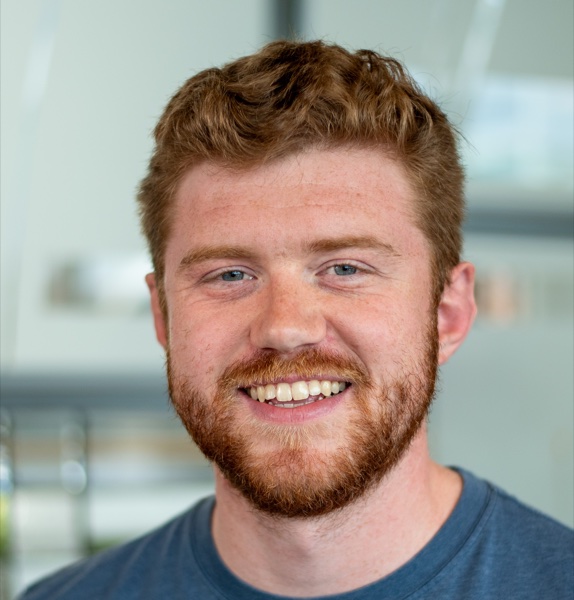 Jacob SansomPh.D. Student ZW
 Zekun WangPh.D. Candidate JX
 Jianwen XieResearch Scientist JC
 Joyce ChaiProfessor DK
 Daniel KhashabiAssistant Professor TS
 Tianmin ShuAssistant Professor Sponsor
We gratefully acknowledge Lambda for sponsoring the workshop's paper awards and compute credits. ContactFor questions about the workshop or the call for papers, please email the organizers. | ||||||||||||||||||||||||||||||||||||||||||||
| You are visitor 01402503 — GeezerVison does not store the pages you look up. Best viewed with Netscape Navigator 4.7 or Internet Explorer 6 at 800×600. No cookies required. |