GeezerVisonThe World Wide Web, restored to 800 pixels of glory. | ||||||||||||||||||||||||||||||||||||||||||||||||||||||||||||||||||||||||||||||||||||||||||||||||||||||||||||||||||||||||||||||||||||||||||||||||||||||||||||||||||||||||||||||||||||||||||||||||||||||||||||||||||||||||||||||||||||||||||||||||||||||||||||||||||||||||||||||||||||||||||||||||||||||||||||||||||||||||||||||||||||||||||
| Home|About|Gaming cabinet|Archives|How it works|Starter sites | ||||||||||||||||||||||||||||||||||||||||||||||||||||||||||||||||||||||||||||||||||||||||||||||||||||||||||||||||||||||||||||||||||||||||||||||||||||||||||||||||||||||||||||||||||||||||||||||||||||||||||||||||||||||||||||||||||||||||||||||||||||||||||||||||||||||||||||||||||||||||||||||||||||||||||||||||||||||||||||||||||||||||||
GeezerVison is showing unified-inertial-encoder.github.io — A Unified Inertial Encoder for Human and Humanoid Motion A Unified Inertial Encoder for Human and Humanoid MotionYutian Chen1Shibo Zhao1Rocky Duan1Karen Liu1,3Carmelo Sferrazza1Guanya Shi1,4Yuheng Qiu1Koushil Sreenath1,2 1 Amazon FAR2 UC Berkeley3 Stanford University4 Carnegie Mellon University AbstractLearning humanoid state estimation and language-grounded motion understanding from robot recordings ties training coverage to the robot's motion repertoire. Human motion datasets offer broader coverage, yet transferring this knowledge requires overcoming differences in body geometry, sensing, and physical disturbances. To enable this transfer, we propose a unified inertial encoder whose shared inertial interface uses kinematic IMU synthesis to represent human and humanoid motion at corresponding body sites. Within this common input space, joint training on human and kinematically retargeted humanoid motion combines velocity estimation and motion–text alignment with continuous-time encoding and sensor and motion randomization. The resulting model transfers zero-shot to a physical Unitree G1 without physics simulation, real-robot training trajectories, or fine-tuning, achieving the lowest velocity error among evaluated methods across five datasets, including 0.099 m/s on real G1. Its motion-description retrieval also extends to retargeted G1 motion categories observed only in human training, demonstrating how human motion knowledge can support the generalization of humanoid inertial odometry and language-grounded motion understanding. 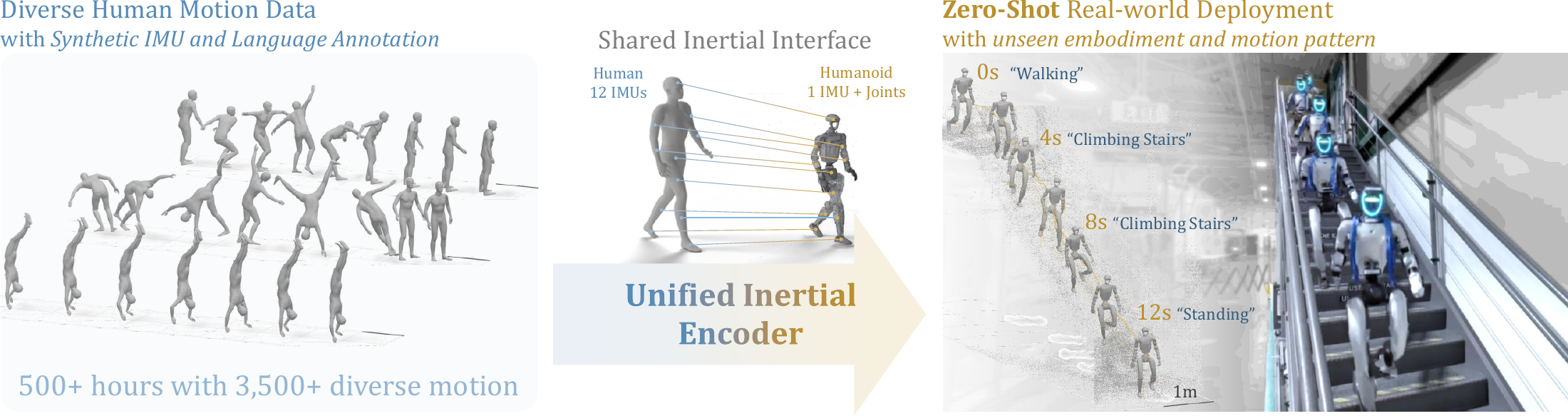 MethodResultsA Shared Inertial InterfaceTwelve corresponding body sites connect human and humanoid motion: pelvis, head, and bilateral upper arms, forearms, upper legs, lower legs, and feet. On G1, kinematic transport combines the pelvis IMU, measured joint positions and velocities, and link kinematics to synthesize these streams. It requires no world pose or root velocity as input. Motion IMU site Side Loading G1… Drag to rotate Computing signals… Continuous-time TokenizationTimestamp-aware encoding accommodates different sampling rates, irregular timing, and missing samples without resampling to a fixed grid. Each token covers a fixed 125 ms of motion rather than a fixed number of samples, so the same motion yields the same tokens whatever the sensor rate. Rate Timing Same motion, 240 samples120 Hz · uniform Discrete25 samples per token: span changes with the rate Continuous125 ms per token, placed by timestamp Discrete CNNfixed sample count 10 tokens · 124% off reference Continuous encoderfixed time span 16 tokens · 5.5% off reference Token output by indexreference · 240 Hz uniformhovertap the signal or a token to link input and output Zero-shot on a Real Unitree G1Without real-robot training or fine-tuning, the model estimates motion on hardware from the pelvis IMU and joint encoders through the shared 12-site representation. Each pair shows the recording and our estimate, with the robot posed from the measured joints along the predicted trajectory (gold). Climbing stairs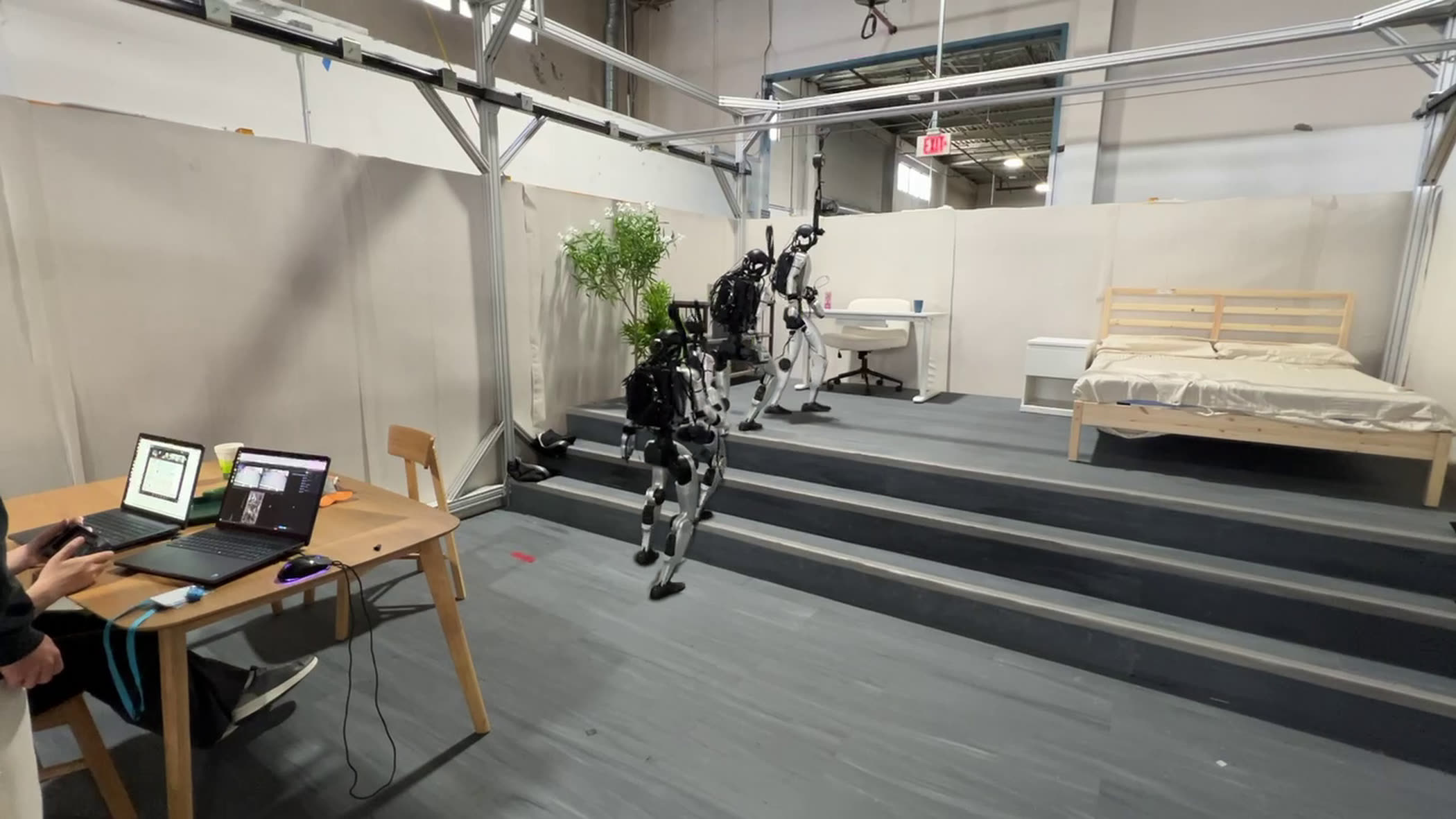 Recording 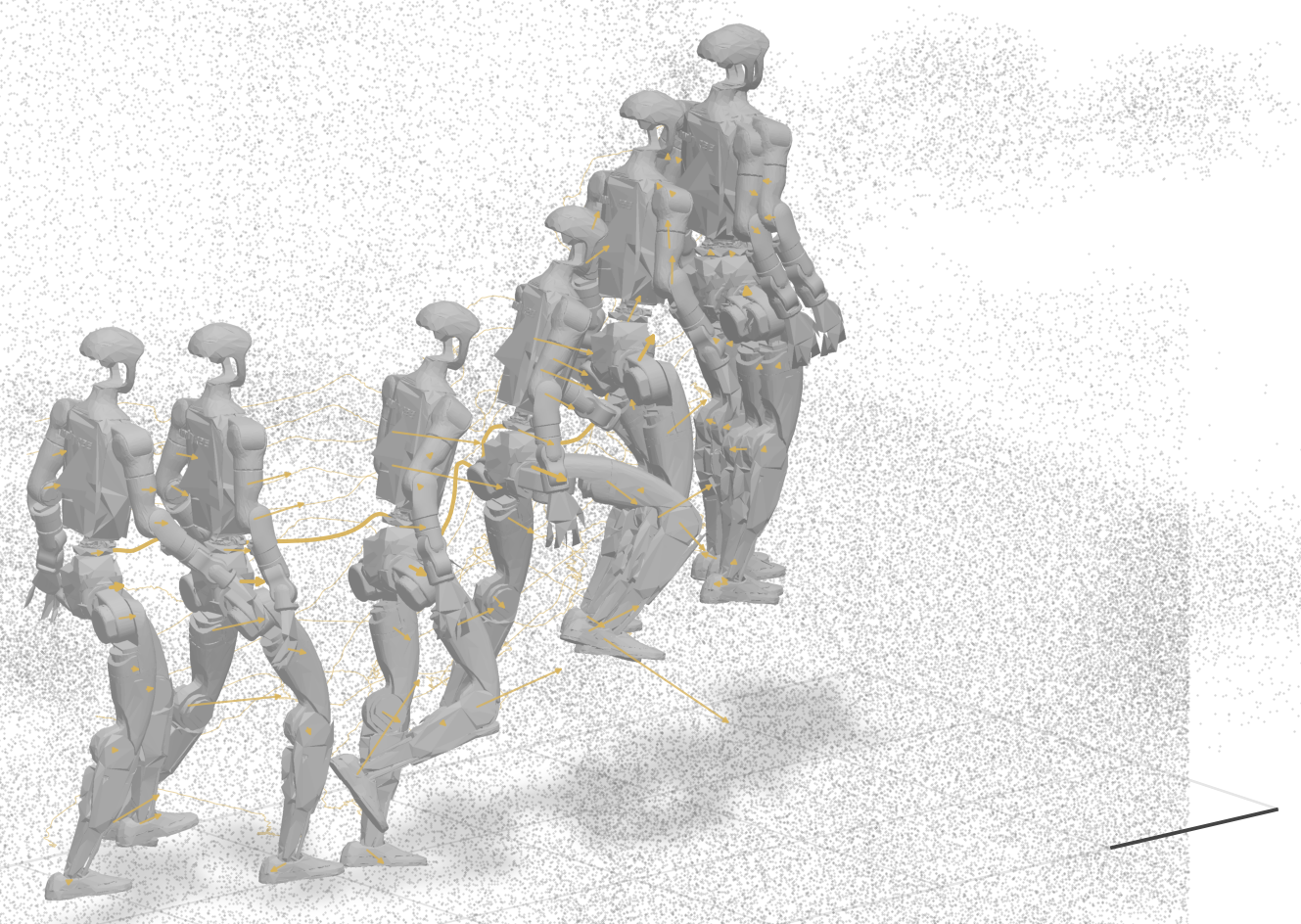 Ours Zero-shot estimate while the G1 climbs: the robot is posed from its measured joints along the predicted pelvis path (gold), with no real-robot training. Runtime and Language Retrieval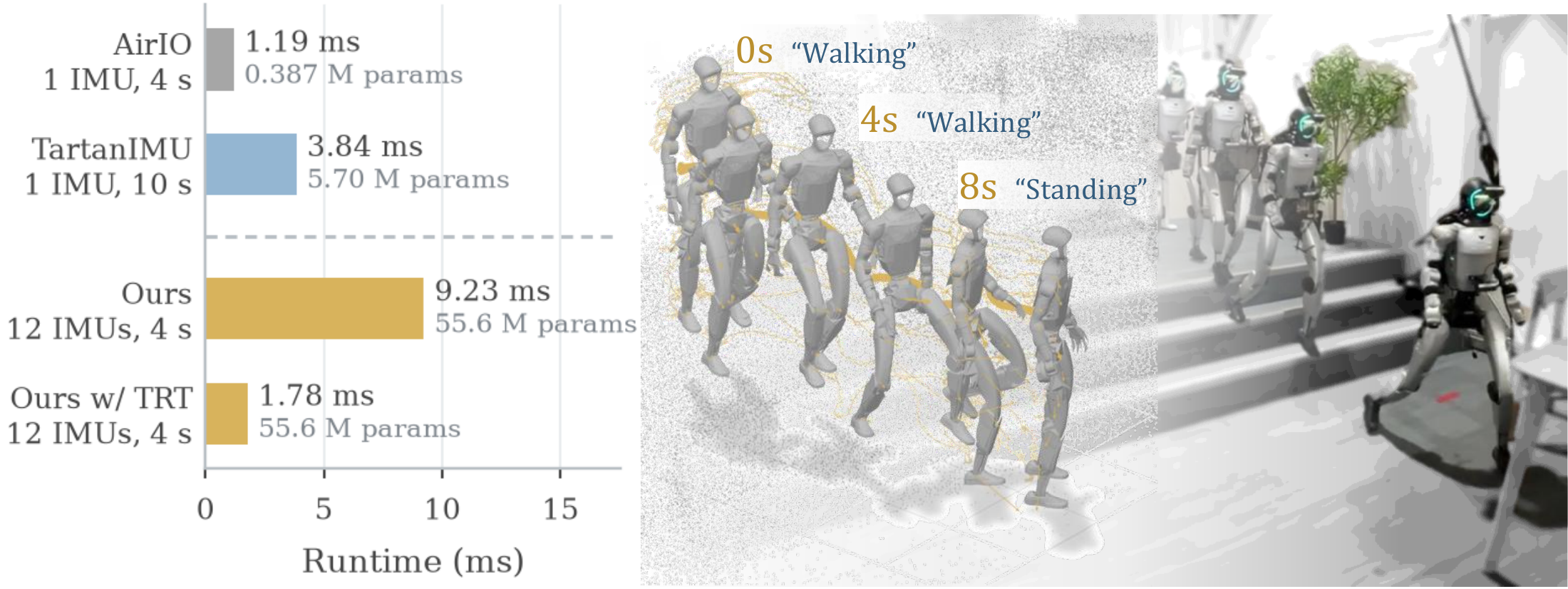 1.78 ms per 4-s, 12-IMU window (TensorRT, NVIDIA L40S), under the 5-ms sampling interval. On the real G1, retrieval switches from “Walking” to “Standing” as it stops. Descending stairs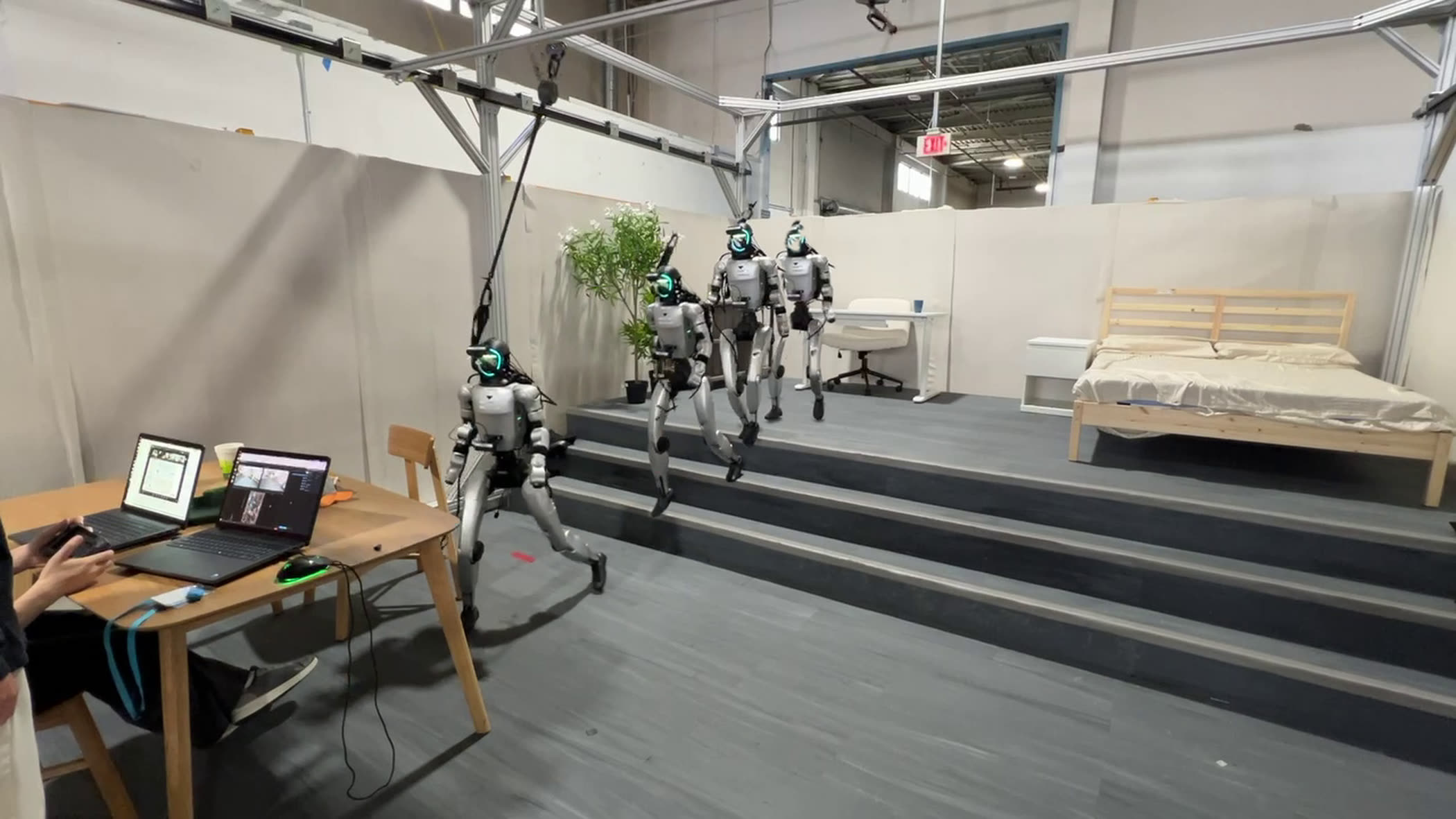 Recording 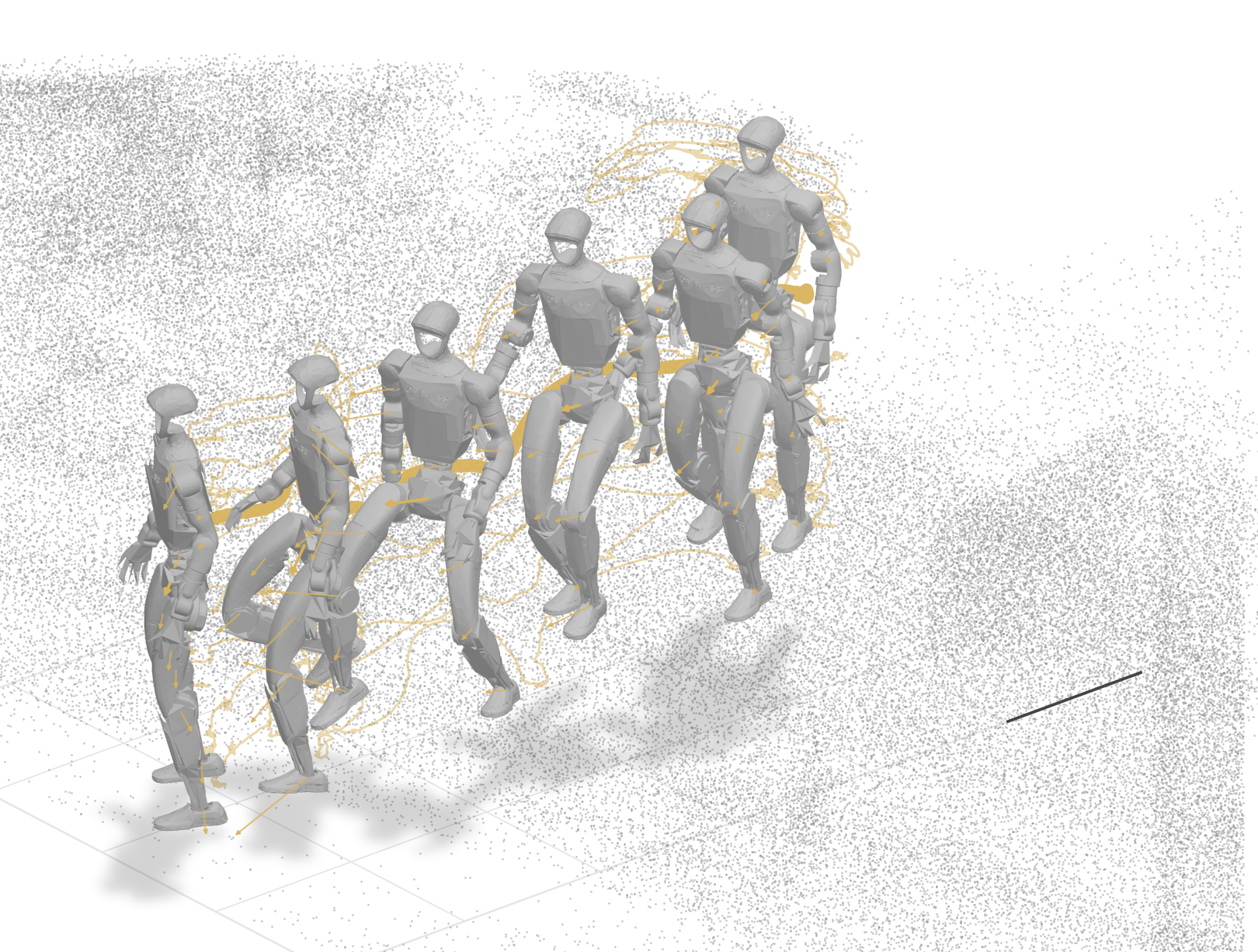 Ours The same checkpoint on the way down, where foot impacts and pitch changes stress inertial odometry most. Inertial OdometryOne checkpoint achieves the lowest AVE and ATEGT on all five datasets, and the lowest ATEPred on four; TLIO leads ATEPred on Nymeria. AVE is in m/s, ATE in m; ATEGT uses ground-truth attitude and ATEPred uses gyro-integrated attitude. Both start from the ground-truth initial pose, with no filter updates or trajectory alignment. Lower is better; bold marks column minima. † trained separately per dataset, * sequences longer than 10 s only.
1 / 6·Recordings shown in the paper Motion Caption RetrievalMotion-to-text recall at 1 (R@1) uses 19 random distractors, averaged over eight draws. Text-to-motion mean average precision (mAP) ranks all annotated windows. Both are percentages; higher is better. On retargeted G1 categories observed only in human training, our model reaches 53.8% R@1 and 11.3% mAP, compared with 17.3% and 0.5% for IMU2CLIP.
Collapse assigns every motion window the same mean text embedding, measuring retrieval without motion-specific information. IMU2CLIP leads R@1 on Nymeria (16.2% versus 14.9%); our model leads mAP there and both metrics on BONES-Seed human motion and both G1 splits. † Trained separately per dataset. 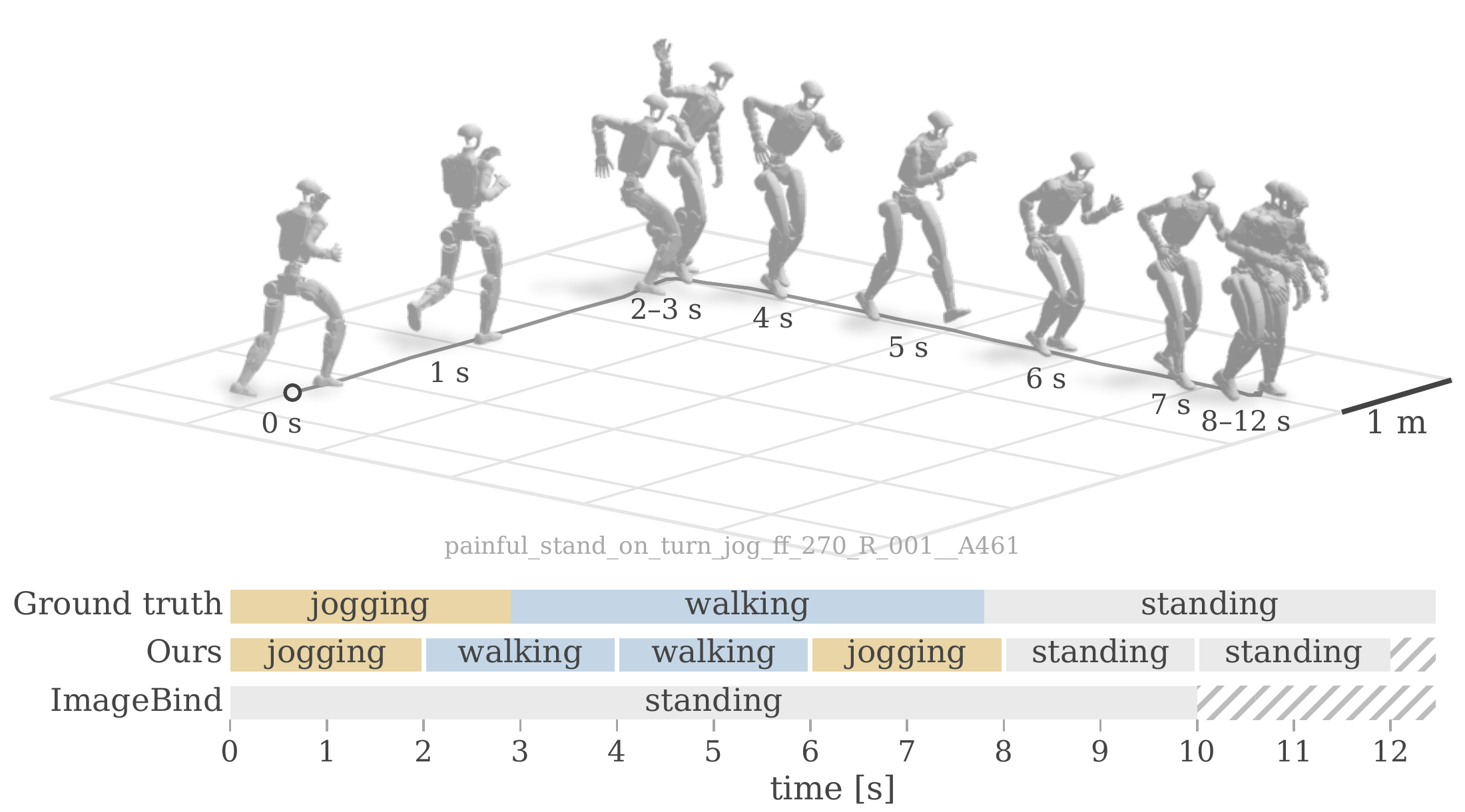 What Enables Transfer?Joint human–humanoid training reduces real-G1 ATEGT from 5.901 m to 3.153 m compared with humanoid-only training. The shared multi-IMU input improves both G1 trajectory metrics over direct joint inputs, and continuous-time encoding improves results across all three ablation datasets.
ATE in meters; lower is better. Bold marks column minima. More diverse training data improves Nymeria and real-G1 ATEGT, while quarter-data training performs best on retargeted G1. Learned RepresentationThe paper visualizes the trunk Loading embedding… Compute-Optimal ScalingSeven model sizes (2.8–274 M parameters), 235 EMA checkpoints. A Chinchilla-style fit L(N,D)=E+A/Nα+B/Dβ gives Nopt∝C0.52 and Dopt∝C0.48. Here, N counts parameters, D counts processed tokens including repeated windows, and C=6ND is training compute in FLOPs. Increasing model capacity and training exposure together uses additional compute effectively. The fit extrapolates and optimizes validation error, which need not give the best hardware transfer. (a) Measured scaling Loading scaling data… Solid: measured · dotted: fitted law · dashed: optimal frontier. Hover a dot. (b) Fitted loss surface Loading scaling data… Dashed: constant compute · gold: fitted minima. Hover or drag to rotate. Citation | ||||||||||||||||||||||||||||||||||||||||||||||||||||||||||||||||||||||||||||||||||||||||||||||||||||||||||||||||||||||||||||||||||||||||||||||||||||||||||||||||||||||||||||||||||||||||||||||||||||||||||||||||||||||||||||||||||||||||||||||||||||||||||||||||||||||||||||||||||||||||||||||||||||||||||||||||||||||||||||||||||||||||||
| You are visitor 01402775 — GeezerVison does not store the pages you look up. Best viewed with Netscape Navigator 4.7 or Internet Explorer 6 at 800×600. No cookies required. | ||||||||||||||||||||||||||||||||||||||||||||||||||||||||||||||||||||||||||||||||||||||||||||||||||||||||||||||||||||||||||||||||||||||||||||||||||||||||||||||||||||||||||||||||||||||||||||||||||||||||||||||||||||||||||||||||||||||||||||||||||||||||||||||||||||||||||||||||||||||||||||||||||||||||||||||||||||||||||||||||||||||||||