GeezerVisonThe World Wide Web, restored to 800 pixels of glory. |
| Home|About|Gaming cabinet|Archives|How it works|Starter sites |
GeezerVison is showing www.mathsisfun.com — Exponential Function Reference Exponential Function ReferenceThis is the general Exponential Function (see below for ex): f(x) = ax a is any value greater than 0 Properties depend on value of "a"
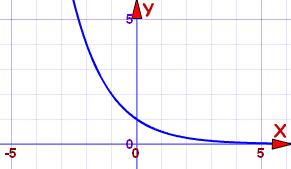
a between 0 and 1
For a between 0 and 1
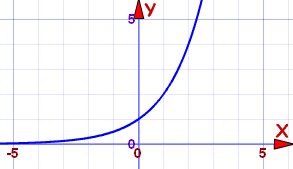
a above 1
For a above 1:
Try different values of a here:
../algebra/images/function-graph.js?fn0=a^x&xmin=-3.711&xmax=4.028&ymin=-0.7247&ymax=3.675&vara=0.5|0|5
In General:
Its Domain is the Real Numbers: Its Range is the Positive Real Numbers: (0, +∞) Inverseax is the inverse function of loga(x) (the Logarithmic Function) So the Exponential Function can be "reversed" by the Logarithmic Function. The Natural Exponential FunctionThis is the "Natural" Exponential Function: f(x) = ex Where e is "Eulers Number" = 2.718281828459... and so on
The value e is important because it creates these useful properties: At any point the slope of ex equals the value of ex :
The area up to any x-value is also equal to ex :
|
| You are visitor 01402503 — GeezerVison does not store the pages you look up. Best viewed with Netscape Navigator 4.7 or Internet Explorer 6 at 800×600. No cookies required. |