 Windows Server 2012 Logo 1
Windows,
a series of 32-bit and 64-bit operating systems by Microsoft for x86 and x86-64 PC's, as well as Windows CE for embedded systems and the mobile operating system Windows Mobile. Its development started in the early 80s as a graphical user interface for 16-bit MS-DOS operating system, with the ability to perform cooperative multitasking while processing an event loop.
Contents
Versions
 |
 |
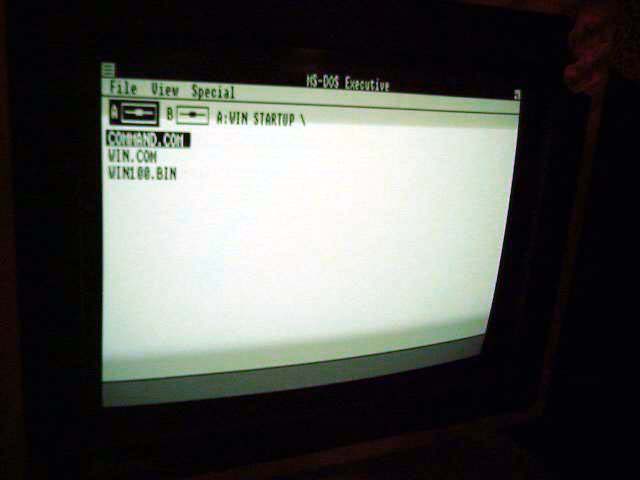
Windows 1.0, 1985 1 |
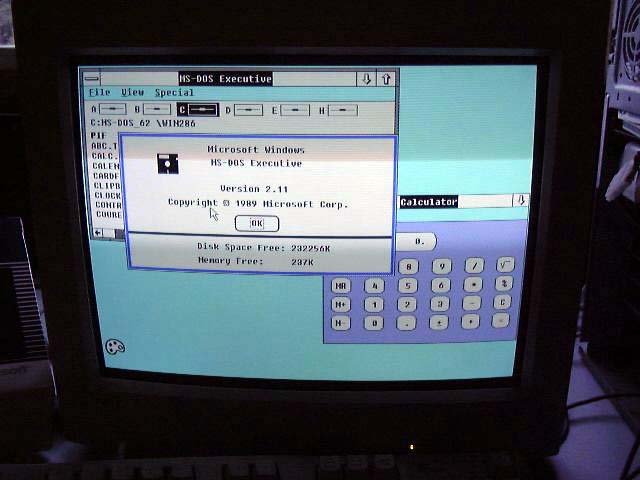
Windows/286 2.11, 1987 2 |
 |
 *https://en.wikipedia.org/wiki/Windows_10* |
Windows NT 4.0 3 |
- List of Microsoft Windows versions
- Windows 1.0
- Windows 2.0
- Windows 3.0
- Windows 95
- Windows NT
- Windows 2000
- Windows XP
- Windows Vista
- Windows CE
- Windows Mobile
- Windows 7
- Windows Phone 7
- Windows 8
- Windows Phone 8
- Windows 10
- Windows 10 Mobile
Chess Engines
Most current chess engines are suited to run under Windows, a few with its own proprietary user interface, but most common as console application and child process of an external chess GUI communicating via redirected standard streams 1 using protocols like the Chess Engine Communication Protocol (WinBoard) and/or the Universal Chess Interface (UCI).
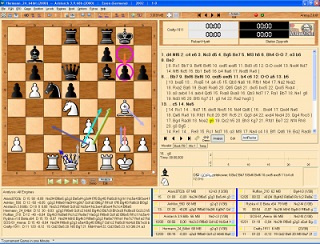
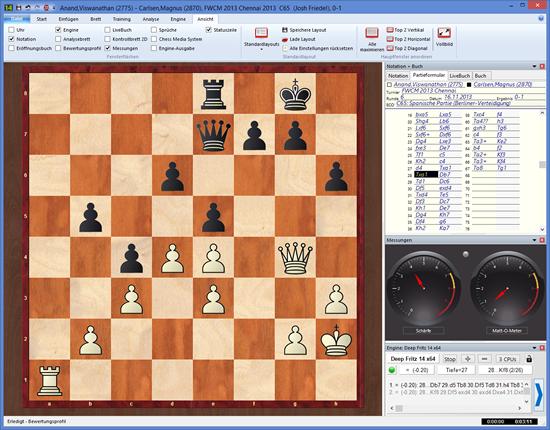
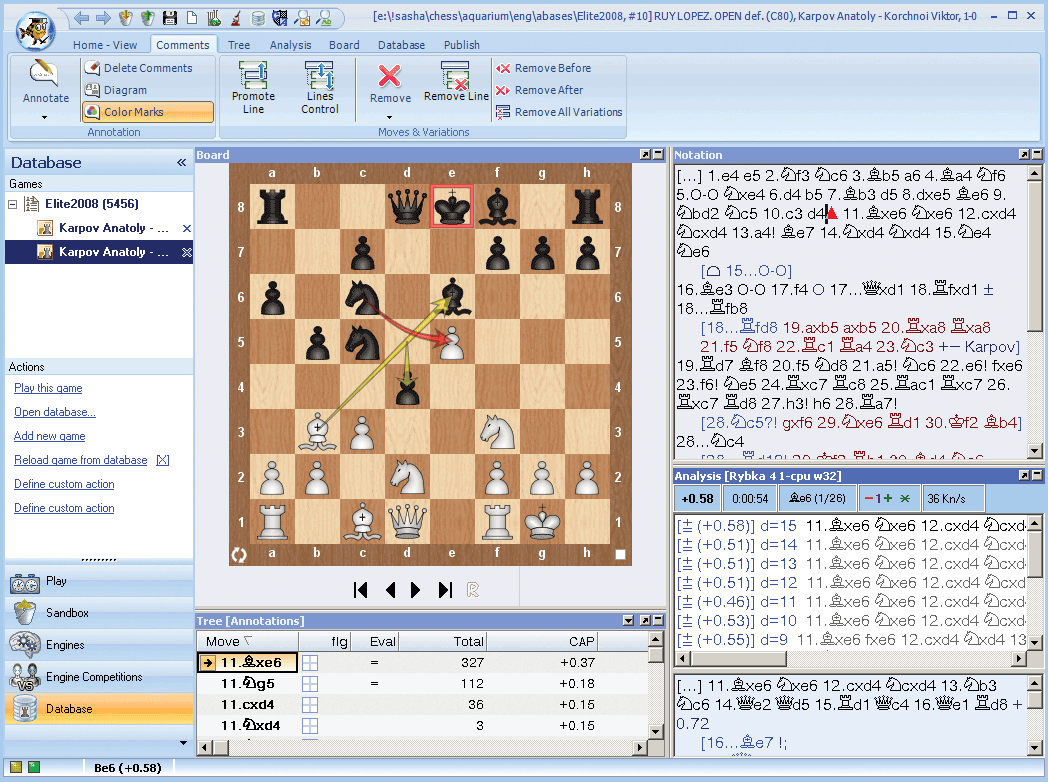
Windows Chess GUIs
 |
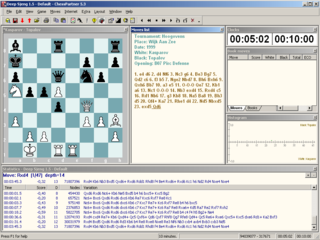 |
Deep Sjeng under ChessPartner 2 |
|
 |
 |
- Aquarium
- Arena
- Banksia GUI
- Chess Academy
- ChessGUI
- ChessPartner GUI
- ChessX
- Cute Chess
- Fritz GUI
- HIARCS Chess Explorer
- Mayura Chess Board
- WinBoard
- Shredder GUI
- Scid vs. PC
Applications
Major
Accessories
Entertainment
Remote Desktop
Development
Covers integrated development environments (IDE), Software development kit (SDK), Application programming interface (API), programming languages, compiler and tools.
IDE
Frameworks
- .NET Framework from Wikipedia
- Comparison of the Java and .NET platforms from Wikipedia
- Common Language Runtime from Wikipedia
Common Language Runtime Overview, MSDN
Windows Communication Foundation from Wikipedia
Subsystems
SDK
API
- Windows API from Wikipedia
- Windows Runtime from Wikipedia
- Windowing, MSDN
- Universal Windows Platform from Wikipedia
Input and Output
Memory
- Memory Management, MSDN
- Enumerating a Heap, MSDN
- Allocating Memory from a NUMA Node, MSDN » NUMA
- [https://msdn.microsoft.com/en-us/library/windows/desktop/aa363804(v=vs.85).aspx NUMA Support (Windows), MSDN]
- Windows Memory Management - CodeProject
- Memory Limits for Applications on Windows by Steve Lionel (Intel), May 16, 2011
Interprocess Communications
- Processes and Threads, MSDN
- Interprocess Communications, MSDN
- Creating a Child Process with Redirected Input and Output, MSDN
- Pipes, MSDN
- Dynamic Data Exchange (DDE)
- Object Linking and Embedding (OLE)
- Component Object Model (COM)
- ActiveX
- Distributed Component Object Model (DCOM)
- Common Object Request Broker Architecture (CORBA)
- Processes, Threads, and Jobs (pdf) from Microsoft® Windows® Internals, Fourth Edition: Windows 2000, Windows XP, and Windows Server 2003 by David Solomon and Mark Russinovich
Dynamic Linking
C
C programmers were faced with some new paradigms from early 16-bit Windows API, not to mention the fact that a lot of C standard library functions were hard and error-prone to use, or even taboo 2 . Charles Petzold: "The original hello world program in the Windows 1.0 SDK was a bit of a scandal. HELLO.C was about 150 lines long, and the HELLO.RC resource script had another 20 or so more lines". (...) Veteran C programmers often curled up in horror or laughter when encountering the Windows hello-world program." 3 .
WinMain and the Message loop
Windows programs are event-driven, have no usual main, but WinMain to enter a event loop 4 , where DispatchMessage transfers messages to a callback procedure associated with the window the message refers to, i.e. for keyboard events one window which owns the keyboard focus. To make Windows applications work flawlessly, keeping its windows up to date, that is processing paint messages, the I/O bound GUI thread needs to be run in the message loop, to react on messages best within 20 ms. In early 16-bit Windows, DispatchMessage implemented cooperative multitasking - but one application being uncooperative could made the whole system hang.
int APIENTRY WinMain(HINSTANCE hInstance, HINSTANCE hPrevInstance, LPSTR lpCmdLine, int nCmdShow)
{
   WNDCLASS wc;
   MSG msg;
   ...
   wc.lpfnWndProc = (WNDPROC) MyWndProc; // associate a Window procedure for this "class" of windows
   if (!RegisterClass(&wc)) // register window class
       return FALSE;
   hwnd = CreateWindow(...);
   ShowWindow(hwnd, SW_SHOW);
   while(GetMessage(&msg, NULL, 0, 0) > 0)
   {
     TranslateMessage(&msg);
     DispatchMessage(&msg);
   }
   return msg.wParam;
}
Window Procedure
The callback or Window procedure is called from the above message loop.
LRESULT CALLBACK MyWndProc(
    HWND hwnd,        // handle to window
    UINT uMsg,        // message identifier
    WPARAM wParam,    // first message parameter
    LPARAM lParam)    // second message parameter
{
    PAINTSTRUCT ps;
    HDC hdc;
    switch (uMsg)
    {
        case WM_CREATE:    // Initialize the window
            return 0;
        case WM_PAINT:
            hdc = BeginPaint(hwnd, &ps);
            TextOut(hdc, 0, 0, "Hello, Windows!", 15);
            EndPaint(hwnd, &ps);
            return 0;
        case WM_DESTROY:   // Clean up window-specific data objects
            return 0;
        case WM_CHAR:      // Process Keyboard character events
            return 0;
        case WM_MOUSEMOVE: // Process mouse move events
            return 0;
        // Process other messages
        default:
            return DefWindowProc(hwnd, uMsg, wParam, lParam);
    }
    return 0;
}
Standard C Library
- C standard library from Wikipedia
- Standard C Library Functions, MSDN
- Windows File I/O vs. C Run-time File I/O, MS Support
C++
Microsoft's proprietary C++ Foundation Classes wrapped the handle based Windows API and hides much of its complexity. Still one of the early class libs, it has a lot of ugly macros, i.e. for message maps. Borland's counter part was the Object Windows Library.
Command-Line Applications
Applies for most UCI and/or Chess Engine Communication Protocol (WinBoard) compatible chess engines, relying on an external GUI.
- Creating Command-Line Applications (C++), MSDN
- Managed Extensions for C++ from Wikipedia now deprecated
Class Libs
- Visual Component Library from Wikipedia
- Object Windows Library from Wikipedia
- Interix from Wikipedia
- Qt (software) from Wikipedia
- Boost (C++ libraries) from Wikipedia
Compiler
Visual C++ Tutorials, Library, and More on MSDN
- MinGW from Wikipedia, port of the GNU Compiler Collection (GCC)
MinGW - Minimalist GNU for Windows
- Cygwin from Wikipedia, Unix-like environment and command-line interface
Cygwin Information and Installation
Intel(R) C++ Compiler User and Reference Guides covers Intrinsics » x86, x86-64, MMX, SSE2, SSSE3, SSE4, AVX
Calling Conventions
Agner Fog describes x86 and x86-64 calling conventions for different C++ compilers and operating systems, covering 32-bit and 64-bit Windows 5 :
The document contains details about data representation, function calling conventions, register usage conventions, name mangling schemes, etc. for many different C++ compilers and operating systems. Discusses compatibilities and incompatibilities between different C++ compilers. Includes information that is not covered by the official Application Binary Interface standards (ABI's). The information provided here is based on my own research and therefore descriptive rather than normative. Intended as a source of reference for programmers who want to make function libraries compatible with multiple compilers or operating systems and for makers of compilers and other development tools who want their tools to be compatible with existing tools.
Other Languages
- C#
- Visual Basic from Wikipedia
- Embarcadero Delphi from Wikipedia
- Intel Fortran Compiler from Wikipedia
- Java
See also
Publications
- Pavel Yosifovich, Mark Russinovich, David Solomon, Alex Ionescu (2017). Microsoft Windows Internals. 7th Edition
Forum Posts
1995 ...
- hash mem in win-chess progs by Pc Sol, rgcc, September 28, 1995 » Transposition Table
- Win32 based "professional" chess software by Chris Smith, rgcc, June 17, 1997
- What will be the position of Windows in 3, 4 years in the future? by Leonid, CCC, November 29, 1999
2000 ...
- Re: Stormx is this a Crafty Clone?? by Sean Empey, CCC, May 25, 2004 » Process, Thread
- Kiwi for Win98 and input-reading stuff by Alessandro Scotti, CCC, September 29, 2004 » Kiwi, C++, Thread
2010 ...
- MSVC calloc question by Harm Geert Muller, CCC, March 17, 2011
- Windows GCC Development by Joshua Shriver, CCC, January 10, 2012
- microsecond-accurate timing on Windows by Martin Sedlak, CCC, May 28, 2012
- Windows 8.1 and Visual Studio 2013 preview by Jose Mº Velasco, CCC, June 30, 2013
2015 ...
- Windows 10 Experience by Fernando Villegas, CCC, August 10, 2015
- OT: Full Removal of Windows 10 by Terry McCracken, CCC, December 13, 2015
- Weird Windows / WinBoard behavior by Harm Geert Muller, CCC, September 15, 2016 » Process, WinBoard
- Help needed for porting to Windows by Evert Glebbeek, CCC, October 22, 2016
- MinGW AlphaBlend by Harm Geert Muller, CCC, November 29, 2016 » 2D Graphics Board, WinBoard 6
- Importance of Windows XP support by Evert Glebbeek, CCC, March 27, 2017
- DOSBox Windows 95 for Chess by The Spacious Mind, HIARCS Forum, March 09, 2019 » Bringer, Chessmaster, ...
Further Links
- Microsoft Windows from Wikipedia
- Wintel from Wikipedia » Intel
- Wine (software) from Wikipedia
- Engineering Windows 7 - Windows Desktop Search by Chris McConnell, October 13, 2008