GV

GeezerVison

The World Wide Web, restored to 800 pixels of glory.

Home|About|Gaming cabinet|Archives|How it works|Starter sites

On this site

  • Understanding Evolution
  • Evolution 101
  • Microevolution – Evolution within a population
  • Speciation – How new species arise
  • Teach Evolution
  • Lessons and teaching tools
  • Teaching Resources
  • Image Library
  • Using research profiles with students
  • Active-learning slides for instruction
  • Using Evo in the News with students
  • Guide to Evo 101 and Digging Data
  • Conceptual framework
  • Teaching guides

This view

  • Original page
  • New address

GeezerVison is showing evolution.berkeley.edu — Understanding Evolution – Your one-stop source for information on evolution

  • Skip to primary navigation
  • Skip to main content
  • Skip to footer
  • About
  • Image & Use Policy
  • Translations
  • Glossary

SUPPORT UE

UC MUSEUM OF PALEONTOLOGY

UC Berkeley logoUC Berkeley

Evo 101

A graphical icon is pictured with a laptop and on the screen is a phylogenetic diagram.
Evo 101

Teach Evo

A graphical icon is pictured with 2 distinct hands working on an Ipad with indistinguishable graphics on the Ipad.
Teach Evo

Learn Evo

A graphical icon is pictured with 3 circles. The top circle includes a double helix, the bottom left circle has a silhouette of a t-rex skull; the bottom right circle has a line drawing of a bird's head. The circles are connected by dark solid bands.
Learn Evo

Evo in the News

CRISPR’s ancient evolutionary ancestor?

Posted September 30, 2026

Every few weeks a genetic innovation pops up in the news – gene therapy to treat hereditary disease, new high-yield crop varieties, and the promise of individualized cancer treatment, to name a few. These breakthroughs are arriving more frequently due, in part, to a new genetic tool. CRISPR is an element of the immune system of many microbes, allowing them to detect and destroy the DNA of invading viruses. Biologists, however, have harnessed this system to make precise cuts in DNA at predetermined locations and “turn off” a particular gene or insert a new, custom-designed DNA sequence. This tool is so important that its developers, Jennifer Doudna and Emmanuelle Charpentier, received a Nobel Prize for their work. Now, new research uncovers the evolutionary origins of one type of CRISPR system and offers a glimpse into what may be the next generation of gene editing tools.

Read more »  |  Read other Evo News stories

Check out our favorites

The Origin of Life

An artist's depiction of a primordial Earth landscape under a dark, stormy sky. In the foreground, jagged, dark volcanic rock formations sit near a glowing river of molten lava. In the upper half of the image, three bright streaks from meteors or comets cut across the clouds, trailing white and orange light. The overall atmosphere is volatile and dramatic, suggesting the early stages of planetary formation.
The Origin of Life

Activity: Plant on a Rampage!

A comic illustration of a plant with two stems for arms and leaves for hands that are up in the air on either side. It has an open mouth and teeth pointing upwards with the text above that states: Plant on a Rampage: Evolutionary scientists to the rescue! Two square banner are on either side of it. The first states: Solve science puzzles! The second banner reads: Save the world!
Plant on a Rampage: Evolutionary scientists to the rescue!

Digging Data

Extinction vulnerability with Shan Huang, David Jablonski, and Stewart Edie

The LDG

Visualizing Life on Earth: An interactive investigation of biodiversity

The Arthropod Story

The Arthropod Story: An interactive investigation

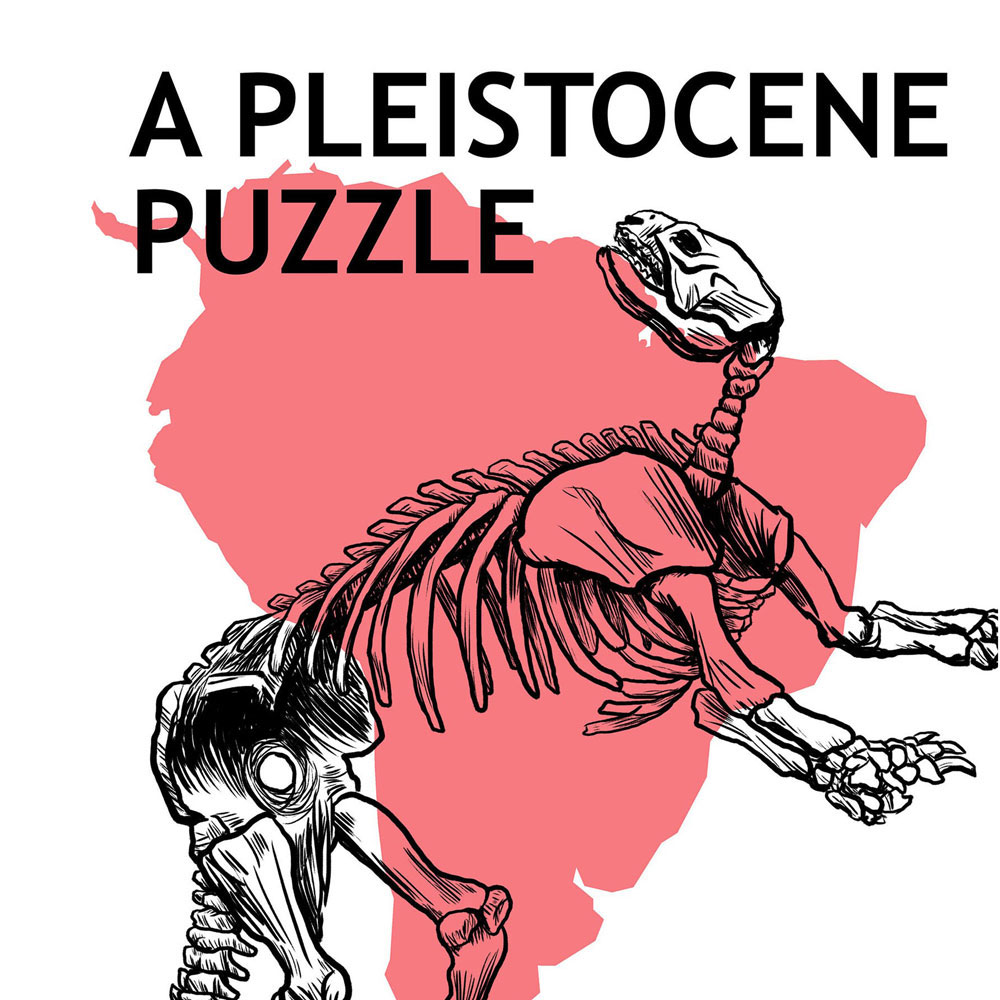
A Pleistocene Puzzle

A Pleistocene Puzzle

Footer

Connect

Subscribe to our newsletter

Teach

  • Teaching resource database
  • Correcting misconceptions
  • Conceptual framework and NGSS alignment
  • Image and use policy

Learn

  • Evo 101
  • Evo in the News
  • The Tree Room
  • Browse learning resources
  • Glossary
You are visitor 01402503 — GeezerVison does not store the pages you look up.
Best viewed with Netscape Navigator 4.7 or Internet Explorer 6 at 800×600. No cookies required.