



Machine Learning Research · Agent Systems · Computer Graphics
I study machine learning models and build software systems around them. My work began with computer vision and neural-network architectures and has expanded into agent workflows, 3D reconstruction, and tools for inspecting real outputs.
One question connects these interests: how can I verify that a system produced what it was intended to produce? I try to make that question part of the workflow, from research experiments to software prototypes.
| 2026 ACM TODAES |
WACA-UNet — Weakness-Aware Channel Attention for Static IR-drop Prediction A computer-vision-based approach to estimating voltage-drop regions from heterogeneous chip-layout maps, with attention to underrepresented input features. Source code · Preprint |
| 2026 IEEE Access |
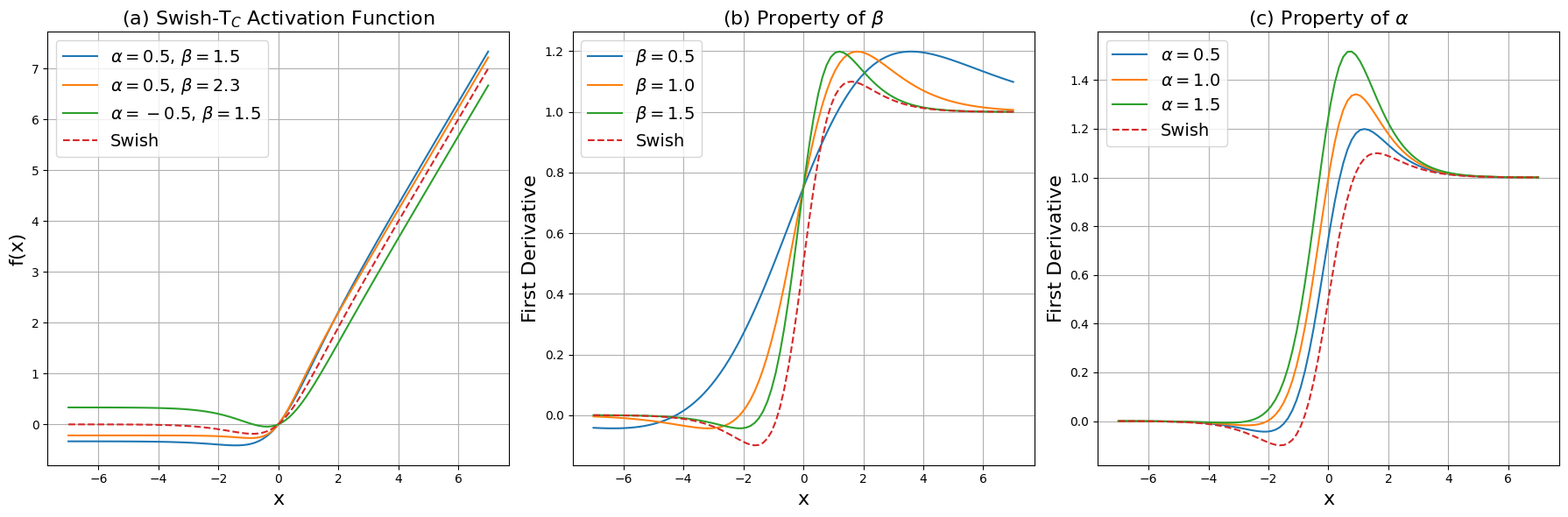
Swish-T — Enhancing Swish Activation with Tanh-Based Bias An activation-function family exploring how bounded tanh-based bias changes learning behavior across network architectures. PyTorch implementation · Preprint |
| 2023 Applied Sciences |
DRRU-Net — DCT-Coefficient-Learning RRU-Net for Image-Splicing Forgery Detection An image-forensics model that combines learned visual features with JPEG compression artifacts in the DCT domain. Source code · Paper |
View a research figure — Swish-T activation study
I build tools that let agents construct, inspect, and revise actual artifacts — whether that's a line drawing, a 3D asset, or an interactive environment.

|
img2drawing ↗ An agent drawing workflow based on explicit pencil strokes rather than one-shot image generation. Observation, authored strokes, rendering, and revision remain inspectable and replayable. Python · Stroke geometry · Rendering · Revision · Timelapse Showcase and source examples |

Character drawing process · Pencil-stroke timelapse
Finished character drawing

Finished line drawing

Additional pencil line studies

|
RefAs ↗ Vision-first 3D reconstruction tooling for observing references, building editable geometry, reviewing GLB renders, and revising individual parts through recorded evidence. 3D reconstruction · GLB · Multiview comparison · Evidence Parameter-fit fixture · Hard-surface example |

|
Immersive Web Simulation Forge ↗ Reusable tools and examples for spatial web experiences and technical simulations, with functional state, deterministic capture, and explicit inspection. Three.js · WebGL · Simulation · Browser QA |

AEROLAB X4 · Wind-tunnel example |

Ocean · Real-time graphics example |

HADARA · Agent development evidence ↗ A local-first development workflow built around task capsules, inspectable evidence, current-state recovery, and guarded handoffs. Node.js · CLI · Agent infrastructure |
One game. Many runtimes.
An evolving portability and QA toolchain for games built for the web and Android, with replay, state comparisons, and target-specific checks. JavaScript · Three.js · Godot · Android QA |
Additional experiments in procedural 3D authoring and spatial interfaces.
Strand-based hair geometry, layered guides, and interactive side-by-side comparisons for developing and inspecting character appearance.

Hair appearance comparison

Hair guide-layer inspection
Exploring spatial interaction, multi-view inspection, and iterative review workflows for 3D work.

Spatial 3D workspace
Computer vision · Machine learning · AI agents · 3D asset reconstruction · Rendering · Reproducible evaluation