在Spring Cloud需要使用OAUTH2来实现多个微服务的统一认证授权,通过向OAUTH服务发送某个类型的grant type进行集中认证和授权,从而获得access_token,而这个token是受其他微服务信任的,我们在后续的访问可以通过access_token来进行,从而实现了微服务的统一认证授权。
本示例提供了四大部分:
discovery-service:服务注册和发现的基本模块auth-server:OAUTH2认证授权中心order-service:普通微服务,用来验证认证和授权api-gateway:边界网关(所有微服务都在它之后)
OAUTH2中的角色:
Resource Server:被授权访问的资源Authotization Server:OAUTH2认证授权中心Resource Owner: 用户Client:使用API的客户端(如Android 、IOS、web app)
Grant Type:
Authorization Code:用在服务端应用之间Implicit:用在移动app或者web app(这些app是在用户的设备上的,如在手机上调起微信来进行认证授权)Resource Owner Password Credentials(password):应用直接都是受信任的(都是由一家公司开发的,本例子使用)Client Credentials:用在应用API访问。
使用Postgres作为账户存储,Redis作为Token存储,使用docker-compose在服务器上启动Postgres和Redis。
Redis:
  image: sameersbn/redis:latest
  ports:
    - "6379:6379"
  volumes:
    - /srv/docker/redis:/var/lib/redis:Z
  restart: always

PostgreSQL:
  restart: always
  image: sameersbn/postgresql:9.6-2
  ports:
    - "5432:5432"
  environment:
    - DEBUG=false

    - DB_USER=wang
    - DB_PASS=yunfei
    - DB_NAME=order
  volumes:
    - /srv/docker/postgresql:/var/lib/postgresql:Z
Redis用来存储token,服务重启后,无需重新获取token.
@Configuration
@EnableAuthorizationServer
public class AuthorizationServerConfig extends AuthorizationServerConfigurerAdapter {
    @Autowired
    private AuthenticationManager authenticationManager;
    @Autowired
    private RedisConnectionFactory connectionFactory;


    @Bean
    public RedisTokenStore tokenStore() {
        return new RedisTokenStore(connectionFactory);
    }


    @Override
    public void configure(AuthorizationServerEndpointsConfigurer endpoints) throws Exception {
        endpoints
                .authenticationManager(authenticationManager)
                .userDetailsService(userDetailsService)//若无,refresh_token会有UserDetailsService is required错误
                .tokenStore(tokenStore());
    }

    @Override
    public void configure(AuthorizationServerSecurityConfigurer security) throws Exception {
        security
                .tokenKeyAccess("permitAll()")
                .checkTokenAccess("isAuthenticated()");
    }

    @Override
    public void configure(ClientDetailsServiceConfigurer clients) throws Exception {
        clients.inMemory()
                .withClient("android")
                .scopes("xx") //此处的scopes是无用的,可以随意设置
                .secret("android")
                .authorizedGrantTypes("password", "authorization_code", "refresh_token")
            .and()
                .withClient("webapp")
                .scopes("xx")
                .authorizedGrantTypes("implicit");
    }
}
auth-server提供user信息,所以auth-server也是一个Resource Server
@Configuration
@EnableResourceServer
public class ResourceServerConfig extends ResourceServerConfigurerAdapter {

    @Override
    public void configure(HttpSecurity http) throws Exception {
        http
                .csrf().disable()
                .exceptionHandling()
                .authenticationEntryPoint((request, response, authException) -> response.sendError(HttpServletResponse.SC_UNAUTHORIZED))
            .and()
                .authorizeRequests()
                .anyRequest().authenticated()
            .and()
                .httpBasic();
    }
}
@RestController
public class UserController {

    @GetMapping("/user")
    public Principal user(Principal user){
        return user;
    }
}
@Configuration
public class SecurityConfig extends WebSecurityConfigurerAdapter {


    @Bean
    public UserDetailsService userDetailsService(){
        return new DomainUserDetailsService();
    }

    @Bean
    public PasswordEncoder passwordEncoder() {
        return new BCryptPasswordEncoder();
    }

    @Override
    protected void configure(AuthenticationManagerBuilder auth) throws Exception {
        auth
                .userDetailsService(userDetailsService())
                .passwordEncoder(passwordEncoder());
    }

    @Bean
    public SecurityEvaluationContextExtension securityEvaluationContextExtension() {
        return new SecurityEvaluationContextExtension();
    }

    //不定义没有password grant_type
    @Override
    @Bean
    public AuthenticationManager authenticationManagerBean() throws Exception {
        return super.authenticationManagerBean();
    }


}
采用用户(SysUser)<->角色(SysRole)<->权限(SysAuthotity)设置,彼此之间的关系是多对多。通过DomainUserDetailsService 加载用户和权限。
spring:
  profiles:
    active: ${SPRING_PROFILES_ACTIVE:dev}
  application:
      name: auth-server

  jpa:
    open-in-view: true
    database: POSTGRESQL
    show-sql: true
    hibernate:
      ddl-auto: update
  datasource:
    platform: postgres
    url: jdbc:postgresql://192.168.1.140:5432/auth
    username: wang
    password: yunfei
    driver-class-name: org.postgresql.Driver
  redis:
    host: 192.168.1.140

server:
  port: 9999


eureka:
  client:
    serviceUrl:
      defaultZone: http://${eureka.host:localhost}:${eureka.port:8761}/eureka/


logging.level.org.springframework.security: DEBUG

logging.leve.org.springframework: DEBUG

##很重要
security:
  oauth2:
    resource:
      filter-order: 3
data.sql里初始化了两个用户admin->ROLE_ADMIN->query_demo,wyf->ROLE_USER
@Configuration
@EnableResourceServer
public class ResourceServerConfig  extends ResourceServerConfigurerAdapter{

    @Override
    public void configure(HttpSecurity http) throws Exception {
        http
                .csrf().disable()
                .exceptionHandling()
                .authenticationEntryPoint((request, response, authException) -> response.sendError(HttpServletResponse.SC_UNAUTHORIZED))
            .and()
                .authorizeRequests()
                .anyRequest().authenticated()
            .and()
                .httpBasic();
    }
}
order-service是一个简单的微服务,使用auth-server进行认证授权,在它的配置文件指定用户信息在auth-server的地址即可:
security:
  oauth2:
    resource:
      id: order-service
      user-info-uri: http://localhost:8080/uaa/user
      prefer-token-info: false
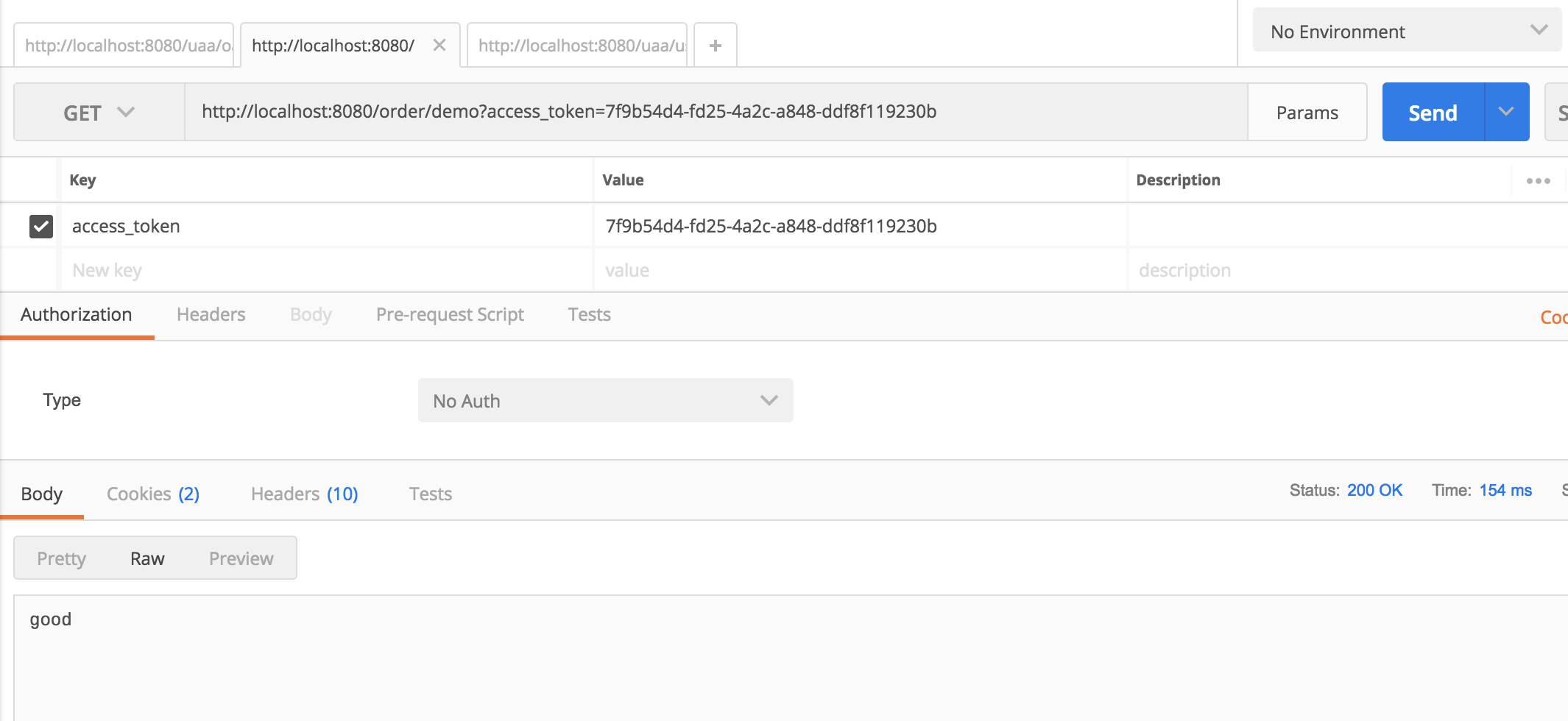
具备authority未query-demo的才能访问,即为admin用户
@RestController
public class DemoController {
    @GetMapping("/demo")
    @PreAuthorize("hasAuthority('query-demo')")
    public String getDemo(){
        return "good";
    }
}
api-gateway在本例中有2个作用:
-
本身作为一个client,使用
implicit -
作为外部app访问的方向代理
@Configuration
@EnableOAuth2Sso
public class SecurityConfig extends WebSecurityConfigurerAdapter{
    @Override
    protected void configure(HttpSecurity http) throws Exception {

        http.csrf().disable();

    }

}
zuul:
  routes:
    uaa:
      path: /uaa/**
      sensitiveHeaders:
      serviceId: auth-server
    order:
      path: /order/**
      sensitiveHeaders:
      serviceId: order-service
  add-proxy-headers: true

security:
  oauth2:
    client:
      access-token-uri: http://localhost:8080/uaa/oauth/token
      user-authorization-uri: http://localhost:8080/uaa/oauth/authorize
      client-id: webapp
    resource:
      user-info-uri: http://localhost:8080/uaa/user
      prefer-token-info: false
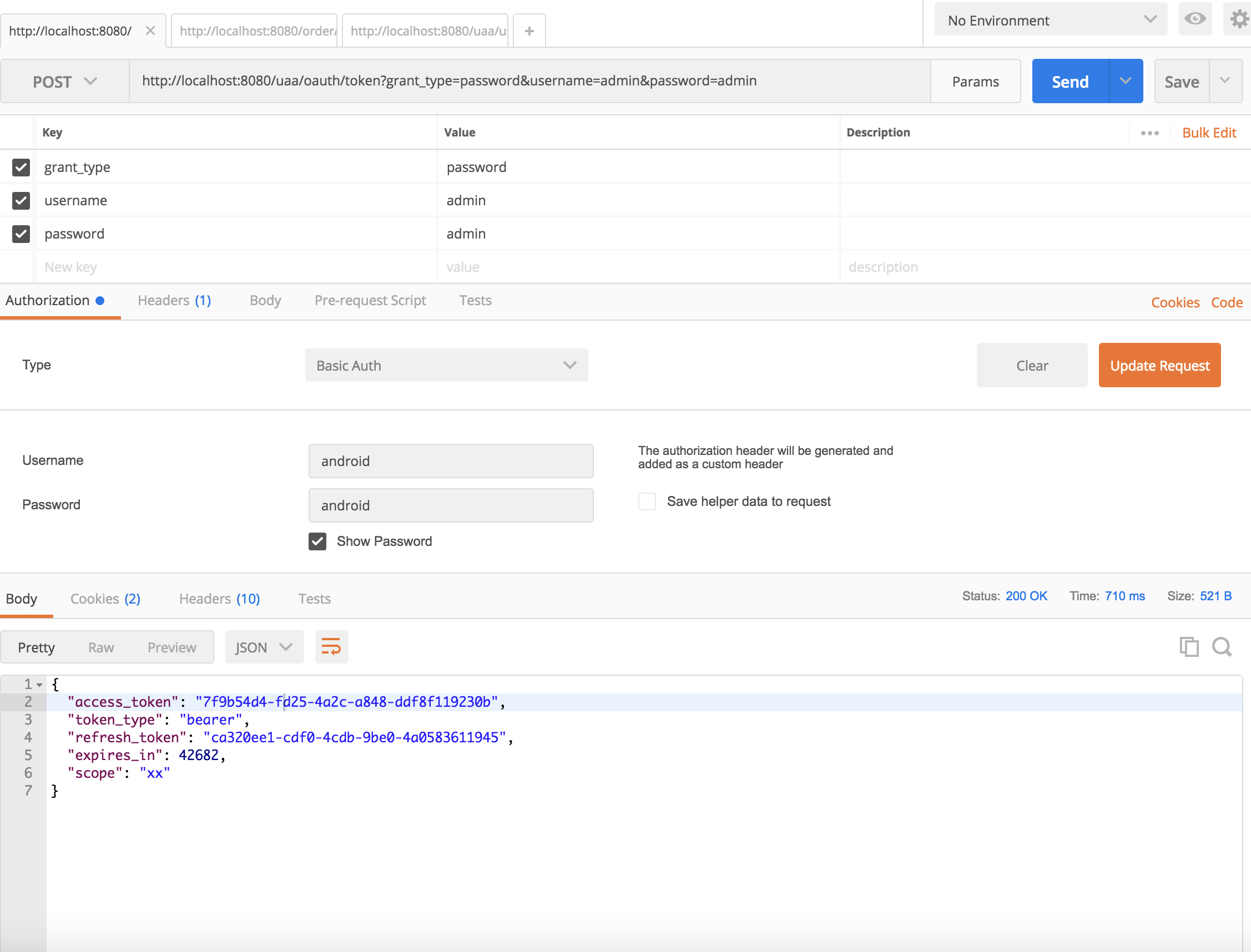
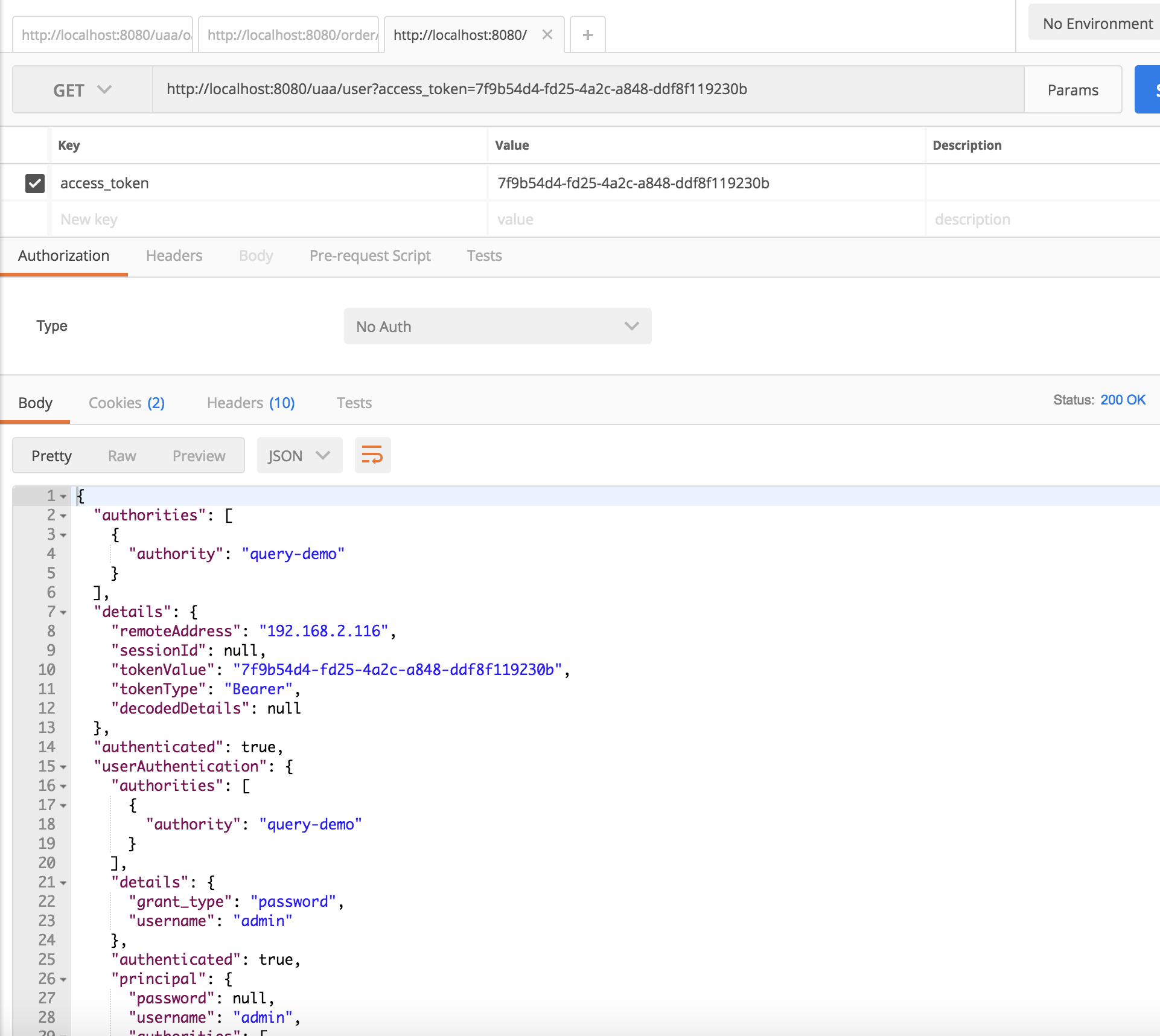
使用Postman向http://localhost:8080/uaa/oauth/token发送请求获得access_token(admin用户的如7f9b54d4-fd25-4a2c-a848-ddf8f119230b)
-
admin用户
-
wyf用户
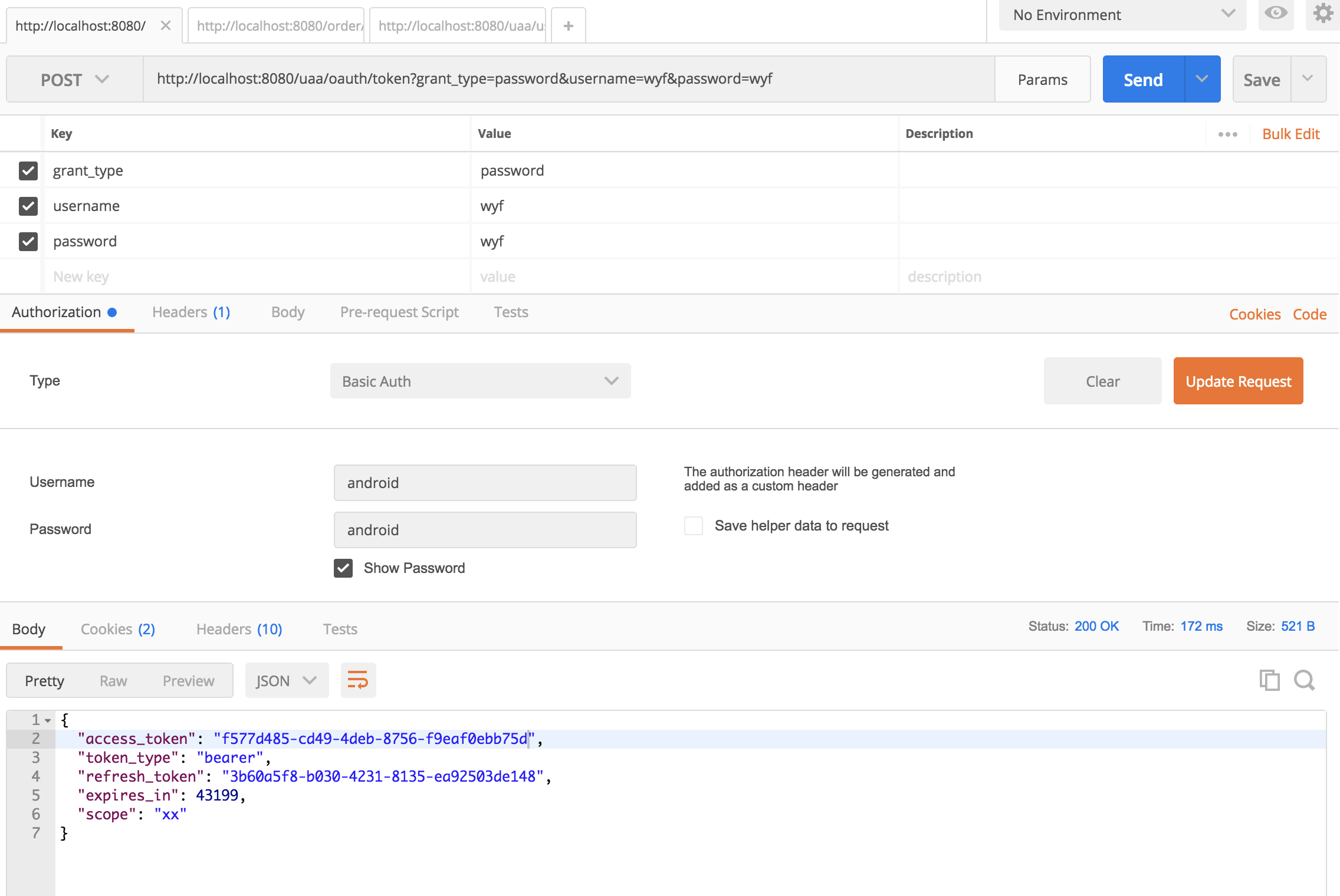
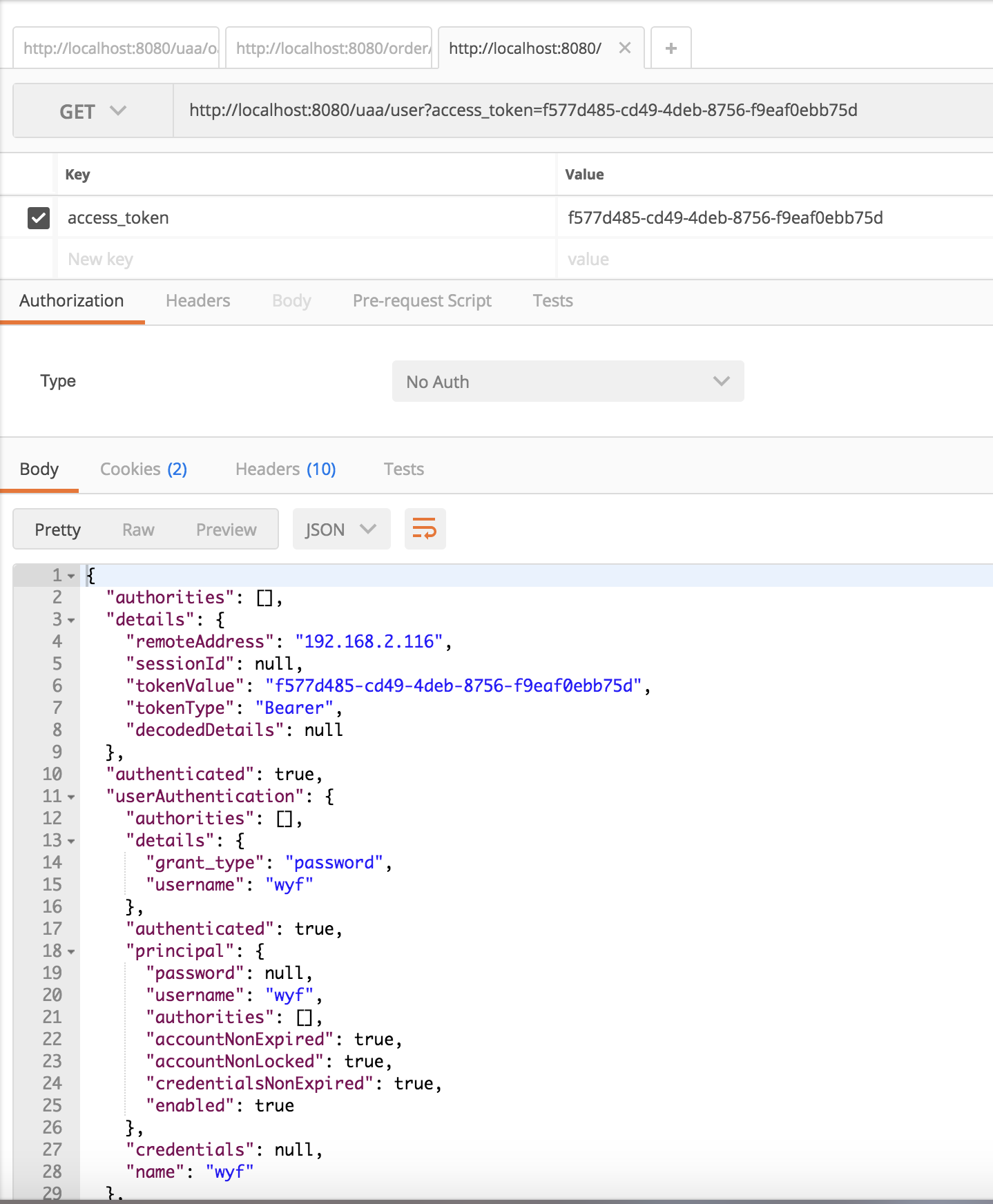


暂时没有做测试,下次补充。
所谓注销只需将access_token和refresh_token失效即可,我们模仿org.springframework.security.oauth2.provider.endpoint.TokenEndpoint写一个使access_token和refresh_token失效的Endpoint:
@FrameworkEndpoint
public class RevokeTokenEndpoint {

    @Autowired
    @Qualifier("consumerTokenServices")
    ConsumerTokenServices consumerTokenServices;

    @RequestMapping(method = RequestMethod.DELETE, value = "/oauth/token")
    @ResponseBody
    public String revokeToken(String access_token) {
        if (consumerTokenServices.revokeToken(access_token)){
            return "注销成功";
        }else{
            return "注销失败";
        }
    }
}
