Spatial intelligence
Perception systems for understanding real-world spaces in 3D and 4D, with emphasis on semantic scene understanding and geometric reasoning.
GeezerVisonThe World Wide Web, restored to 800 pixels of glory. |
| Home|About|Gaming cabinet|Archives|How it works|Starter sites |
GeezerVison is showing ir0.github.io — Iro Armeni | Gradient Spaces Stanford University Designing adaptive spaces with computer vision, generative AI, and mixed reality.I am an Assistant Professor of Civil and Environmental Engineering and, by courtesy, of Computer Science at Stanford University. I lead the Gradient Spaces group, researching at the intersection of Computer Vision, Generative AI, and the built environment. My work focuses on developing machine perception architectures and applications capable of designing, reconstructing, and predicting in adaptive physical and digital spaces.
Research at the intersection of computer vision, generative AI, and the built environment.
About Building intelligent systems for the spaces people inhabit.My area of focus is on developing quantitative and data-driven methods that learn from real-world visual data to generate, predict, and simulate new or renewed built environments that place the human in the center. My goal is to create sustainable, inclusive, and adaptive built environments that can support our current and future physical and digital needs. I am intrigued by the idea of creating responsive spaces that blend from the 100% physical (real reality) to the 100% digital (virtual reality) and anything in between, with the use of Mixed Reality. Read more in A Day in the Life of an Architect in the Gradient World. 
Current focus
Education & awards Background and recognitionEducation
Awards
Research Lab themesSpatial intelligencePerception systems for understanding real-world spaces in 3D and 4D, with emphasis on semantic scene understanding and geometric reasoning. Generative designLearning models that synthesize and predict spaces, support planning, and reason over future built conditions. Adaptive environmentsDesigning responsive, data-driven physical and digital spaces that support sustainability, resilience, and human-centered use. Publications Academic publications
Search publications
Recent publications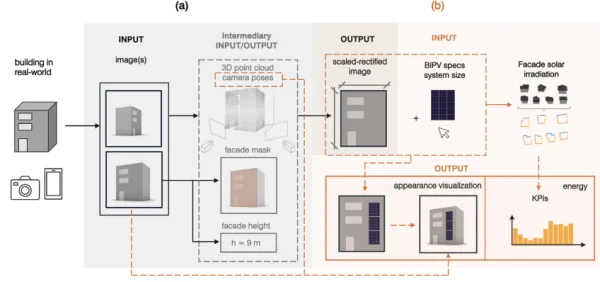
Automated Facade Solar Retrofits Using Feed-forward 3D Reconstruction and Generative Image EditingAyca Duran, Christoph Waibel, Bernd Bickel, Iro Armeni, Arno Schlueter Automation in Construction, Vol. 193, 107294, 2027 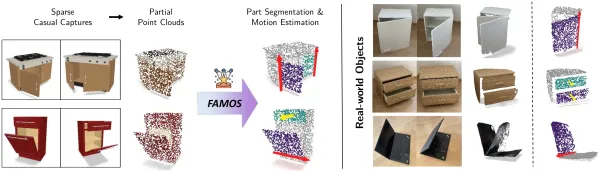
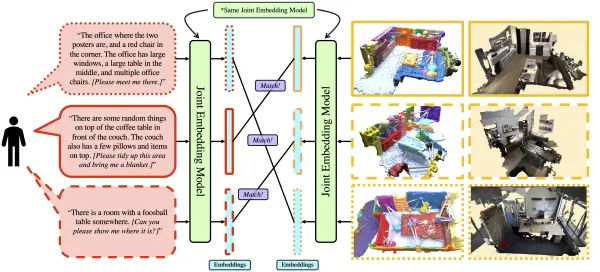
SceneKey: Multi-modal Embedding for Fine-grained 3D Scene RetrievalLuka Milivojevic, X. Wang, Y. Miao, Sayan Deb Sarkar, L. Sun, Nikola Popovic, Iro Armeni, Danda Pani Paudel WACV 2027 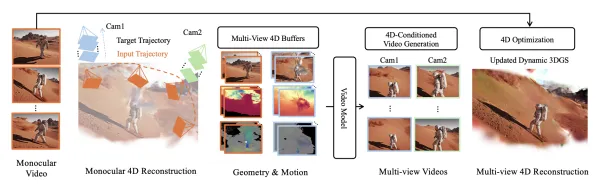
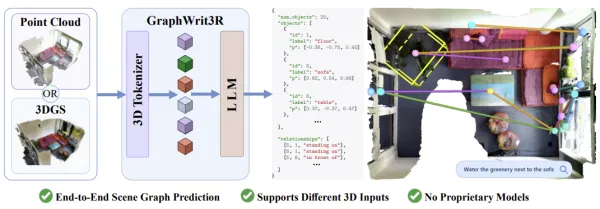
GraphWrit3R: End-to-End Writing of Scene Graphs for Multi-Modal 3D ScenesLuka Milivojevic, Nikola Popovic, Sayan Deb Sarkar, Sebastian Koch, Iro Armeni, Luc Van Gool, Danda Pani Paudel NeurIPS 2026 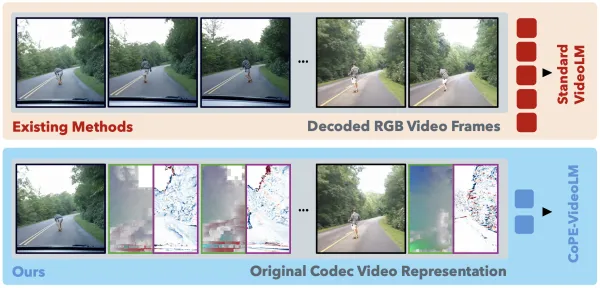
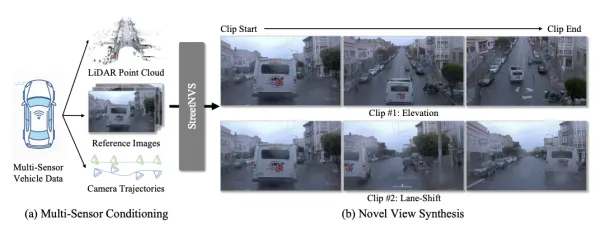
Energy-based Compositional Diffusion PlanningTao Sun, Utkarsh Aashu Mishra, Jiaxin Lu, Danfei Xu, Iro Armeni ICML 2026 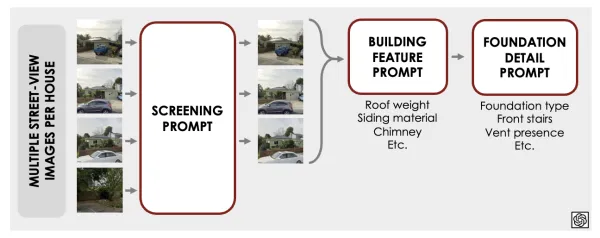
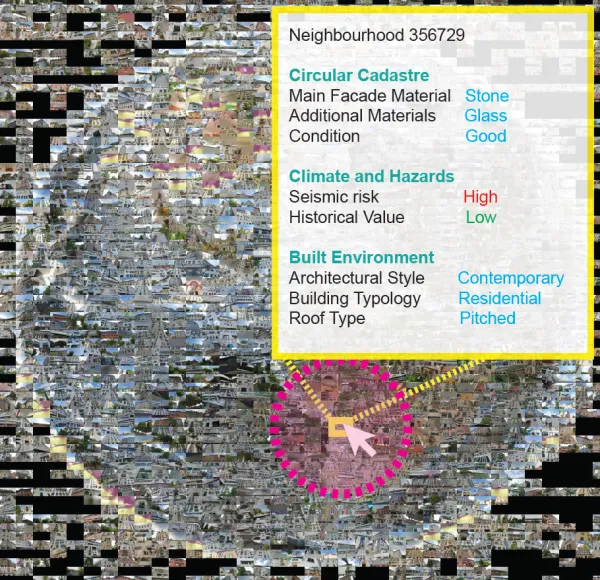
Leveraging vision and language models to capture residential seismic vulnerabilities in the building inventoryMia Lochhead, Iro Armeni, and Gregory Deierlein NCEE 2026 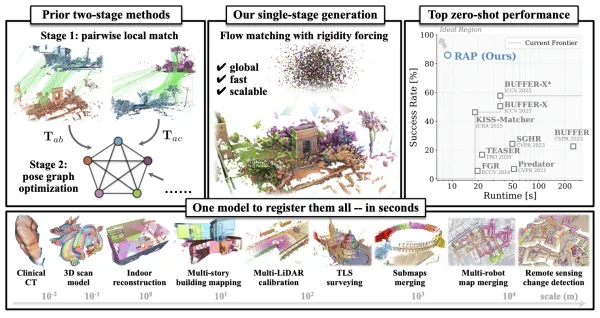
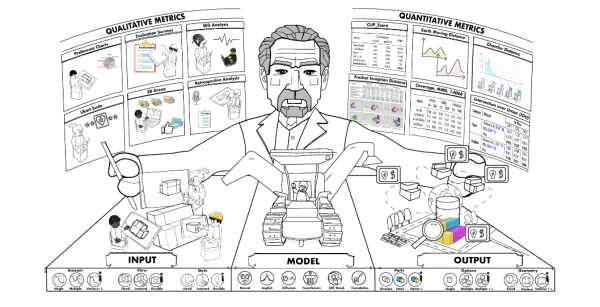
Deep Sketch-Based 3D Modeling: A SurveyAlberto Tono, Jiajun Wu, Gordon Wetzstein, Iro Armeni, Hariharan Subramonyam, James Landay, and Martin Fischer Computer Graphics Forum 2026 
Show earlier publications
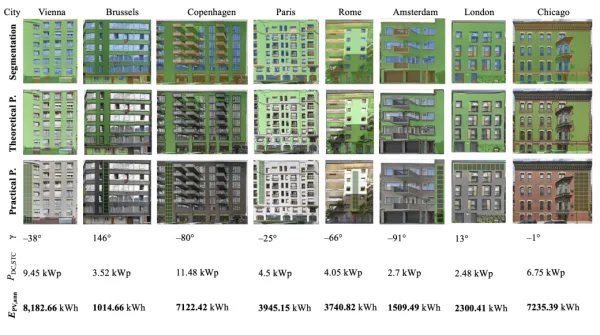
Facade Segmentation for Solar Photovoltaic SuitabilityAyca Duran, Christoph Waibel, Bernd Bickel, Iro Armeni, Arno Schlueter Tackling Climate Change with Machine Learning, Workshop in NeurIPS 2025 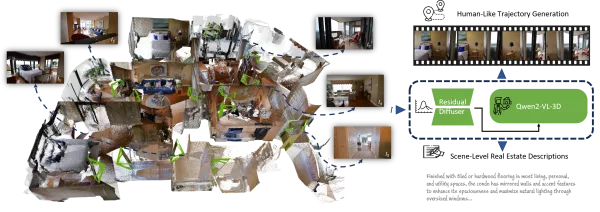
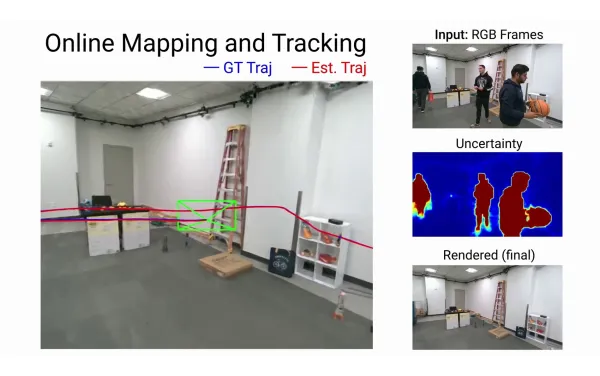
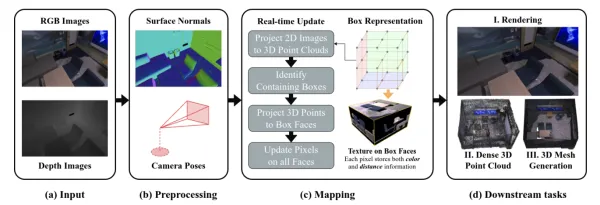
Multi-Hexplanes: A Lightweight Map Representation for Rendering and 3D ReconstructionJianhao Zheng, Gabor Valasek, Daniel Barath, Iro Armeni WACV 2025 [Oral Presentation] 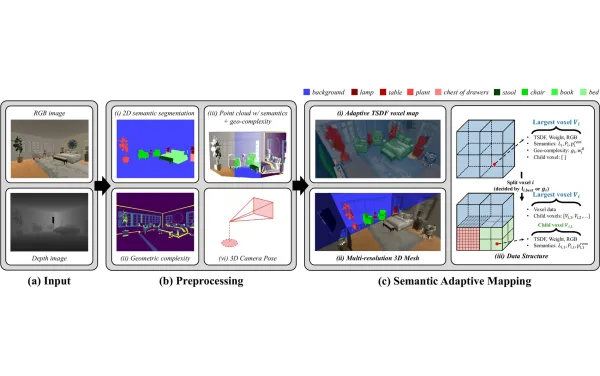
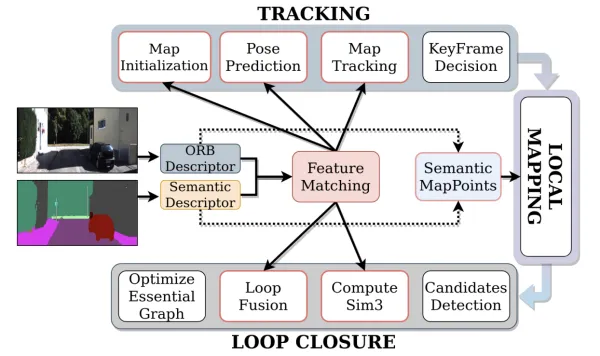
Semantically Guided Feature Matching for Visual SLAMOguzhan Ilter, Iro Armeni, Marc Pollefeys, Daniel Barath ICRA 2024 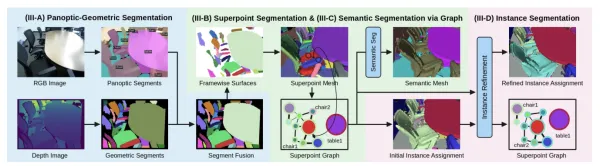
Volumetric Semantically Consistent 3D Panoptic MappingYang Miao, Iro Armeni, Marc Pollefeys, Daniel Barath IROS 2024 Oral Presentation 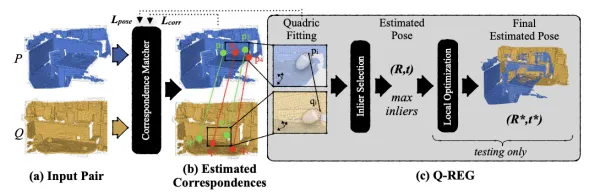
Q-REG: End-to-End Trainable Point Cloud Registration with Surface CurvatureShengze Jin, Daniel Barath, Marc Pollefeys, Iro Armeni 3DV 2024 SGAligner: 3D Scene Alignment with Scene GraphsSayan Deb Sarkar, Ondrej Miksik, Marc Pollefeys, Daniel Barath, Iro Armeni ICCV 2023 ARrow: A Real-Time AR Rowing CoachElena Iannuci, Zhu-Tian Chen, Iro Armeni, Marc Pollefeys, Hanspeter Pfister, Johanna Beyer EuroVis 2023 [Best Short Paper Honorable Mention Award] Learning-Based Relational Object Matching Across ViewsCathrin Elich, Iro Armeni, Martin R. Oswald, Marc Pollefeys, Joerg Stueckler ICRA 2023 HoloLabel: Augmented Reality User-In-The-Loop Online Annotation Tool for As-Is Building InformationDhruv Agrawal*, Janik Lobsiger*, Jessica Bo, Véronique Kaufmann, Iro Armeni EC3 2022 SemSpray: Virtual Reality As-Is Semantic Information Labeling Tool for 3D Spatial DataYiming Zhao*, Cyprien Fol*, Yuchang Jiang, Tianyu Wu, Iro Armeni EC3 2022 ImpliCity: City Modeling From Satellite Images with Deep Implicit Occupancy FieldsCorinne Stucker, Bingxin Ke, Yuanwen Yue, Shengyu Huang, Iro Armeni, Konrad Schindler ISPRS Congress 2022 [Best Young Author Award] Robust Policies via Mid-Level Visual Representations: An Experimental Study in Manipulation and NavigationBryan Chen*, Alexander Sax*, Gene Lewis, Iro Armeni, Silvio Savarese, Amir Zamir, Jitendra Malik, Lerrel Pinto CoRL 2020 3D Scene Graph: A Structure for Unified Semantics, 3D Space, and CameraIro Armeni, Jerry Zhi-Yang He, JunYoung Gwak, Amir R. Zamir, Martin Fischer, Jitendra Malik, Silvio Savarese ICCV 2019 SEGCloud: Semantic Segmentation of 3D Point CloudsLyne P. Tchapmi, Christopher B. Choy, Iro Armeni, JunYoung Gwak, Silvio Savarese 3DV 2017 [Spotlight Presentation] Joint 2D-3D-Semantic Data for Indoor Scene UnderstandingIro Armeni*, Alexander Sax*, Amir R. Zamir, Silvio Savarese Technical Report 2017 3D Semantic Parsing of Large-Scale Indoor SpacesIro Armeni, Ozan Sener, Amir R. Zamir, Helen Jiang, Ioannis Brilakis, Martin Fisher, Silvio Savarese CVPR 2016 [Oral Presentation] State of Research in Automatic As-Built ModellingViorica Pătrăucean, Iro Armeni, Mohammad Nahangi, Jamie Yeung, Ioannis Brilakis, Carl Haas Advanced Engineering Informatics 2015 A dynamic identification of a historical building using accelerometers with interface modules and a digital synchronization methodLuigi Spedicato, Iro Armeni, Nicola Ivan Giannoccaro, Markos Avlonitis, Sozon Papavlasopoulos Periodical of Key Engineering Materials 2015 Pedestrian navigation and shortest path: Preference versus distanceIro Armeni, Konstantinos Chorianopoulos Workshop, International Conference on Intelligent Environments 2013 Resume of the thesis "More than a machine" J. A. CoderchIro Armeni*, Telesilla Bristogianni* Technical Chronicles, Technical Chamber of Greece 2020 Books & chapters Books and chaptersArtificial Intelligence for Predicting Reuse PatternsIro Armeni, Deepika Raghu, Catherine De Wolf in "A Circular Built Environment in the Digital Age" Eds. Catherine De Wolf, Sultan Çetin, Nancy Bocken Springer Nature Miscellaneous Selected conversations and storiesPanel discussion Panel Discussion on Practical Applications of AI: On ConstructionIro Armeni 12th Thessaloniki International Symposium in World Affairs: "Prometheus' dilemma: The applications of AI in everyday life." watch the discussionPodcast Computer Vision and Mixed Reality in Architecture with Prof. Iro ArmeniCircular Engineering for Architecture Podcast, 2024 listen to the podcastShort story A Day in the Life of an Architect in the Gradient WorldShort Story, 2023 Iro Armeni read the storyDatasets Open data and resources
HouseTour, 2025
Over 1,200 house-tour videos with camera poses, 3D reconstructions, and real estate descriptions. Website
Nothing Stands Still (NSS), 2024
3D point clouds from 6 large indoor building areas under construction or renovation, across 27 temporal stages. Website
3D Scene Graph, 2019
Semantic annotations for Gibson environment models, including 3D/2D segmentations and object, room, and camera relationships. Website
Stanford 2D-3D-Semantics Dataset (2D-3D-S), 2017
Registered RGB, depth, surface normal, and semantic annotations across 6,000+ m² of indoor space, with 3D meshes and point clouds. Website
Stanford Large-Scale 3D Indoor Spaces Dataset (S3DIS), 2016
Point clouds of six large-scale indoor areas across three buildings, annotated with 12 building-element classes plus clutter. Website |
| You are visitor 01402503 — GeezerVison does not store the pages you look up. Best viewed with Netscape Navigator 4.7 or Internet Explorer 6 at 800×600. No cookies required. |