GeezerVison is showing kaimary.github.io — Yuankai Fan 范元凯 | Home
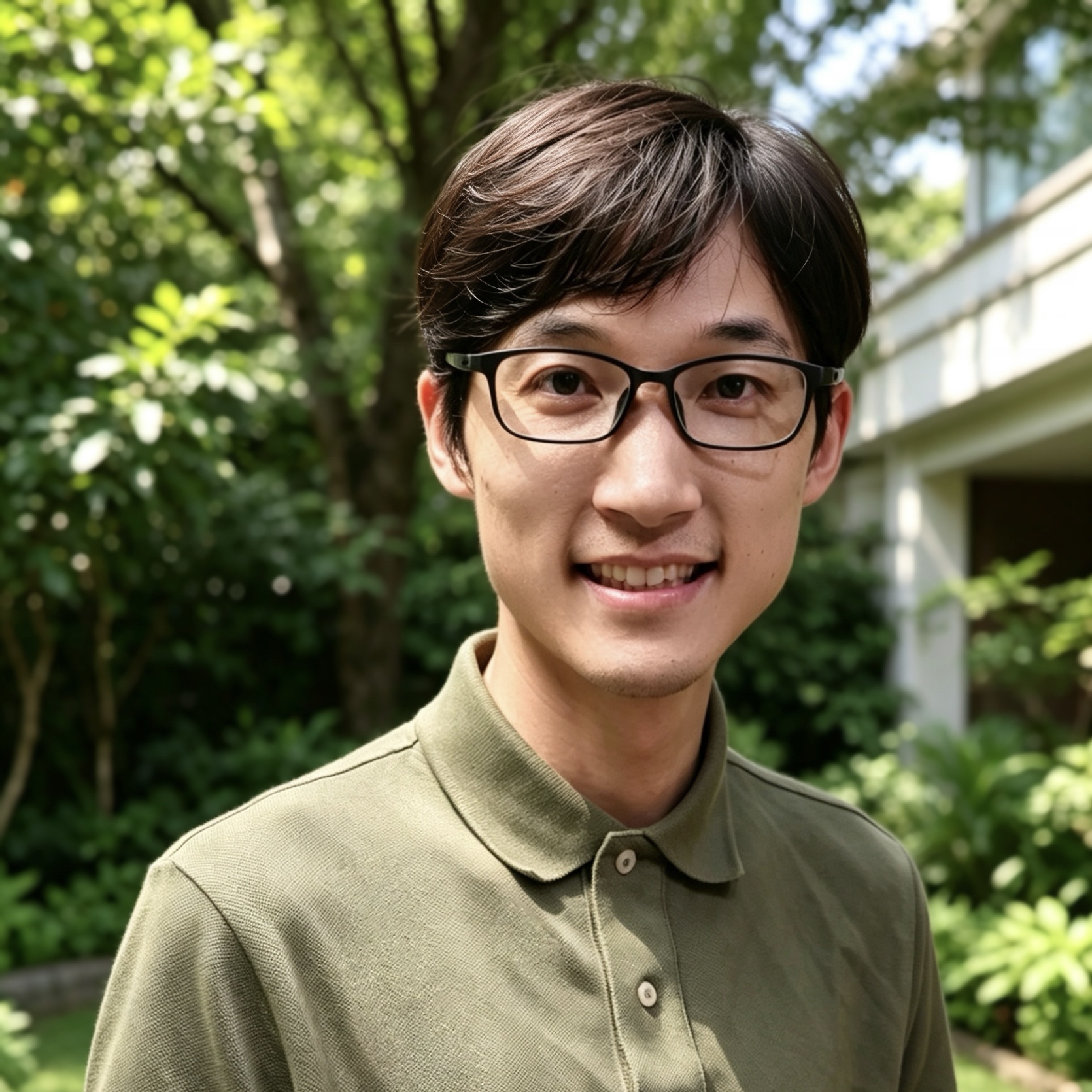
Hi👋 I am currently a Senior Researcher in AI Infrastructure Research Center at the Institute of Artificial Intelligence (TeleAI), China Telecom. My research lies at the intersection of AI/Data Infra, MLSys, and DB, with a particular focus on efficient training & inference for large-scale models (including vision-language models, generative diffusion models, and unified multimodal models), efficient multimodal data processing & mangement, and distributed storage (caching) systems.
Before TeleAI, I was a postdoc at Fudan University, where I focus on AI for database systems. Pior to that, I worked for Microsoft as a senior engineer, gaining extensive experience in (Windows) system development as well as (Azure) AI services, and earlier served as a software engineer at EMC2 (now part of DELL Technologies), specializing in cloud storage technology.
I received my Ph.D in CS from FDU under the guidance of Prof. X. Sean Wang (and Prof. Zhenying He), and also hold a B.Eng. degree from YSU.
Openings
I'm seeking highly motivated students who can intern in Shanghai for 3+ months. If you’re passionate about AI systems, please email me your CV. Experience with deep learning training/inference frameworks (deepspeed/megatron-lm/sglang/vllm), distributed caching systems (mooncake/lmcache/dynamo), distributed computing frameworks (ray), or compilers/kernels (CUDA, Triton, TileLang, TVM) is a plus, but not required.
Our team works on making large-scale AI training and inference more efficient, reliable, and accessible. For an overview of our team, please see AI基础设施研究所介绍.
SC 2026: Arachne, a training framework for Text-to-Video models that decomposes training into fine-grained computational units and orchestrates their execution via coordinated spatial and temporal optimization, is accepted to SC 2026! See our paper “Arachne: Orchestrating Cascades for Efficient Text-to-Video Model Training” for details. Slides · Video
Working Papers
Bridging L2–L3: A Unified KV Offloading System for Serving Large-Scale Language Models
Under the AI Flow framework, communication is shifting from transmitting fidelity-oriented information flows toward delivering task-oriented and perception-oriented token flows across heterogeneous network resources. Video communication is a fundamental component of modern information networks. However, under ultra-low-bandwidth and weak-network conditions, conventional video coding and transmission methods, which are optimized for pixel-level fidelity, often struggle to balance visual usability, transmission efficiency, and robustness to unstable links. In this paper, we propose Generative Transmission (GenTrans) for video communication under ultra-low-bandwidth and weak-network conditions. Built upon Generative Video Compression, GenTrans formulates video transmission as a joint optimization problem involving bandwidth, computation, and memory, rather than treating it merely as a signal coding task. By leveraging generative priors, cross-clip memory reuse, runtime state reuse, and weak-network-aware transport, GenTrans significantly reduces transmission overhead while enabling visually coherent and practically useful reconstruction.
@inproceedings{fan2026WAICA,author={Chen, Xiangyu and Luo, Jixiang and Fan, Yuankai and Huang, Haibin and Zhang, Chi and Li, Xuelong},title={Generative Transmission: Rethinking Computation, Bandwidth, and Memory in Communication},award={Best Paper Award},booktitle={World Artificial Intelligence Conference Academic},year={2026},}
Arachne: Orchestrating Cascades for Efficient Text-to-Video Model Training
Peng Yu, Yuankai Fan, Yang Qiu, Tian Li, Bihuan Chen, Yin Chen, and Qizhen Weng
In Proceedings of the International Conference for High Performance Computing, Networking, Storage and Analysis 2026
The rising demand for AI-generated videos is fueled by advances in large-scale Text-to-Video (T2V) models, trained on extensive datasets of video clips spanning diverse resolutions and durations. To address this data heterogeneity, current training methods often use a bucketing strategy that groups samples into discrete buckets for efficiency. However, this approach struggles to scale with compute and data volumes under static parallelism schemes, such as data and sequence parallelism, leading to significant workload imbalances and hardware under-utilization. In this paper, we present Arachne, a novel training framework for efficient T2V model training at scale. Arachne decomposes the training process into fine-grained computational units, called cascades, orchestrating their distributed execution and synchronization across the cluster through coordinated spatial and temporal optimization. Our comprehensive evaluation demonstrates that Arachne reduces iteration time by up to 65% over leading frameworks, exhibiting a positive scaling trend where its performance advantages amplify as training scale grows.
@inproceedings{fan2026SC,author={Yu, Peng and Fan, Yuankai and Qiu, Yang and Li, Tian and Chen, Bihuan and Chen, Yin and Weng, Qizhen},title={Arachne: Orchestrating Cascades for Efficient Text-to-Video Model Training},booktitle={Proceedings of the International Conference for High Performance Computing, Networking, Storage and Analysis},year={2026},}
AI for Green Multi-Cluster: Intelligent Management towards Green and Low-Carbon, Large-scale Multi-Clusters
Qizhen Weng, and Yuankai Fan
In AI for Good Innovate for Impact Report Jul 2025
This use case presents AI-powered green multi-cluster management for large-scale intelligent infrastructure. It uses AI-driven scheduling, GPU multiplexing, cross-cluster coordination, and multimodal explanation mechanisms to improve cluster utilization, reduce energy consumption, and support sustainable low-carbon AI infrastructure management.
@incollection{weng2025GreenMultiCluster,author={Weng, Qizhen and Fan, Yuankai},title={AI for Green Multi-Cluster: Intelligent Management towards Green and Low-Carbon, Large-scale Multi-Clusters},booktitle={AI for Good Innovate for Impact Report},publisher={International Telecommunication Union},month=jul,year={2025},chapter={4.2-Climate Change},section={Use Case 8},pages={182--187},}
Rethinking Data in NL2SQL: A Survey of What We Have and What We Expect
Yuankai Fan, Qizhen Weng, Yin Chen, and X. Sean Wang
This survey rethinks the role of data in NL2SQL, reviewing what data resources, benchmarks, and practices the community currently has and outlining what future NL2SQL systems and datasets should support.
@article{fan2025NL2SQL,author={Fan, Yuankai and Weng, Qizhen and Chen, Yin and Wang, X. Sean},title={Rethinking Data in {NL2SQL}: A Survey of What We Have and What We Expect},journal={Vicinagearth},volume={2},number={1},pages={15},year={2025},month=nov,issn={3005-060X},doi={10.1007/s44336-025-00026-9},}
Grounding Natural Language to SQL Translation with Data-Based Self-Explanations
Yuankai Fan, Tonghui Ren, Can Huang, Zhenying He, and X. Sean Wang
In International Conference on Data Engineering 2025
Natural Language Interfaces for Databases empower non-technical users to interact with data using natural language (NL). Advanced approaches, utilizing either neural sequence-to-sequence or more recent sophisticated large-scale language models, typically implement NL to SQL (NL2SQL) translation in an end-to-end fashion. However, like humans, these end-to-end translation models may not always generate the best SQL output on their first try. In this paper, we propose CycleSQL, an iterative framework designed for end-to-end translation models to autonomously generate the best output through self-evaluation. The main idea of CycleSQL is to introduce data-grounded NL explanations of query results as self-provided feedback, and use the feedback to validate the correctness of the translation iteratively, hence improving the overall translation accuracy.
@inproceedings{cyclesql2025,author={Fan, Yuankai and Ren, Tonghui and Huang, Can and He, Zhenying and Wang, X. Sean},title={Grounding Natural Language to SQL Translation with Data-Based Self-Explanations},booktitle={International Conference on Data Engineering},pages={29--42},year={2025},}
The Power of Constraints in Natural Language to SQL Translation
Tonghui Ren, Chen Ke, Yuankai Fan, Yinan Jing, Zhenying He, Kai Zhang, and X. Sean Wang
Current large language model (LLM)-based Natural Language to SQL (NL2SQL) approaches typically rely on the database schema and partial data values for the translation. These approaches are unable to use sufficient data for accurate database understanding due to limitations in data selection methods, and they cannot input the entire database due to the limited context window sizes of LLMs. This insufficient data integration may result in an incomplete understanding of the database, leading to semantically incorrect SQL generation. In this paper, we introduce REDSQL, a novel plug-and-play framework that refines the predicted SQL by utilizing the entire database in the refinement process.
@article{red2025,author={Ren, Tonghui and Ke, Chen and Fan, Yuankai and Jing, Yinan and He, Zhenying and Zhang, Kai and Wang, X. Sean},title={The Power of Constraints in Natural Language to {SQL} Translation},journal={Proc. {VLDB} Endow.},volume={18},number={7},pages={2097--2111},year={2025},doi={10.14778/3734839.3734847},}
Computation-Bandwidth-Memory Trade-offs: A Unified Paradigm for AI Infrastructure
Large-scale artificial intelligence (AI) models are fundamentally transforming industries and redefining the paradigm of human–machine collaboration. While the technological revolution signals a new era of machine intelligence, the continued scaling of these models has exposed significant limitations in contemporary hardware architectures, manifesting as constraints on computational efficiency, interconnection bandwidth, and memory capacity. These three dimensions are inseparably intertwined, such that advances along any single axis often exacerbate bottlenecks in the others, rendering isolated optimizations increasingly ineffective. Achieving an optimal balance among them to maximize system efficiency therefore remains a central challenge in the design of scalable AI systems. To address this challenge, we introduce Computation-Bandwidth-Memory Trade-offs, termed the AI Trinity, a unified paradigm that positions computation, bandwidth, and memory as coequal pillars for next-generation AI infrastructure. At its core, AI Trinity enables a dynamic flow of resources across these pillars, transcending single-resource bottlenecks and adapting to diverse scenarios, thereby optimizing overall system performance to its maximum potential. Within this framework, AI Trinity identifies three fundamental trade-offs: (1) More Computation→Less Bandwidth, wherein computational resources are exploited to reduce data transmission under limited bandwidth conditions, (2) More Bandwidth→Less Memory, which exploits abundant communication capacity to populate or refresh memory when local storage resources are constrained, and (3) More Memory→Less Computation, whereby storage capacity are utilized to mitigate redundant computation when computational costs are prohibitive.
@article{trinity2025,author={Fan, Yuankai and Weng, Qizhen and Li, Xuelong},title={Computation-Bandwidth-Memory Trade-offs: {A} Unified Paradigm for {AI} Infrastructure},journal={CoRR},volume={abs/2601.11577},year={2025},doi={10.48550/ARXIV.2601.11577},eprinttype={arXiv},eprint={2601.11577},}
A Confidence-based Knowledge Integration Framework for Cross-Domain Table Question Answering
Yuankai Fan, Tonghui Ren, Can Huang, Beini Zheng, Yinan Jing, Zhenying He, Jinbao Li, and Jianxin Li
Recent advancements in TableQA leverage sequence-to-sequence (Seq2seq) deep learning models to accurately respond to natural language queries. These models achieve this by converting the queries into SQL queries, using information drawn from one or more tables. However, Seq2seq models often produce uncertain low-confidence predictions when distributing probability mass across multiple outputs during a decoding step, frequently yielding translation errors. To tackle this problem, we present CKIF, a confidence-based knowledge integration framework that uses a two-stage deep-learning-based ranking technique to mitigate the low-confidence problem commonly associated with Seq2seq models for TableQA.
@article{ckif2024,author={Fan, Yuankai and Ren, Tonghui and Huang, Can and Zheng, Beini and Jing, Yinan and He, Zhenying and Li, Jinbao and Li, Jianxin},title={A Confidence-based Knowledge Integration Framework for Cross-Domain Table Question Answering},journal={Knowledge-Based Systems},volume={306},pages={112718},year={2024},}
MetaSQL: A Generate-then-Rank Framework for Natural Language to SQL Translation
Yuankai Fan, Zhenying He, Tonghui Ren, Can Huang, Yinan Jing, Kai Zhang, and X. Sean Wang
In International Conference on Data Engineering 2024
The Natural Language Interface to Databases (NLIDB) empowers non-technical users with database access through intuitive natural language interactions. Advanced approaches, utilizing neural sequence-to-sequence models or large-scale language models, typically employ auto-regressive decoding to generate unique SQL queries sequentially. In this paper, we propose MetaSQL, a unified generate-then-rank framework that can be flexibly incorporated with existing NLIDBs to consistently improve their translation accuracy. MetaSQL introduces query metadata to control the generation of better SQL query candidates and uses learning-to-rank algorithms to retrieve globally optimized queries.
@inproceedings{metasql2024,author={Fan, Yuankai and He, Zhenying and Ren, Tonghui and Huang, Can and Jing, Yinan and Zhang, Kai and Wang, X. Sean},title={MetaSQL: A Generate-then-Rank Framework for Natural Language to SQL Translation},booktitle={International Conference on Data Engineering},pages={1765--1778},year={2024},}
GAR: A Generate-and-Rank Approach for Natural Language to SQL Translation
Yuankai Fan, Zhenying He, Tonghui Ren, Dianjun Guo, Lin Chen, Ruisi Zhu, Guanduo Chen, Yinan Jing, Kai Zhang, and X. Sean Wang
In International Conference on Data Engineering 2023
A Natural Language Interface to Databases (NLIDB) aims to help end-users access databases. State-of-the-art approaches primarily construct language translation models to convert NL queries to SQL queries. While these models exhibit good performance on NLIDB benchmarks, the translation accuracy seems to have stalled at between 70%-75%, and most erroneous translations happen with complex queries that require an understanding of the structure and semantics specific to a database. This paper proposes a Generate-And-Rank approach called GAR.
@inproceedings{gar2023,author={Fan, Yuankai and He, Zhenying and Ren, Tonghui and Guo, Dianjun and Chen, Lin and Zhu, Ruisi and Chen, Guanduo and Jing, Yinan and Zhang, Kai and Wang, X. Sean},title={{GAR}: A Generate-and-Rank Approach for Natural Language to SQL Translation},booktitle={International Conference on Data Engineering},pages={110--122},year={2023},}
GenSQL: A Generative Natural Language Interface to Database Systems
Yuankai Fan, Tonghui Ren, Zhenying He, X. Sean Wang, Ye Zhang, and Xingang Li
In International Conference on Data Engineering Apr 2023
GenSql is a generative natural language interface to database systems that demonstrates natural language to SQL translation capabilities for interactive database access.
@inproceedings{gensql2023,author={Fan, Yuankai and Ren, Tonghui and He, Zhenying and Wang, X. Sean and Zhang, Ye and Li, Xingang},title={{GenSQL}: A Generative Natural Language Interface to Database Systems},booktitle={International Conference on Data Engineering},pages={3603--3606},month=apr,year={2023},doi={10.1109/ICDE55515.2023.00278},}
Last Update: 2026-07-22
You are visitor 01402775 — GeezerVison does not store the pages you look up. Best viewed with Netscape Navigator 4.7 or Internet Explorer 6 at 800×600. No cookies required.