GeezerVisonThe World Wide Web, restored to 800 pixels of glory. |
| Home|About|Gaming cabinet|Archives|How it works|Starter sites |
GeezerVison is showing networkencyclopedia.com — Network Frame - NETWORK ENCYCLOPEDIA  In the intricate tapestry of network communication, a ‘network frame’ serves as a fundamental building block. This essential unit of data transmission operates at the heart of network interactions, specifically within the data-link layer and physical layer of the seven-layer OSI Model. A network frame is a packaged piece of data composed of various segments, including a header with a preamble, destination and source addresses, a data payload, and often error-checking information. This article aims to unravel the complexities of network frames, offering a deep dive into their structure, function, and significance in the realm of networking. We’ll explore how frames are created, transmitted, and processed within a network, delving into each component’s role and the overarching mechanisms ensuring efficient and reliable data communication. Table of Contents:
 1. What is a Network Frame?A Network Frame is a segment of data on a network or telecommunications link, generally consisting of a header with preamble (start of frame flag), destination and source addresses, data payload, and usually some form of error-checking information. Frames are assembled and generated by the data-link layer and physical layer of the seven-layer OSI Model. This assembly process is called “framing.” In other words, packets from the network layer are encapsulated by the data-link layer into frames. Data segments generated by higher layers of the OSI model are generally referred to as packets, but the term “packet” is also sometimes used to include frames. The format in which data frames are constructed depends on the particular data-link layer protocol being used. Thus, we can speak of Ethernet frames, Integrated Services Digital Network (ISDN) frames, X.25 frames, frame relay frames, and so on. Each particular local area network (LAN) or wide area network (WAN) data-link protocol has its own method of framing data for transmission over the network or telecommunications line. Frames can be fixed-length or variable-length, and have addressing information for multipoint connections or no addressing information for point-to-point connections. They can also have error correction, as in X.25, or no error correction, as in frame relay. 2. Understanding the Network Frame StructureDetailed Examination of Each Component of a Network FrameA network frame is a structured packet of data essential for effective network communication. Each component of a frame has a specific role, working in harmony to ensure the accurate and efficient transmission of data.
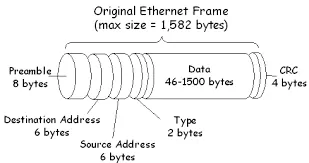 Role of the Header, Preamble, Addresses, Payload, and Error-Checking
3. Creation and Transmission of FramesHow Frames are Assembled in the Data-Link LayerFrame assembly occurs in the data-link layer, the second layer of the OSI Model. This layer is responsible for the logical structuring of data packets into frames. The process starts with raw data from the network layer, which is then encapsulated with the necessary headers and trailers. This encapsulation includes the addition of source and destination addresses, type/length information, and the FCS for error-checking. The Process of Transmitting Frames Through the Physical LayerOnce a frame is assembled, it is passed down to the physical layer, where it is converted into signals for transmission over the network medium. The physical layer handles the encoding and signaling, ensuring that the data in the frame is transmitted in a format that is understandable by the receiving hardware. Depending on the network type (like Ethernet, Wi-Fi, or fiber optics), the physical layer’s role includes defining connectors, voltage levels, and other physical specifications. The frame travels through the network medium, reaching its destination, where it is received and processed by the physical layer and then passed up to the data-link layer for further processing. 4. Frames in the OSI ModelExploration of How Network Frames Fit into the OSI ModelThe OSI (Open Systems Interconnection) Model, a conceptual framework used to understand network interactions, categorizes network processes into seven distinct layers. Network frames specifically operate within the Data-Link Layer (Layer 2) but are influenced by, and interact with, other layers in the model.
Interaction Between the Data-Link Layer and Other Layers in the ModelThe Data-Link Layer’s role in framing complements the functions of the adjacent layers:
5. Types of Network FramesDifferent Types of FramesNetwork frames vary depending on the network type and protocol. Some common types include:
Characteristics and Specific Uses of Each Type
6. Error Detection and Correction in FramesMechanisms for Error-Checking in Network FramesError-checking is a critical component in network frames to ensure data integrity. Several mechanisms are employed to detect and correct errors that may occur during transmission:
Techniques Used for Error Detection and Correction
7. Advanced ConceptsFrame Sequencing and ControlEffective frame management in networks involves more than just sending and receiving data; it requires precise control and sequencing.
Frame Prioritization and Quality of Service (QoS)In complex network environments, managing the priority of frames is essential to maintain QoS:
8. ConclusionIn conclusion, network frames are the backbone of data communication in networking. From their structured composition to their role in error detection and correction, frames ensure that data is transmitted efficiently and accurately across networks. The exploration of frame structures, types, and their functions within the OSI Model underscores their significance in network communications. Advanced concepts like frame sequencing, control, and Quality of Service (QoS) highlight the sophistication involved in managing network traffic. As technology evolves, the principles governing network frames continue to be crucial for the development of reliable and efficient networking systems. Understanding these fundamental aspects is essential for anyone looking to deepen their knowledge in the field of network communications. 9. References

Network Encyclopedia Editorial Team Every entry is written, reviewed and kept up to date by our editors. Spotted a mistake? We fix it in the open. Editorial Mission · Correction Policy · Suggest a correction Related entries |
| You are visitor 01402503 — GeezerVison does not store the pages you look up. Best viewed with Netscape Navigator 4.7 or Internet Explorer 6 at 800×600. No cookies required. |