GeezerVisonThe World Wide Web, restored to 800 pixels of glory. | ||||||||||||||||||||||||||||||||||||||||||
| Home|About|Gaming cabinet|Archives|How it works|Starter sites | ||||||||||||||||||||||||||||||||||||||||||
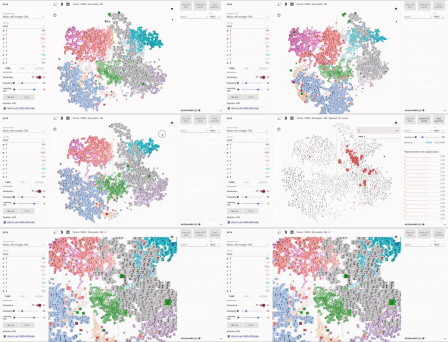
GeezerVison is showing numpy.org — NumPy Powerful N-dimensional arrays Fast and versatile, the NumPy vectorization, indexing, and broadcasting concepts are the de-facto standards of array computing today.Numerical computing tools NumPy offers comprehensive mathematical functions, random number generators, linear algebra routines, Fourier transforms, and more.Open source Distributed under a liberal BSD license, NumPy is developed and maintained publicly on GitHub by a vibrant, responsive, and diverse community.Interoperable NumPy supports a wide range of hardware and computing platforms, and plays well with distributed, GPU, and sparse array libraries.Performant The core of NumPy is well-optimized C code. Enjoy the flexibility of Python with the speed of compiled code.Easy to use NumPy’s high level syntax makes it accessible and productive for programmers from any background or experience level.Try NumPy Use the interactive shell to try NumPy in the browser ECOSYSTEMNearly every scientist working in Python draws on the power of NumPy. NumPy brings the computational power of languages like C and Fortran to Python, a language much easier to learn and use. With this power comes simplicity: a solution in NumPy is often clear and elegant. NumPy's API is the starting point when libraries are written to exploit innovative hardware, create specialized array types, or add capabilities beyond what NumPy provides.
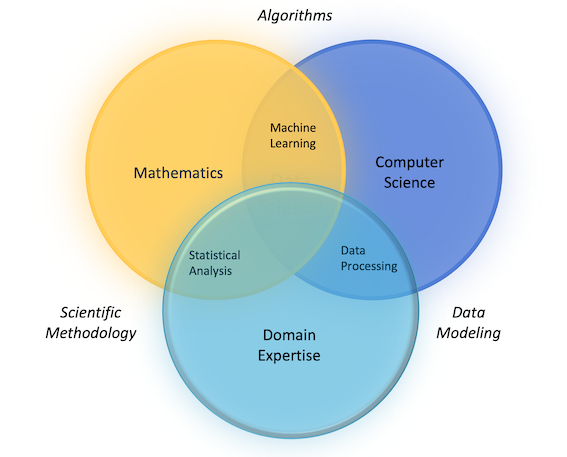
 NumPy lies at the core of a rich ecosystem of data science libraries. A typical exploratory data science workflow might look like:
NumPy forms the basis of powerful machine learning libraries like scikit-learn and SciPy. As machine learning grows, so does the list of libraries built on NumPy. TensorFlow’s deep learning capabilities have broad applications — among them speech and image recognition, text-based applications, time-series analysis, and video detection. PyTorch, another deep learning library, is popular among researchers in computer vision and natural language processing. Statistical techniques called ensemble methods such as binning, bagging, stacking, and boosting are among the ML algorithms implemented by tools such as XGBoost, LightGBM, and CatBoost — one of the fastest inference engines. Yellowbrick and Eli5 offer machine learning visualizations. 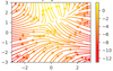 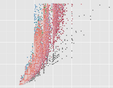  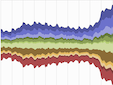 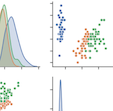 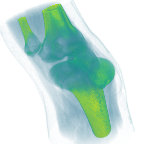   NumPy is an essential component in the burgeoning Python visualization landscape, which includes Matplotlib, Seaborn, Plotly, Altair, Bokeh, Holoviz, Vispy, Napari, and PyVista, to name a few. NumPy’s accelerated processing of large arrays allows researchers to visualize datasets far larger than native Python could handle. CASE STUDIESFirst Image of a Black Hole  How NumPy, together with libraries like SciPy and Matplotlib that depend on NumPy, enabled the Event Horizon Telescope to produce the first ever image of a black hole Detection of Gravitational Waves 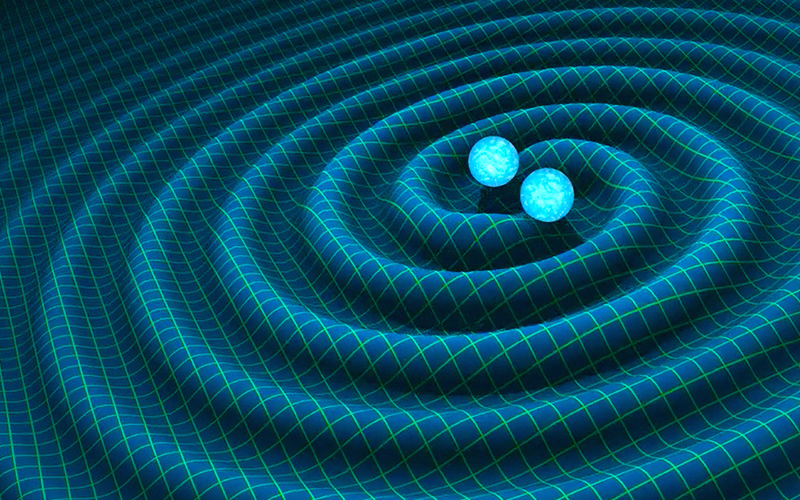 In 1916, Albert Einstein predicted gravitational waves; 100 years later their existence was confirmed by LIGO scientists using NumPy. Sports Analytics  Cricket Analytics is changing the game by improving player and team performance through statistical modelling and predictive analytics. NumPy enables many of these analyses. Pose Estimation using deep learning  DeepLabCut uses NumPy for accelerating scientific studies that involve observing animal behavior for better understanding of motor control, across species and timescales. | ||||||||||||||||||||||||||||||||||||||||||
| You are visitor 01402503 — GeezerVison does not store the pages you look up. Best viewed with Netscape Navigator 4.7 or Internet Explorer 6 at 800×600. No cookies required. |