GeezerVison is showing oriel.foreachdeveloper.com — Oriel: apps with Zig and the web, on desktop and mobile
Zig 0.16 · Linux · Windows · macOS · Android · iOS
Apps in Zig. UI with the web.
Oriel gives your React, Vue, Svelte or plain HTML frontend a native app on desktop and mobile, with typed Zig commands to call. Use the system WebView or try the experimental native renderer with the same web files. One codebase, five platforms.
Everything a desktop app needs, compiled in only when you ask for it.
Small and fast to build
A release app is a few MB. The build cache is hundreds of MB, not gigabytes, and Zig rebuilds incrementally.
Typed both ways
Write Commands and Events as plain Zig structs. invoke and listen are generated for TypeScript at compile time.
Secure by default
Navigation limits, per-origin command capabilities, a strict CSP, and a bridge injected only into your own pages.
Batteries, opt-in
Tray, updater, SQLite and sqlite-vec, offline text to speech, the phone's own model, camera, lifecycle events, dialogs, notifications, global shortcuts, clipboard, file watching, deep links, audio capture, media server.
Local AI built in
llama.cpp and whisper.cpp as modules: CUDA, Vulkan and Metal on the desktop, Metal on iOS, and ARM dotprod/i8mm CPU kernels, Vulkan, OpenCL and Hexagon on Android.
Voice, tuned
oriel.dictation: live dictation and file transcription out of the box. Whisper with voice detection, live draft text and a measured CPU or GPU per device, or the phone's own recognizer.
Chat, tuned
oriel.chat is a local LLM in a module: models, the chat template, streamed tokens and a reused KV cache, on the CPU or the GPU, per device.
Speech, offline
oriel.tts: Kokoro-82M text to speech out of the box. Verified voice downloads, bundled phoneme data, and streaming playback on the CPU or GPU.
Who said what
oriel.speakers: speaker embeddings and diarization, offline. Voices clustered into speakers over a recording, and matched against the voices an app remembers.
Phones and tablets too
The same app on Android (phones, desktop mode, ChromeOS) and iOS. Tiles, a keyboard, notification actions and deep links stand in for the tray and hotkeys.
Reach past the window
System-wide hotkeys, typing and pasting into other apps, image clipboard, and microphone or system audio capture, on X11, Wayland, Windows and macOS.
Signed updates
oriel.updater checks Ed25519-signed manifests, swaps the binary, AppImage or .app atomically and restarts in place on Linux, Windows and macOS. The page can't change the URL or the key.
Find nearby devices
oriel.network announces and finds services on the local network with mDNS/DNS-SD, through each platform's own responder; oriel.bluetooth sends a Bluetooth LE beacon nearby phones see. No server in between.
Your own native code
App extensions: your Kotlin, Swift, Objective-C or Zig, declared by name in build.zig and called with one API on every platform, from Zig or the page.
Ship it
oriel package builds deb, rpm, AppImage, .dmg and Windows setup.exe (natively or cross-compiled from Linux); oriel android build an APK and AAB; oriel ios build an .ipa.
Native UI renderer
Render your frontend with native views using the experimental, opt-in native UI renderer.
Your frontend, drawn natively
-Dnative_ui runs the same HTML, CSS and JavaScript with QuickJS, a DOM written in Zig and platform drawing on Linux, Windows, macOS, Android and iOS. React, Vue, Svelte, Preact and CSS-in-JS apps run on it.
Text and controls that fit
Mixed-font lines, baseline alignment, decorated inline text and styled SVGs. Android text widths and control sizes follow its WebView; macOS buttons keep their default AppKit appearance until styled.
Canvas from JavaScript or Zig
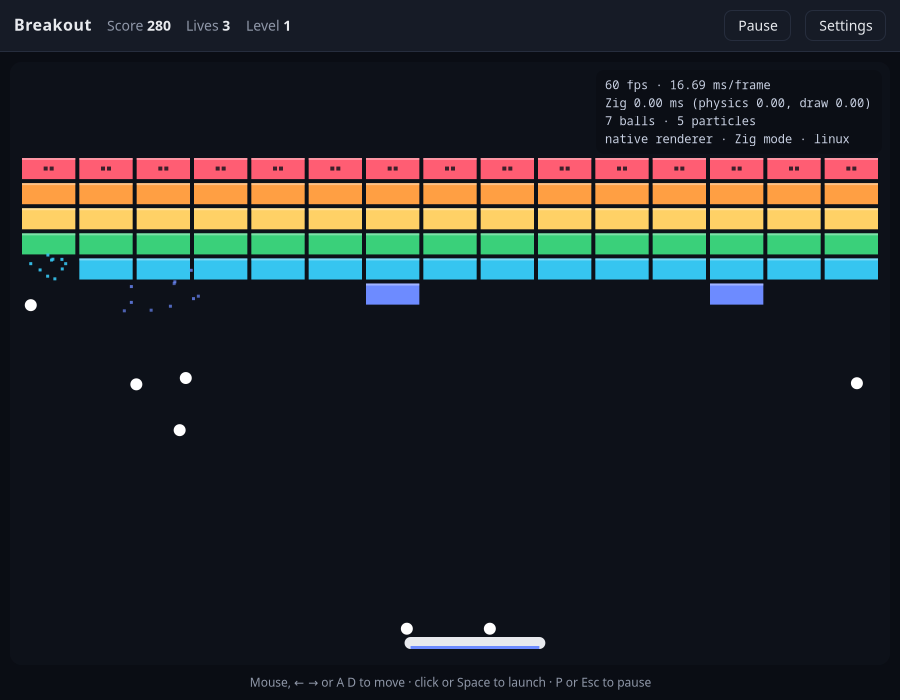
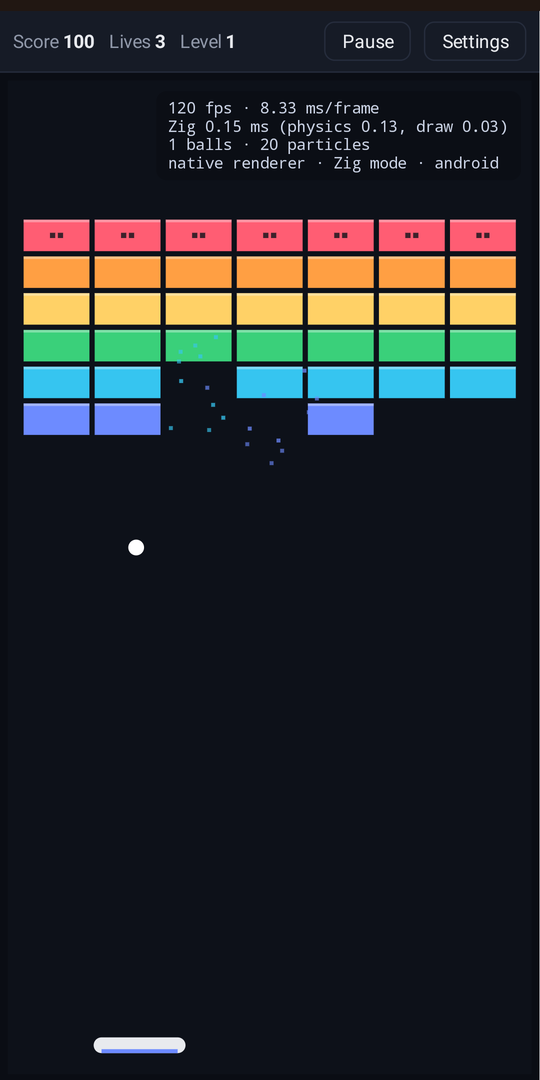
Breakout runs either way, in both renderers. Numeric canvas recording and transform updates reduce work per frame; the render bench covers rows, animation, canvas and memory on Android and desktop. Battery savings have not been established.
import { invoke, listen } from"./oriel";
// Typed from the Zig structs: name is a string,// the result is Promise<string>.const text = awaitinvoke("greet", { name: "Ada" });
listen("greeted", ({ count }) => {
console.log(`greeted ${count} times`);
});
Built with Oriel
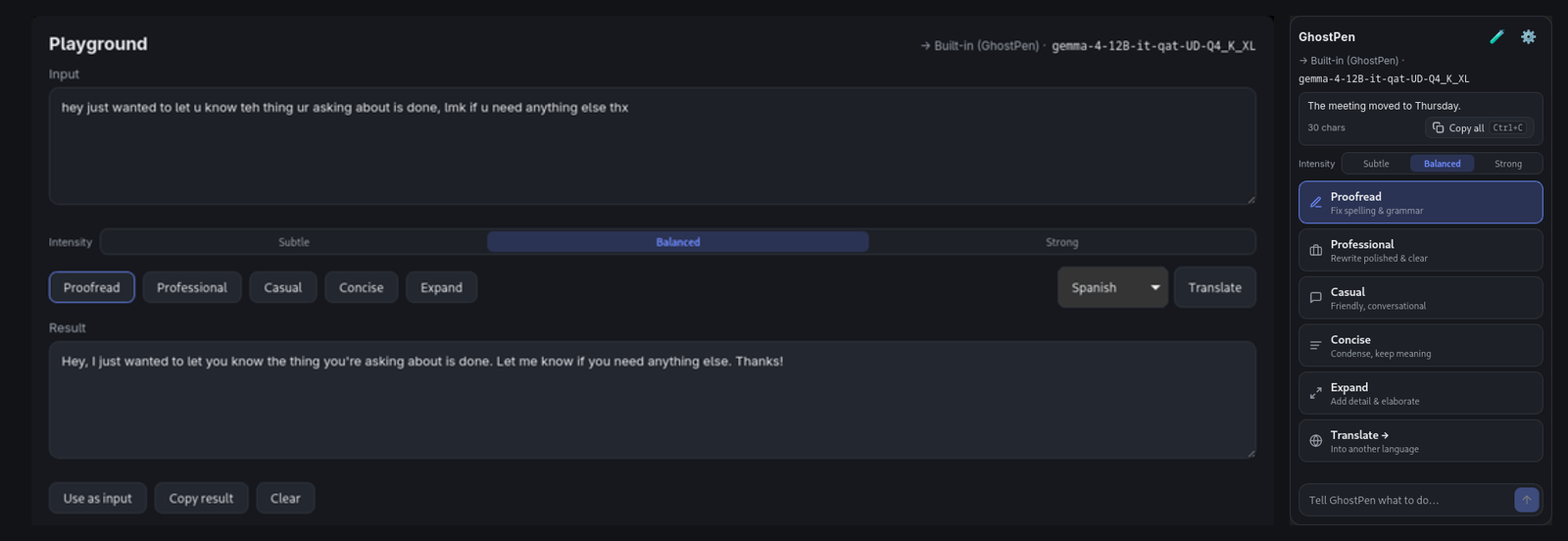
GhostPen: AI text editing anywhere on the desktop, ported from Tauri. Built-in models (llama.cpp), live captions and dictation (whisper.cpp) on the GPU (Vulkan, CUDA, Metal), and meetings with speakers by voice (oriel.speakers), on Linux, Windows and macOS.
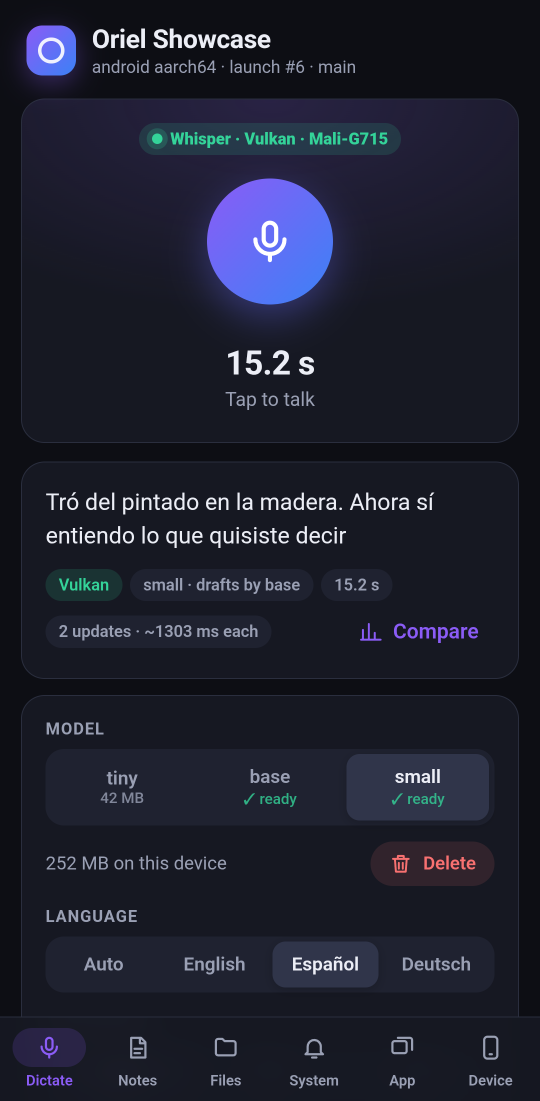
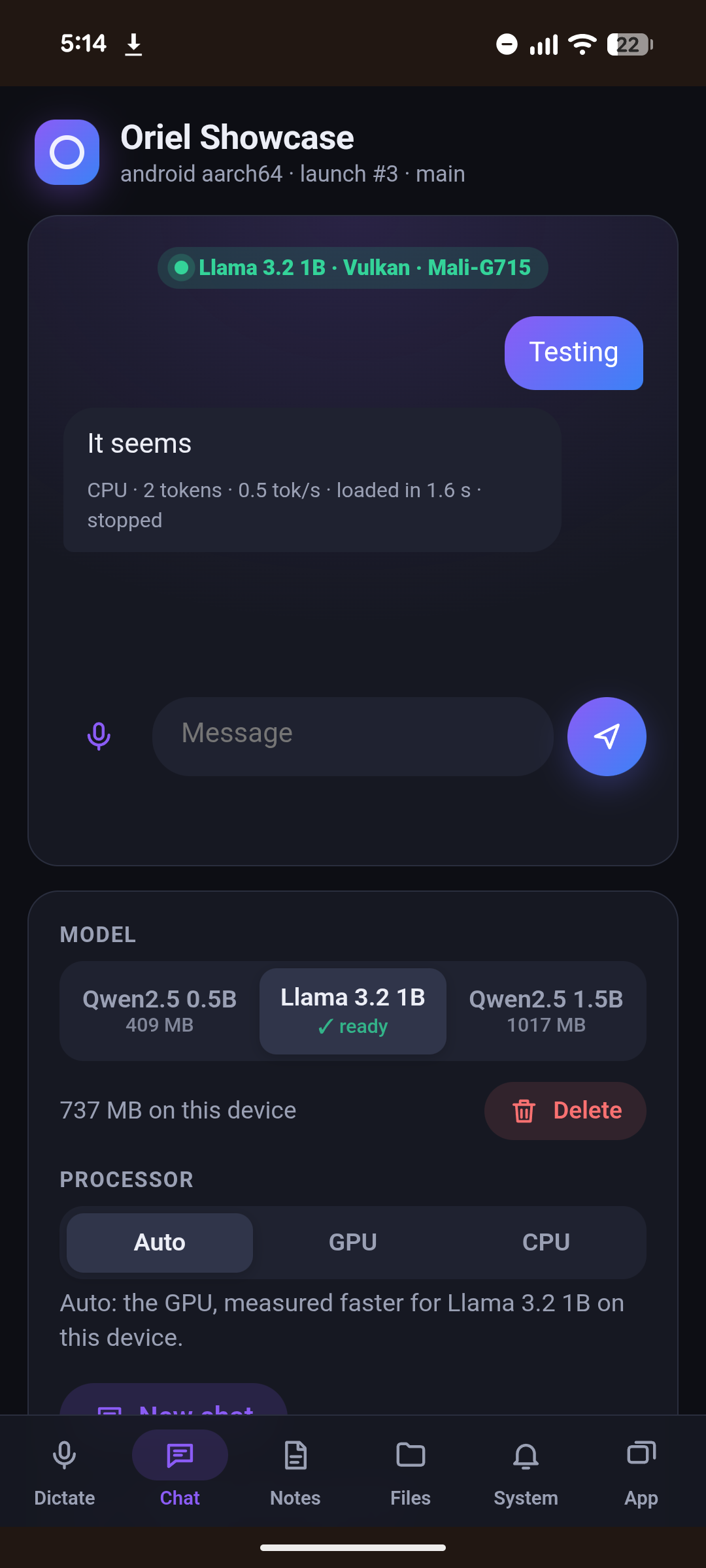
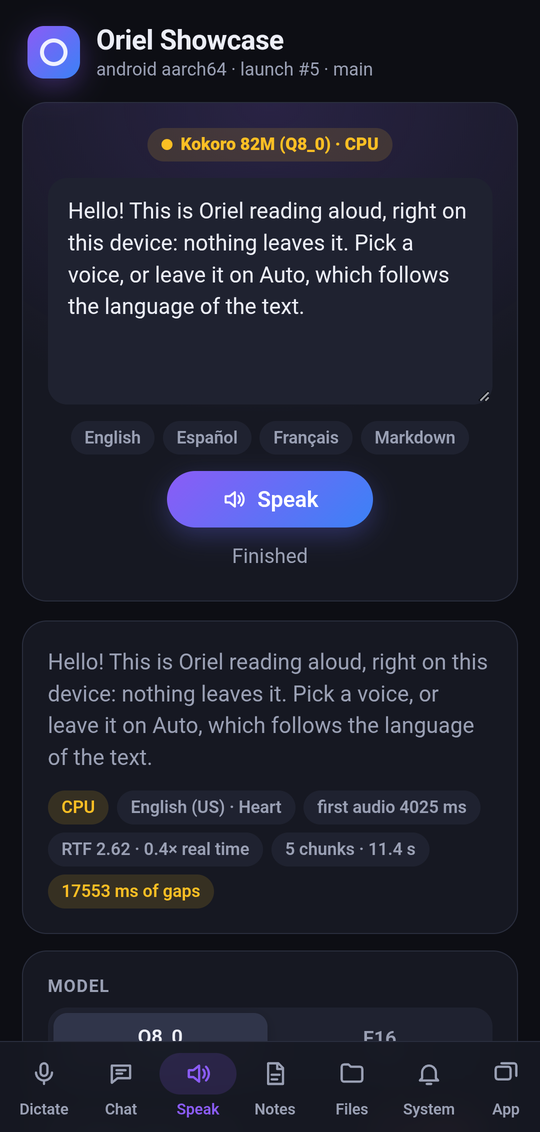
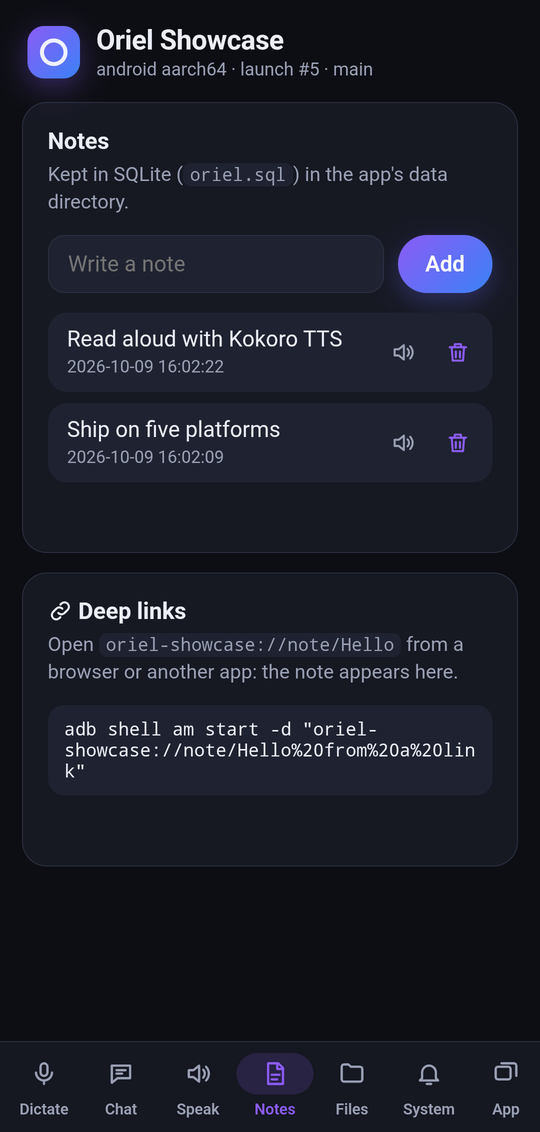
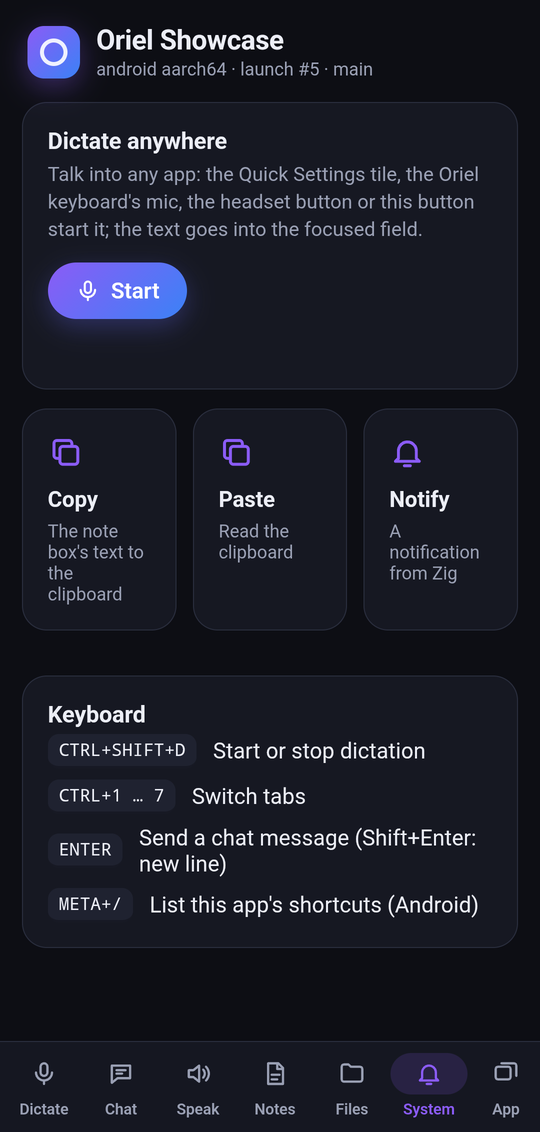
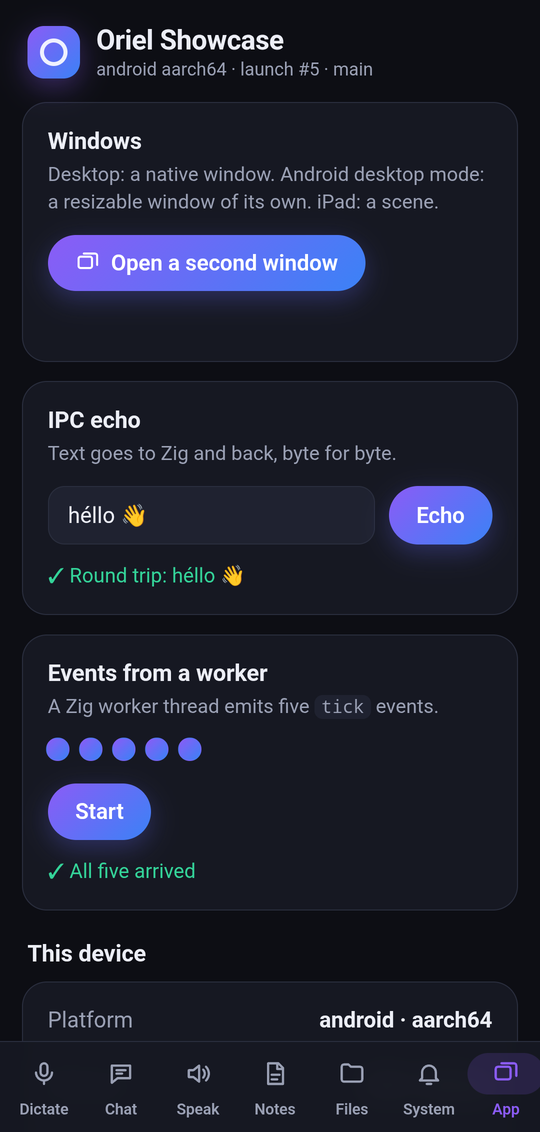
examples/showcase: every Oriel feature in one app, from one codebase, for Linux, Windows, macOS, Android and iOS. Below, on Android: Dictate and Chat on a Pixel, the rest on a Poco X3.
Dictate · live text on a Pixel: small on Vulkan, drafted by base on the CPU, ~1.3 s per updateChat · Llama 3.2 1B on Vulkan on a Pixel: streamed tokens, per-device model and CPU/GPU choiceSpeak · Kokoro 82M offline, streamed in chunks; on this phone's CPU, first audio in about 4 sNotes · SQLite, deep links that add a note from anywhere, and read aloudSystem · dictate into any app, the clipboard, notifications, shortcutsApp · windows, IPC round trips, events from worker threads
system-monitor
examples/system-monitor: a live CPU, memory, disk, network and process monitor that reads the kernel directly and spawns nothing, on Linux, Windows and macOS.
Three renderers, one app — compiled .oriel views with no JavaScript runtime (the default), the native renderer, or the WebView
Applications — each app's combined CPU and memory, its processes as a parent/child tree, or every process
Updates itself — Check for updates installs the next release with oriel.updater, signed and verified
Ships everywhere — AppImage, deb, rpm, a Windows installer and a macOS .app with every release
Linux, the Oriel renderer: a frame in under 6 ms, kernel telemetry with no processes spawned
breakout
examples/breakout: a canvas game with an HTML and CSS interface, in the WebView or the native renderer. Drag on a phone; mouse or arrow keys on the desktop.
Three ways — the physics and drawing in JavaScript, or in Zig through oriel.canvas
500 balls on a 120 Hz phone — 120 fps from Zig (0.35 ms a frame), 63 fps from JavaScript, 120 in the WebView
500 balls on a 144 Hz laptop — 144 fps from Zig, 59–75 from JavaScript, 103–116 in the WebView
The native renderer, Zig mode: Linux and an Android phone
GTK4 + WebKitGTK 6.0. Complete: every module, deb / rpm / AppImage.
Stable
Windows
Win32 + WebView2. Every module ported, verified on real Windows 11. Build natively or cross-compile from Linux; per-user NSIS installer.
Verified
macOS
AppKit + WKWebView. Every module ported, Metal for whisper / llama, deep links, .app / .dmg packaging. Verified on macOS 15, Apple Silicon.
Verified
Android
Kotlin shell + WebView over JNI, one window per Activity (resizable in desktop mode). APK and AAB. Verified on a Pixel phone, Android desktop mode and the emulator.
Verified
iOS
UIKit + WKWebView from Zig, no Xcode project. .app and .ipa, Metal for whisper / llama. The showcase verified in the iPhone simulator (iOS 18): commands, events, workers, local chat, a second window. Real devices next.
Preview
Coming from Electron or Tauri?
The same model: a web frontend, a native backend, calls between them. What changes is what ships with your app.
Electron
Tauri
Oriel
Backend
JavaScript on Node.js
Rust
Zig 0.16
UI
Chromium, bundled with every app
The system webview
The system webview, or native views with no webview (native renderer, compiled .oriel views)
App size
Chromium and Node.js in every app
Small: no browser bundled
A few MB: no browser bundled
UI ↔ backend
ipcMain / ipcRenderer through a preload script
invoke commands and events
Plain Zig structs; TypeScript generated at compile time; sync and async worker pool
Mobile
Desktop only
Android and iOS
Android and iOS from the same Zig and web code
Local AI and voice
Packages you add
Plugins or crates you add
Built in: llama.cpp, whisper.cpp, Kokoro text to speech, speaker diarization
You are visitor 01402775 — GeezerVison does not store the pages you look up. Best viewed with Netscape Navigator 4.7 or Internet Explorer 6 at 800×600. No cookies required.