GeezerVisonThe World Wide Web, restored to 800 pixels of glory. |
| Home|About|Gaming cabinet|Archives|How it works|Starter sites |
GeezerVison is showing thewelltemperedcomputer.com — The Well-Tempered Computer
USB AudioA DAC (the chip doing the actual DA conversion) does not understand USB at all.
PC’s, tablets, smartphones, they all have USB ports. As a USB DAC receives the audio digital, you bypass the onboard audio.
The fact that a device has a USB port does not mean your DAC will play. First of all the device must be a USB host. A NAS or a AVR with a USB port most of the time won't drive a USB DAC. You can attach a USB thumbdrive or even a HD but not a DAC.
OSX and Linux have a native mode USB audio class 2 drivers (UAC2). UAC2 means you can play audio with a sample rate > 96 kHz over the USB. In April 2017, an update of Win10 finally brought native mode drivers. On older versions you need a third party driver to use UAC2
Not all USB-DAC’s are UAC1/UAC2 compliant. Some do feature a proprietary driver. This is becomming rare. Check if this driver is available for your operating system.
A detailed description of how USB audio works can be found in the Reference section.
Android 5 supports USB audio in host mode but no full UAC1/2 support at the present. Android 8 looks to be fully UAC1 compliant More about USB audio on Android ConnectingThere are several ways to connect a PC to your audio using USB.
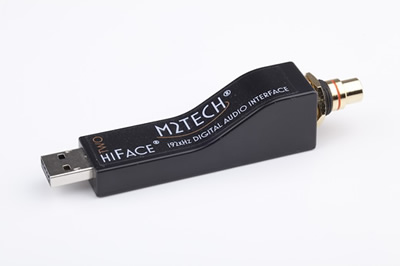
The digital input of traditional audio gear is SPDIF. Most PC's don't have a SPDIF out. You need a bridge between the USB and the SPDIF. Converting to AES/EBU also exist as this is the standard in the pro-world. If you are happy with your current DAC or receiver, this is a good solution.
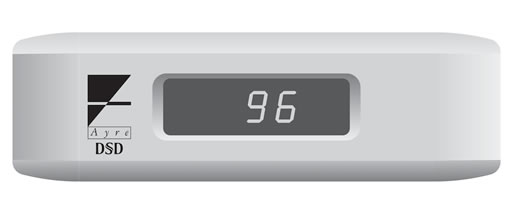
Ayre QB9 A DAC has a digital input by desin. SPDIF (optical or electrical) and AES/EBU are the standard inputs. Add a USB input to the DAC and you can connect it to PC.
Benchmark DAC2 Today it is common to include a pre-amp. Hence volume control and a head phone out . Most of the time inputs like SPDIF and Toslink are supported as well. As it is a DAC + pre-amp, it might even have an anlog input too. Indeed as our audio is digital you need an pre-amp with digital inputs.
USB Amplifier
Gato Audio DIA-250 Integrated Amplifier
All the digital inputs
Marantz NA-11S1 Streaming: AirPlay / DLNA (certified V1.5) Internet: Spotify /last.fm USB DAC: asynchronous USB 24/192 (driver for Windows) USB port for iDevices DoP (DSD over USB) DSD64/128 Remote app: iDevice / Android ResolutionIn the early days USB audio was limited to 16 bits/48 kHz max. A common source of confusion is the version of the bus (USB 1,2 or 3) and the USB audio standard (1 or 2). USB Audio Class 1 standard (1998)This standard allows for 24 bits/96 kHz max.
2 channel * 24 bit * 96000 Hz sample rate= 4608000 bits/s or 576 Byte/ms
All popularr operating systems support USB Audio Class 1 natively. USB Audio Class 2 standard (2009) USB Audio Class 2 additionally supports 32 bit and all common sample rates > 96 kHz Using High Speed USB for playback there are no limits in resolution. It is downwards compatible with class 1.
From mid-2010 on USB audio class 2 drivers are available in OSX 10.6.4 and Linux. Companies like Thesycon or Centrance have developed a USB Class 2 Audio driver for Windows. This was necessary because Microsoft simply didn’t support UAC2. In April 2017, an update of Win10 finally included UAC2 drivers. It is the same driver as developed by Thesycon. If you use older versions of Win, you still need a third party driver. Adaptive or asynchronous synchronization The audio data is send over the USB in isochronous mode. This is what probably differentiates between an asynchronous USB DAC and an asynchronous USB to SPDIF converter. The moment you use a converter you move the clock out of the DAC. More details Things to look forWhen buying a USB DAC always check the specs of the USB input. DAC and USB specs Asynchronous Lots of people think that if it is an asynchronous DAC, this applies to the USB. Except for entry level models, almost all USB DACs today support 24 bit. Even if you don’t have 24 bit sources (might change in the near future) a 24 bit depth is beneficial when using digital volume control.
The bit depth (16 or 24) of a DAC is a nominal value. Will playing 16 bits sources on a 24 DAC affect sound quality? References More technical information about USB audio can be found here. Fundamentals of USB-Audio - XMOS 2017 © Vincent Kars
December 23, 2022
|
| You are visitor 01402503 — GeezerVison does not store the pages you look up. Best viewed with Netscape Navigator 4.7 or Internet Explorer 6 at 800×600. No cookies required. |