GeezerVisonThe World Wide Web, restored to 800 pixels of glory. |
| Home|About|Gaming cabinet|Archives|How it works|Starter sites |
GeezerVison is showing www.geeksforgeeks.org — C++ Classes and Objects - GeeksforGeeks  
C++ Classes and ObjectsLast Updated : 27 Aug, 2026 In Object Oriented Programming, classes and objects are basic concepts that are used to represent real-world concepts and entities.
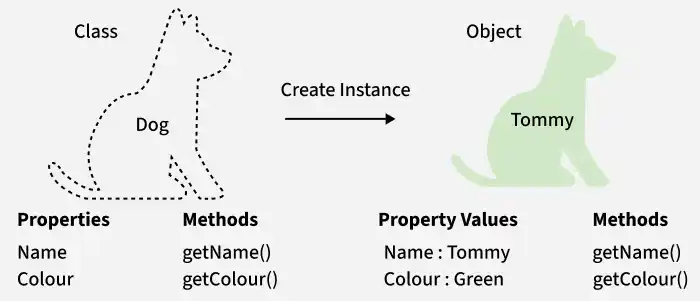 C++ ClassesA class in C++ is a user-defined data type that combines data members and member functions into a single unit. It acts as a blueprint for creating objects and helps organize code in an object-oriented way.
Creating a ClassA class must be defined before creating its objects. In C++, a class is declared using the class keyword. Output Car Brand: Toyota Explanation: In the above program defines a Car class containing a data member brand and a member function display() to print the car brand. In the main() function, an object car1 is created, the brand is assigned as "Toyota", and the display() function is called to show the output. C++ ObjectsAn object in C++ is an instance of a class created to access the data members and member functions defined inside the class. Each object has its own separate copy of data members while sharing the common structure and behavior defined by the class.
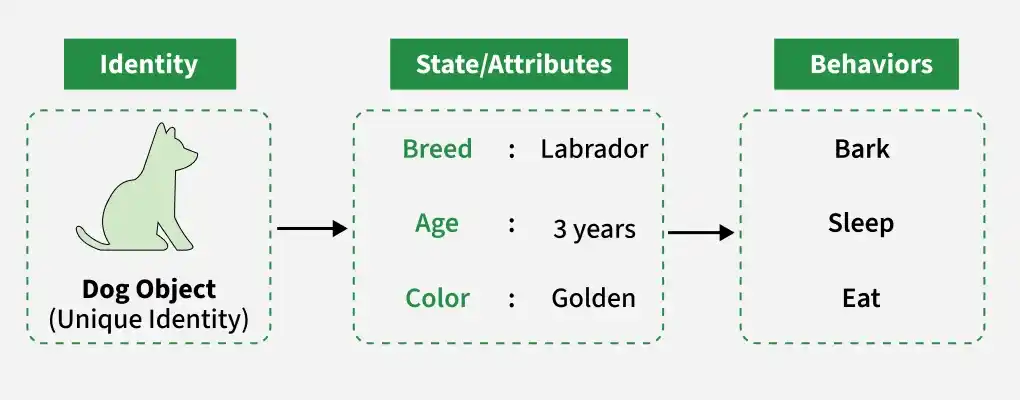
Object CreationOnce the class is defined, we can create its object in the same way we declare the variables of any other inbuilt data type.  Syntax
Example
Here, tuffy is an object of the Dog class. Object InitializationObjects can be initialized using constructors while creating them.
 In the above example:
The constructor initializes the object with the provided values. Accessing Class MembersMembers of the class can be accessed inside the class itself simply by using their assigned name and access them outside, the (.) dot operator is used with the object of the class. Syntax
Output Dog Name: Tuffy Breed: Papillon Explanation: Above program defines a Dog class with two data members, name and breed, along with a member function display() to print their values. In the main() function, an object tuffy is created, values are assigned to its data members, and the display() function is called to show the dog details. Comment ExploreStandard Template Library(STL) Practice & Problems |
| You are visitor 01402503 — GeezerVison does not store the pages you look up. Best viewed with Netscape Navigator 4.7 or Internet Explorer 6 at 800×600. No cookies required. |