GeezerVisonThe World Wide Web, restored to 800 pixels of glory. | ||||||||||||||||||||||||||||||
| Home|About|Gaming cabinet|Archives|How it works|Starter sites | ||||||||||||||||||||||||||||||
GeezerVison is showing gr-framework.org — Editor & Interactions — GR Framework 0.73.27 documentation Editor & Interactions¶Viewer¶The standard GRPlot plot view enables various interactions, such as panning and box zooming. To do this, either scroll or right-click and drag a box. You can also move the coordinate system window around.
Hovering over a data point will show the x- and y-values, as well as the label or z-data, if applicable. In addition, if you press the Shift key, all y-data and labels/z-data at that specific x-value will be shown inside the tooltip.
The view can be reset using the Toolbar¶The toolbar is part of the GRPlot widget. This allows you to quickly change certain aspects of the plot.
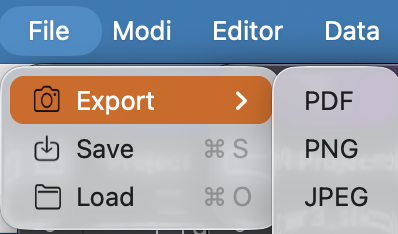
Menubar¶The menu has four submenus. The first is the File menu, which allows you to save the plot to an XML/PNG file. This can be used to load the file later and restore the plot. In addition, it is possible to export the plot to a variety of other raster and vector graphics formats, including (pure) PNG, JPEG, PDF and SVG.
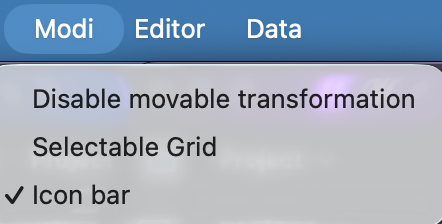
The toolbar and the option to move elements inside the editor can be deactivated via the Modi submenu. The grid can also be made selectable inside the editor.
The toolbar and the option to move elements inside the editor can be deactivated via the Modi submenu. The grid can also be made selectable inside the editor.
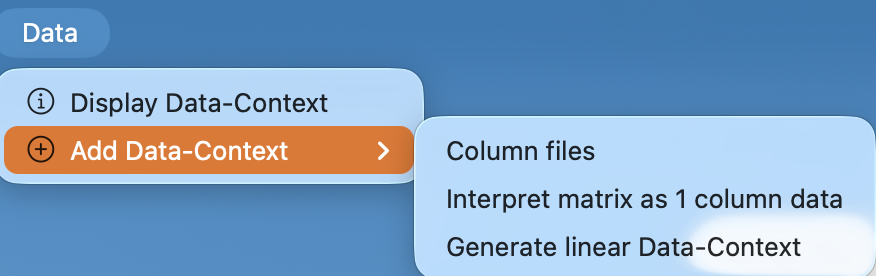
When the ‘Show data context’ action is triggered, a dock widget containing a tabular view of all used context keys and their data will appear on the left side of the window. A context key is simply a reference from a series element to its data, and this can also be quickly accessed from the edit element widget. In this case, the relevant column is highlighted, while a selected column highlights the plot element which uses that data.
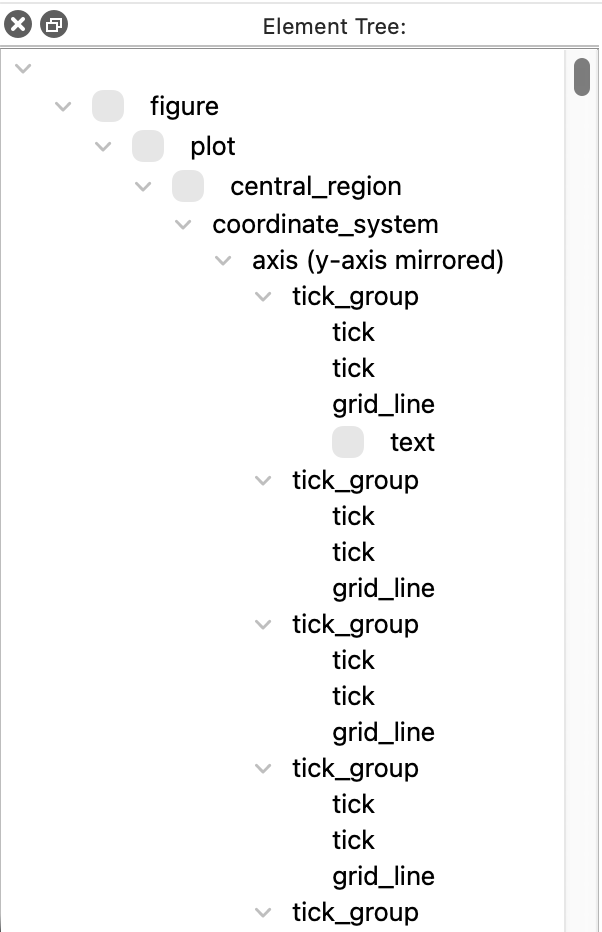
The Editor menu can be used to enable Editor view. Once enabled, this menu can be used to switch back to the normal view. It can also be used to enable the tree view, which displays the underlying XML tree.
Editor view¶If the editor view is enabled, multiple new options become available. Firstly, normal interactions with the plot, such
as panning, are disabled, and every mouse movement highlights the elements displayed under the cursor. This way, the
user knows what they could change at that specific location, and a click selects that element. The attributes of that
element can then be changed in the newly opened dock widget and applied to the plot. Any red attribute in the list is
valid for the selected element, but has not yet been set. Hover over any attribute to get a tooltip with a short
explanation of that attribute. To disable the editor completely use
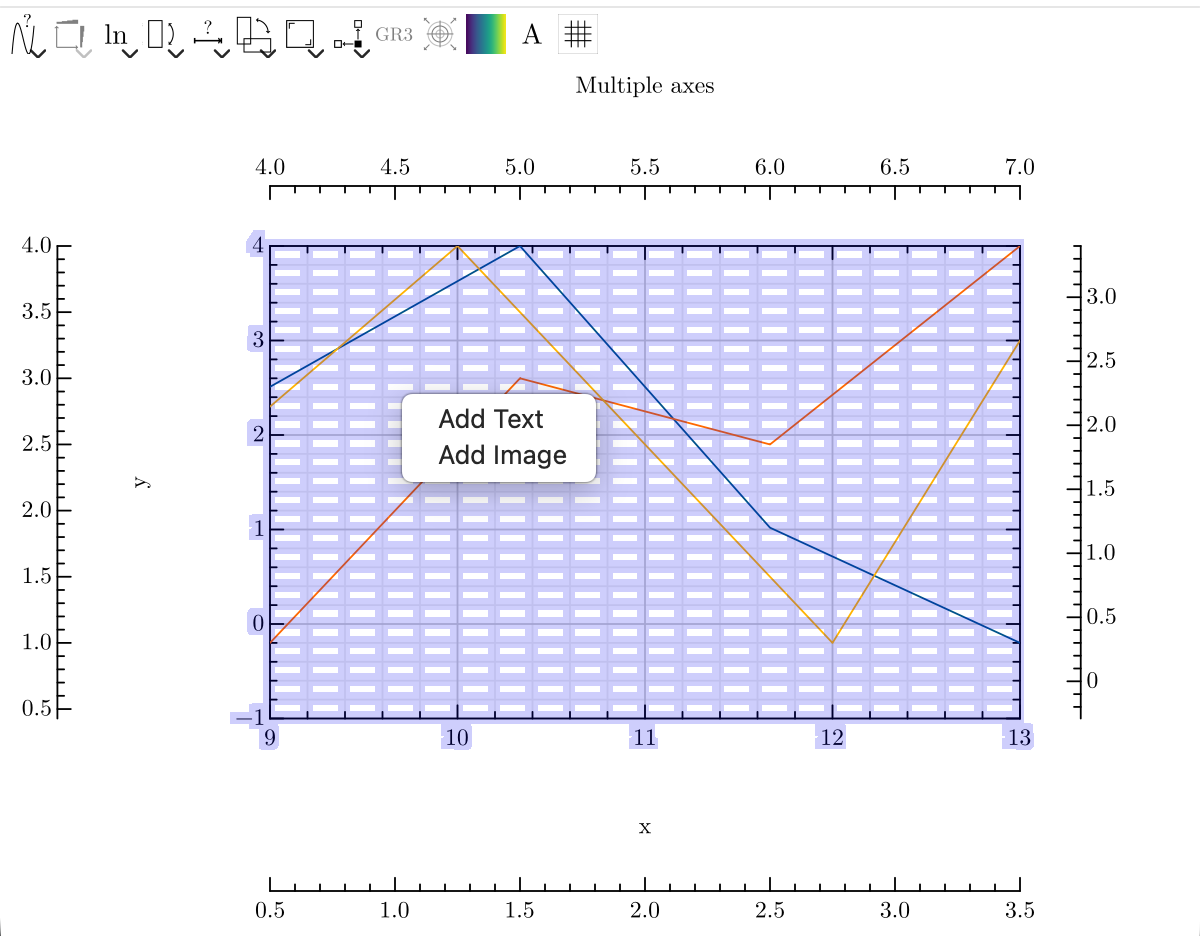
Any changes made can be undone or redone using the options in the editor menu. This is restricted to the last five changes. Another feature of the editor view is the ability to add text or overlay elements (pictures) at the mouse position by right-clicking. Newly inserted text or overlay elements can be dragged and resized by their corners. More complex additions can only be made with the advanced editor, which requires a greater understanding of the tree structure. This involves selecting the correct parent element and setting all the necessary attributes.
Elements can also be moved within the editor view. To do this, press the control key (command on Mac) before clicking on an element. If the advanced editor is not enabled, only important elements can be moved. If more than one element is selected for movement, an element intersection will be shown, allowing similar attributes to be changed on all selected elements. You can also resize an element if the cursor is at the edge of it.
To remove an existing element, select it and then press Backspace or Delete. Press Escape to deselect everything. All of these options are also available for the tree view, which can be opened via the Editor menu. Clicking on an element in the tree view opens the corresponding element edit window, while the checkboxes can be used to move elements.
| ||||||||||||||||||||||||||||||
| You are visitor 01402503 — GeezerVison does not store the pages you look up. Best viewed with Netscape Navigator 4.7 or Internet Explorer 6 at 800×600. No cookies required. |