GeezerVisonThe World Wide Web, restored to 800 pixels of glory. |
| Home|About|Gaming cabinet|Archives|How it works|Starter sites |
GeezerVison is showing stringedinstrumentdatabase.aornis.com — The Stringed Instrument Database: C The Stringed Instrument Database
The Stringed Instrument DatabaseC
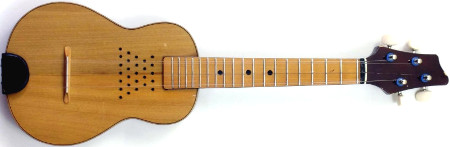
CakAlternative names: Keroncong Cak Origin: Indonesia Tuning: D5 D5, G4, B4 Strings/Courses: 4/3 Further notes: Played with the Cuk (see below) in Keroncong music. Steel strings. Scale Length: 355-375mm 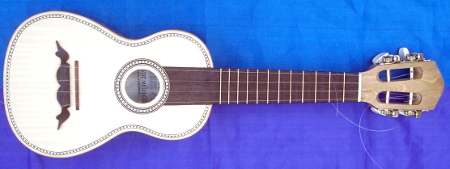 CavaquinhoAlternative names: Cavaco, Manchete, Machimbo Origin: Portugal Tuning: D3, G3, B3, D4 or A3, A3, C#4, E4. Strings/Courses: 4/4 Further notes: Originally from Portugal, but now variants are played throughout the world. It was carried by Portugese sailors on ships due to it's convenient size. In Brazil, they play a larger-bodied Cavaquinho. The Madeiran Braghinha and Hawaiian Ukulele are both descendents of this instrument. Sometimes the Portugese Cavaquinho has tuning machines similar to the Guitarra Portuguesa, rather than the type shown here. Steel strings, or sometimes nylon (traditionally gut). A cavaquinho player is called a cavaquista. Scale Length: Usually about 330mm  Cavaquinho, BrazilianAlternative names: Cavaco, Manchete, Machimbo Origin: Brazil, developing from the Portuguese version above. Tuning: D3, G3, B3, D4 Strings/Courses: 4/4 Further notes: The Brazilian version always has steel strings. Scale Length: Usually about 330mm 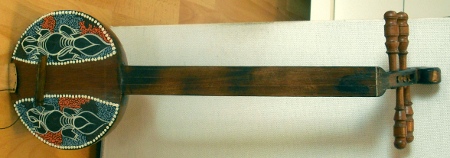 CekuntrungAlternative names: Origin: Indonesia Tuning: Strings/Courses: 4/4 or 2/2 Further notes: Scale Length: 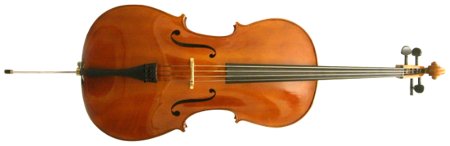 CelloAlternative names: Originally short for Violoncello. Origin: Italy, 16th century. Tuning: C2, G2, D3, A3 Strings/Courses: 4/4 Further notes: Steel strings. Scale Length: 695-700mm Cello Banjo- See Banjo, Cello. 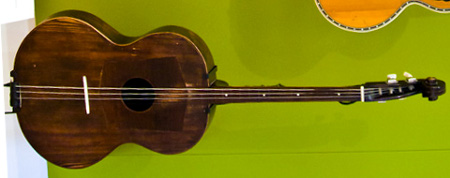 CelovicAlternative names: Celo, Csello, Cselo. Origin:Croatia, Serbia, Slovenia Tuning: E2, A2, D3, G3 Strings/Courses: 4/4 Further notes: Steel strings. Scale Length: 600-875mm 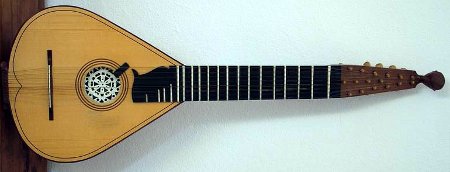 CeteraAlternative names: Citare Origin: Corsica, France, 17th century. Nearly died out but was reveived in the 1970's. Tuning: Often tuned to the taste of the performer, but usually only the highest 4 courses are fretted, and the rest are only played open, and are tuned chromatically like an archlute. Strings/Courses: 16/8 or 14/7 Further notes: Steel strings. Scale Length: 450-600mm 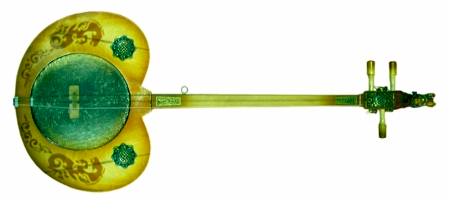 ChanzyAlternative names: Chanzi, Tyanzi Origin: Tuva, Eastern Russia Tuning: F2, C3, F3 or D2 A2 D3 or C2 G2 C3 Strings/Courses: 3/3 Further notes: Nylon strings. Scale Length: 660mm 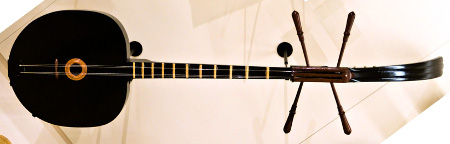 ChapeyAlternative names: Grajappi, Grajabpi, Chapei, Kratchappi, Krachap-pi, Chapey Dong Veng, Chapi Origin: Thailand and Cambodia Tuning: F3 F3, B3 B3 Strings/Courses: 2/2, 3/2 or 4/2 Further notes: The two courses can be single, doubled, or one of each. Nylon or silk strings. Scale Length: 800-900mm 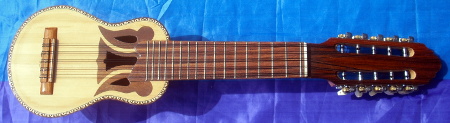 CharangoAlternative names: Quirquincho, Mulita, Tatu, Kirki. Origin: Andean mountains, South America. 17th or 18th century. Tuning: G4 G4, C5 C5, E5 E4, A4 A4, E5 E5 Strings/Courses: 10/5 Further notes: Traditionally charangos were made out of armadillo shells. Nowadays they are usually carved from solid wood, but are sometimes also made with flat backs and bent sides. Nylon strings. Scale Length: 350-370mm. 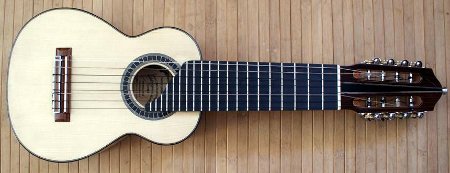 Charango, HatunAlternative names: Grand Charango Origin: Peru. A recent invention. Tuning: A3, D4, G4, C5, E5 E4, A4, E5 Strings/Courses: 8/7 Further notes: Nylon strings. Scale Length: 370-380. Sometimes the two lowest courses have a longer scale length and a seperate fretboard. 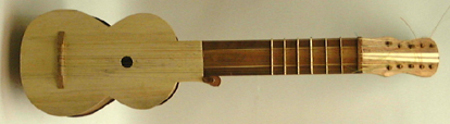 Charango, RankaAlternative names: Patasi Charango, Ranqha Charango Origin: Cochabamba, central Bolivia. Tuning: G4 G4, C5 C5, E5 E4, A4 A4, E5 E5 E6 or D4 D4, A4 A4, G5 G4, C5 C5, G5 G5 G6. Strings/Courses: 11/5 Further notes: Nylon or steel strings. Scale Length: 350-380mm. 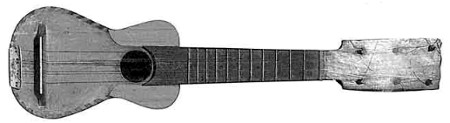 Charango VallegrandinoAlternative names: Origin: Vallegrande, South-western Bolivia. Tuning: G4, C5 C5, E5 E5, A4 or A4, D5 D5, F#5 F#5, B4 or A4, F5 F5, G5 G5, B5 Strings/Courses: 6/4 Further notes: Now quite rare. Scale Length: ABout 330mm 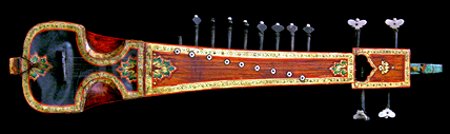 ChikaraAlternative names: Origin: Bengal, India. Tuning: C, F, G Strings/Courses: 3/3 with sympathetic strings. Further notes: Scale Length: 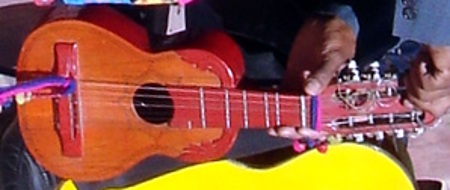 ChinliliAlternative names: Chinlilo Origin: Ayacucho, Peru. Tuning: G, B, D, G, B, E Strings/Courses: 8/6 or 7/6 Further notes: The doubled courses are tuned in octaves. The frets are laid out diatonically like a Dulcimer. Metal strings. Scale Length: 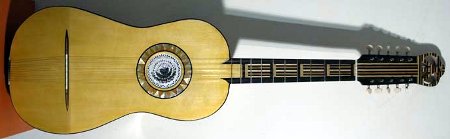 Chitarra BattenteAlternative names: Origin: Southern Italy, 17th century. Tuning: A3 A3, D4 D4, G3 G3, B3 B3, E4 E4 Strings/Courses: 10/5 Further notes: Italian for 'beating Guitar', due to the fact it is largely for strumming. Steel strings. Scale Length: Varies. There are at least 3 different sizes. 640mm is a common scale length. 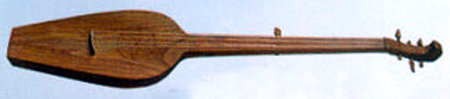 ChonguriAlternative names: Choghur Origin: Georgia, 16th century. Tuning: D3, F3, D4, A3 or D3, G3, B4, D4 Strings/Courses: 4/4 Further notes: Nylon strings. Scale Length: 630mm 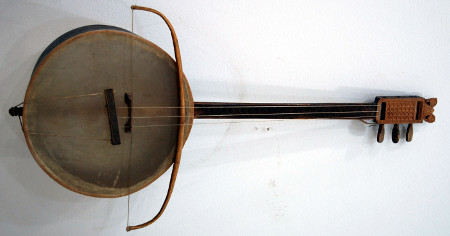 ChuniriAlternative names: Chianuri Origin: Georgia. Tuning: Strings/Courses: 3/3 Further notes: Scale Length: 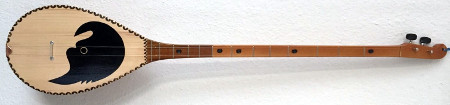 CifteliaAlternative names: Cifteli, Dyzen, Karadyzen, Ciftetelli, Qifteli. Origin: Albania Tuning: B3, E3 Strings/Courses: 2/2 Further notes: Steel strings. Scale Length: About 630mm, but varies widely. 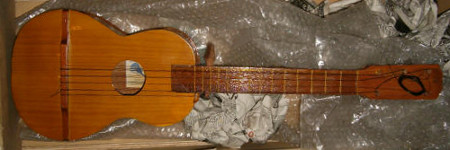 Cinco Y MedioAlternative names: Origin: Venezuela Tuning: E3, A3, D3, F#4, B4, E4 Strings/Courses: 6/6 Further notes: Nylon strings. Scale Length: 480mm 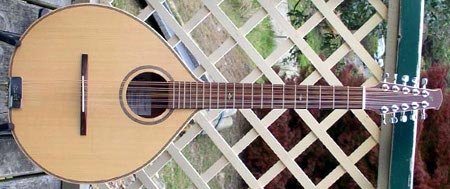 CitternAlternative names: Origin: Europe, 16th century. Tuning: C2 C2, G2 G2, D3 D3, A3 A3, E4 E4 is the standard tuning, but often modal tunings are used, especially in Celtic and Irish music. Sometimes the lower courses are tuned in octaves. Strings/Courses: 10/5 Further notes: Not to be confused with the Renaissance cittern. Steel strings. Scale Length: 580-640mm 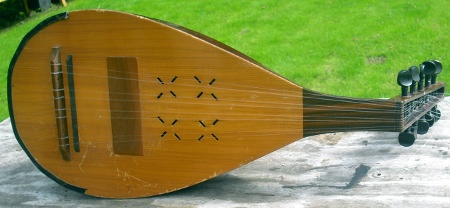 CobzaAlternative names: Kobsa, Koboz (in Hungary), Kobza Origin: Romania and Hungary. Tuning: D D, A A, D D, G G. Strings/Courses: Usually 8/4, but sometimes 10/4 or 10/5. Further notes: Usually steel strings, but sometimes nylon. Nylon strings are more common in Hungary than Romania. Scale Length: 480mm 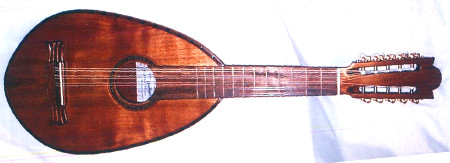 ConcherosAlternative names: Origin: Mexico. Tuning: Strings/Courses: 8/4 (called mandolina concheros), 10/5 (called vihuela concheros) or 12/6 (caled guitarra concheros). Further notes: Steel strings. Scale Length: 500-600mm 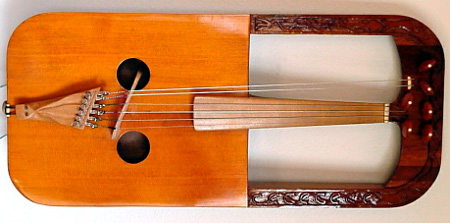 CrwthAlternative names: Origin: Europe, 11th century. Took it's present form in Wales, where it is now most popular. Tuning: G2, C3, C2, D2, D3 Strings/Courses: 5/5 and 6/5 are common. Huge variation. Further notes: Nylon, gut or steel strings. Scale Length: No standard, because the Crwth is not made on a wide scale, and is usually handmade by luthiers. 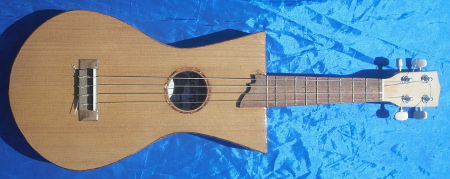 Cuatro AntiguoAlternative names: Origin: Puerto Rico, 17th century. Tuning: A3, E4, A4, D5 Strings/Courses: 4/4 or 8/4 Further notes: Means 'old cuatro'. Nylon or steel strings. Traditionally gut or strips of rawhide. Not played much anymore, although recently has been revived. Scale Length: 450-500mm 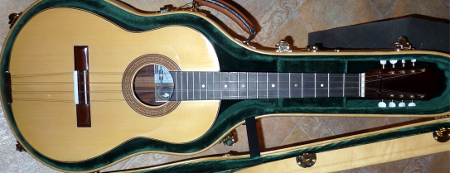 Cuatro CubanoAlternative names: Cuban Cuatro, Tres-Cuatro, Cuatres Origin: Eastern Cuba. Tuning: G4 G3, C4 C4, E4 E4, A4 A4 or G4 G3, C4 C4, E4 E4, G4 G4 or A4 A3, D4 D4, F#4 F#4, B4 B4 Strings/Courses: 8/4 Further notes: Steel strings. Evolved from the Cuban Tres/Tres Cubano. An extra course was added. Not played very often. Scale Length: 480-650mm 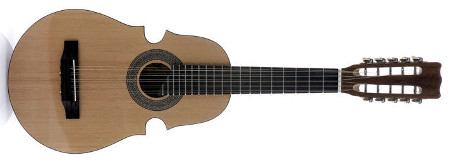 Cuatro PuertorriquenoAlternative names: Puerto Rican Cuatro, Cuatro Aviolinado, Cuatro Moderno (to distinguish from the Cuatro Antiguo above). Origin: Puerto Rico, 19th century. Tuning: B3 B2, E4 E3, A3 A3, D4 D4, G4 G4 Strings/Courses: 10/5 Further notes: 'Cuatro Aviolinado' means 'violin-shaped cuatro'. Steel strings. A Puerto Rican Cuatro player is called a cuatrista. Scale Length: 500-520mm 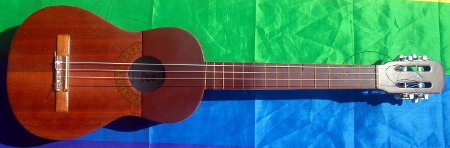 Cuatro VenezolanoAlternative names: Venezuelan Cuatro Origin: Venezuela, 15th century. Tuning: A3, D4, F#4, B3 Strings/Courses: 4/4 Further notes: Nylon strings. A Venezuelan Cuatro player is called a cuatrista. Scale Length: 500-510mm 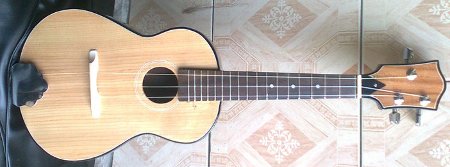 CukAlternative names: Keroncong Cuk Origin: Indonesia Tuning: G4, B3, E3 Strings/Courses: 3/3 Further notes: Played with the Cak (see above) in Keroncong music. Nylon strings. Scale Length: 355-375mm 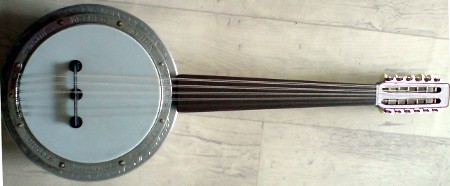 CumbusAlternative names: Origin: Turkey, early 20th century. Tuning: A2 A2, B2 B2, E3 E3, A3 A3, D4 D4, G4 G4. Also often tuned to Oud tunings. Strings/Courses: 12/6 Further notes: Pronounced 'joom-boosh'. There are varieties with necks of various Turkish and Western instruments attached to a Cumbus body. Nylon or steel strings. Scale Length: 560mm for the standard Cumbus.
The Stringed Instrument Database
|
| You are visitor 01402503 — GeezerVison does not store the pages you look up. Best viewed with Netscape Navigator 4.7 or Internet Explorer 6 at 800×600. No cookies required. |