GeezerVisonThe World Wide Web, restored to 800 pixels of glory. |
| Home|About|Gaming cabinet|Archives|How it works|Starter sites |
GeezerVison is showing stringedinstrumentdatabase.aornis.com — The Stringed Instrument Database: P-R The Stringed Instrument Database
The Stringed Instrument DatabaseP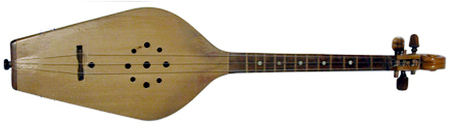 PanduriAlternative names: Origin: Georgia Tuning: G3 A3 C4 or E3 B3 A4 Strings/Courses: 3/3 Further notes: Scale Length: About 500mm Peruvian Bandurria- See Bandurria, Peruvian. Philippine Bandurria- See Bandurria, Philippine. Philippine Laud- See Laud, Philippine. 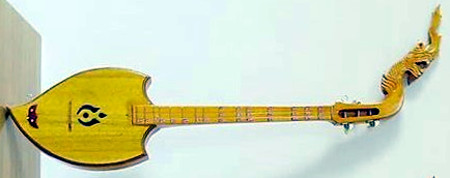 PhinAlternative names: Pin, Pinn Origin: Thailand and Laos. Tuning: A3, E4, A4 or A3, D4, A4. Strings/Courses: 3/3 Further notes: Scale Length: 500-600mm 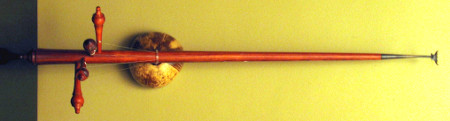 Phin PiaAlternative names: Phin Pya, Pia, Phia, Origin: Nothern Thailand, 12th century. Tuning: Strings/Courses: 2/2 Further notes: Traditionally silk strings, nowadays often steel strings. Scale Length: 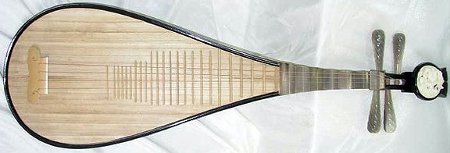 PipaAlternative names: Origin: China during the Qin Dynasty (221 - 206 BCE). Tuning: A2, D3, E3, A3 Strings/Courses: 4/4 Further notes: Nylon or silk strings. Scale Length: 725mm 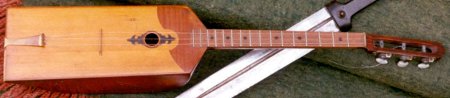 PondarAlternative names: Ponder, Pandir, Pandur, Dechig pondur, Adkhoku pondur, Dakhch pandr, Merz ponder. Origin: Chechnya, Southern Russia. Tuning: C, D, G. Strings/Courses: Usually 3/3, sometimes 6/3 Further notes: Steel strings. Scale Length: Portuguese Guitar- See Guitarra Portugesa Prim- See Bisernica 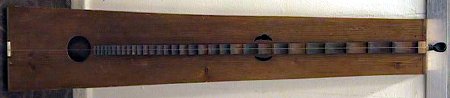 PsalmodikonAlternative names: Psalmodicon, Salmodikon, Manikarka, Salmedunken, Moldpill, Mollpill Origin: Denmark, around 1820. Tuning: No standard Strings/Courses: 1/1 or sometimes 2/1. Further notes: It was developed for use in churches that could not afford organs. Other instruments were not considered suitable for churches. It was also designed to take up little space and be playable by those who could not read music. They are usually box-shaped, although other shapes also exist. Scale Length: No standard. Puerto Rican Cuatro- See Cuatro Puertorriqueno. Q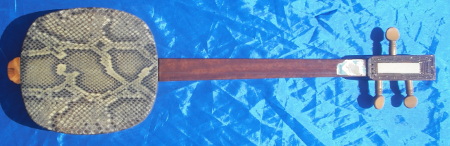 QinqinAlternative names: Chinchin, Meihuaqin Origin: China Tuning: G3, D4, A5 Strings/Courses: 3/3 Further notes: Nylon or silk strings. Scale Length: 400-600mm 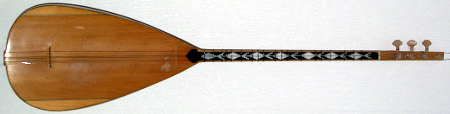 QopuzAlternative names: Gopuz, Ghopoz, Chogur, Choqur, Azeri Saz, Ashiq Saz Origin: Azerbaijan Tuning: D4 D4 D4, G3 G3 G3, C4 C4 C4 Strings/Courses: 9/3, 8/3, 7/3 or 6/3 Further notes: Steel strings. The names 'Azeri Saz' and 'Ashiq Saz' are comparisons to the Turkish Saz, from which this instrument is believed to have originated. It is much deeper than the Turkish Saz, however. 'Ashiq' is a traditional style of music commonly featuring this instrument. Scale Length: 750mm 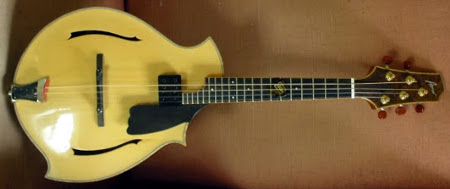 QuintolaAlternative names: Mandele, 5 string mandolin. Origin: First invented as a purely electric instrument, now acoustic models are also made. Tuning: C3, G3, D4, A4, E5. Strings/Courses: 5/5 Further notes:Steel strings. Scale Length: Around 350mm, often slightly longer than a standard mandolin. Sometimes they have fanned frets, too. R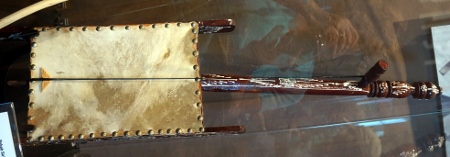 RababahAlternative names: Rabab, Rababa Origin: Played by the Bedouin peoples in the Sahara, Africa. Tuning: No Standard Strings/Courses: 1/1 Further notes: Scale Length: 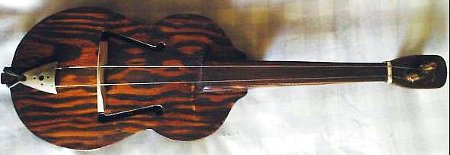 RabelAlternative names: Origin: Spain. Evolved from the medieval Rebec, which was popular throughout medieval Europe. Tuning: Strings/Courses: 2/2 or 3/3 Further notes: Scale Length: Often quite a wide variation as they are made by local luthiers on a small scale. 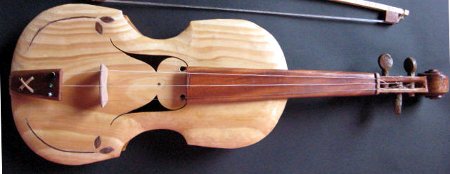 RabecaAlternative names: Rabeca chuleira, Rabela, Chula Origin: North-eastern Brazil. Evolved from the rebec and the rabel taken to the new world by Portuguese invaders and missionaries. Tuning: Tuned in either fourths or fifths. Strings/Courses: usually 3/3, but sometimes 4/4 Further notes: Scale Length: Often quite a wide variation as they are made by local luthiers on a small scale. 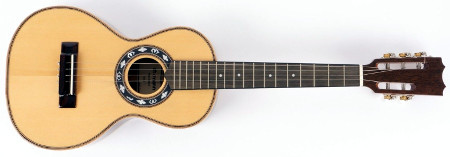 RajaoAlternative names: Origin: Madeira, Portugal. Tuning: D4, G4, C4, E4, A4 Strings/Courses: 5/5 or 6/5 Further notes: Sometimes the top string is doubled. Steel strings. Scale Length: 425mm 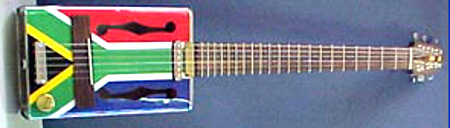 RamkieAlternative names: Afri-can, Kitaar Origin: South Africa Tuning: Usually either standard Guitar tuning or an open tuning. No standard due to their homemade nature. Strings/Courses: Further notes: Nylon, fishing wire, steel or cable strings. Scale Length: No standard due to the wide variety in sizes. 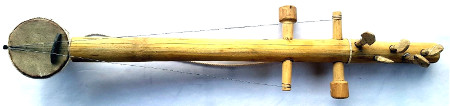 RavanhathaAlternative names: Ravanhatta, Ravanastron, Ravana Hasta Veena. Origin: Western India. Tuning: Strings/Courses: Further notes: Scale Length: 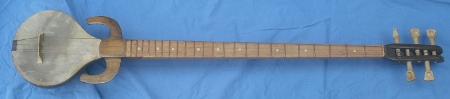 RawapAlternative names: Kashgar Rebab, Ravap, Origin: Xinjiang, Western China and eastern parts of Tajikistan and Kyrgyzstan. Tuning: Strings/Courses: 5/3 Further notes: The two highest courses are doubled and the lowest is single. Steel strings. Scale Length: 700mm Requinto guitar- See Guitar, Requinto. Requinto jarocho- See Jarana Jarocha Requinto. 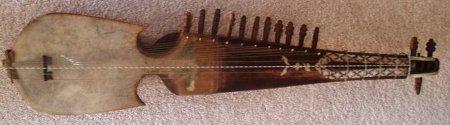 RebabAlternative names: Rubab, Robab, Rubob, Kabuli Rebab, Ryborb, "the lion of the instruments" (in Afghnistan). Origin: Ancient Persia (now Iran) or Afghanistan, 7th century. Tuning: No absolute pitch, but the 3 stringed versions are tuned in fourths. Strings/Courses: 3/3, 4/4 or 6/6 Further notes: 3-6 strings and 11 or 12 sympathetic strings. Scale Length: 600-650mm 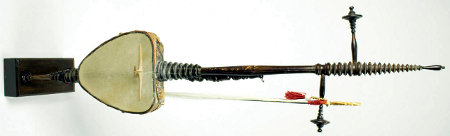 Rebab (Indonesian)Alternative names: Origin: Indonesia Tuning: Between C#3, G#3 and D3, A3. Tuned to the Gamelan orchestra it is played with. Strings/Courses: 2/2 Further notes: Related to the Kemenche and Rubab. Probably brought to Indonesia by Muslim explorers. Scale Length: Requinto- See Guitar, Requinto. 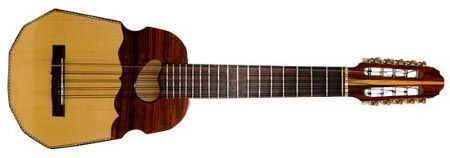 RonrocoAlternative names: Ronrroco, Ronrojo Origin: Andean mountains, South America. Tuning: G3 G3, C3 C3, E4 E3, A3 A3, E4 E4 (Standard tuning) or G3 G2, C3 C2, E4 E3, A3 A3, E4 E4 (Lowest two courses also in octaves) or D4 D4, G4 G4, B4 B3, E4 E4, B4 B4 (Bolivian tuning) Strings/Courses: 10/5 Further notes: Nylon strings. Scale Length: 485-500mm 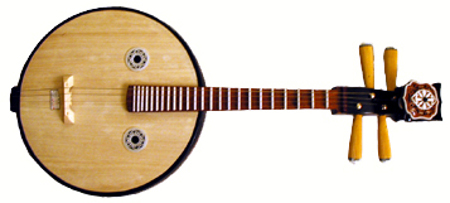 RuanAlternative names: Ruanxian, Zhongruan Origin: China during the Qin Dynasty (221 BC - 206 BC) Tuning: G2, D3, G3, D4 Strings/Courses: 4/4 Further notes: Steel strings. Scale Length: 425mm Russian Guitar- See Guitar, Russian.
The Stringed Instrument Database
|
| You are visitor 01402503 — GeezerVison does not store the pages you look up. Best viewed with Netscape Navigator 4.7 or Internet Explorer 6 at 800×600. No cookies required. |