GeezerVisonThe World Wide Web, restored to 800 pixels of glory. |
| Home|About|Gaming cabinet|Archives|How it works|Starter sites |
GeezerVison is showing explorable.com — Cluster Sampling 
Cluster SamplingExplorable.com In cluster sampling, instead of selecting all the subjects from the entire population right off, the researcher takes several steps in gathering his sample population. This article is a part of the guide:Discover 23 more articles on this topic Don't miss these related articles: Browse Full Outline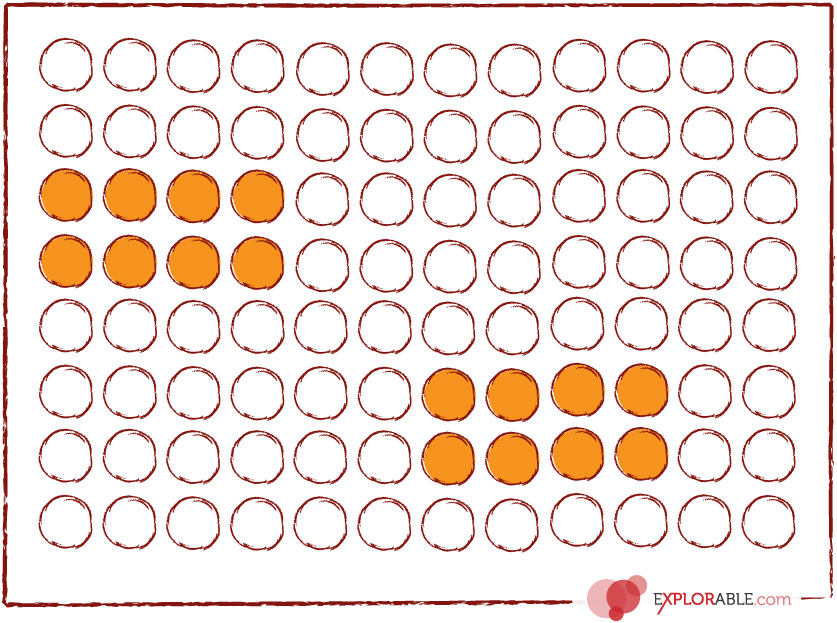 Cluster Sampling First, the researcher selects groups or clusters, and then from each cluster, the researcher selects the individual subjects by either simple random or systematic random sampling. The researcher can even opt to include the entire cluster and not just a subset from it. The most common cluster used in research is a geographical cluster. For example, a researcher wants to survey academic performance of high school students in Spain.
The important thing to remember about this sampling technique is to give all the clusters equal chances of being selected. Types of Cluster SampleOne-Stage Cluster SampleRecall the example given above; one-stage cluster sample occurs when the researcher includes all the high school students from all the randomly selected clusters as sample. Two-Stage Cluster SampleFrom the same example above, two-stage cluster sample is obtained when the researcher only selects a number of students from each cluster by using simple or systematic random sampling. Difference Between Cluster Sampling and Stratified SamplingThe main difference between cluster sampling and stratified sampling lies with the inclusion of the cluster or strata. In stratified random sampling, all the strata of the population is sampled while in cluster sampling, the researcher only randomly selects a number of clusters from the collection of clusters of the entire population. Therefore, only a number of clusters are sampled, all the other clusters are left unrepresented. Advantages and Disadvantages of Cluster Sampling
Full reference: Explorable.com (Oct 18, 2009). Cluster Sampling. Retrieved Oct 28, 2026 from Explorable.com: https://explorable.com/cluster-sampling You Are Allowed To Copy The TextThe text in this article is licensed under the Creative Commons-License Attribution 4.0 International (CC BY 4.0). This means you're free to copy, share and adapt any parts (or all) of the text in the article, as long as you give appropriate credit and provide a link/reference to this page. That is it. You don't need our permission to copy the article; just include a link/reference back to this page. You can use it freely (with some kind of link), and we're also okay with people reprinting in publications like books, blogs, newsletters, course-material, papers, wikipedia and presentations (with clear attribution). This article is a part of the guide:Discover 23 more articles on this topic Don't miss these related articles: Browse Full OutlineThank you to... This project has received funding from the European Union's Horizon 2020 research and innovation programme under grant agreement No 827736.
 Explorable.com - 2008-2026 You are free to copy, share and adapt any text in the article, as long as you give appropriate credit and provide a link/reference to this page. This website uses cookiesThis website uses cookies. By agreeing you consent to all cookies on this website in accordance with our Cookie Policy. Read more |
| You are visitor 01402503 — GeezerVison does not store the pages you look up. Best viewed with Netscape Navigator 4.7 or Internet Explorer 6 at 800×600. No cookies required. |