GeezerVisonThe World Wide Web, restored to 800 pixels of glory. |
| Home|About|Gaming cabinet|Archives|How it works|Starter sites |
GeezerVison is showing explorable.com — Random Sampling 
Random SamplingExplorable.com Random sampling is one of the most popular types of random or probability sampling. This article is a part of the guide:Discover 23 more articles on this topic Don't miss these related articles: Browse Full Outline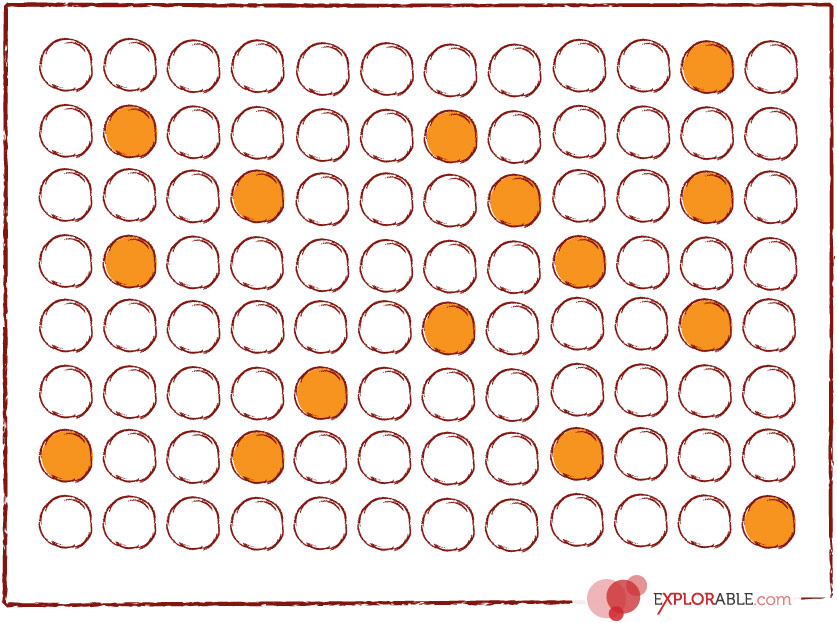 Random Sampling, Explorable In this technique, each member of the population has an equal chance of being selected as subject. The entire process of sampling is done in a single step with each subject selected independently of the other members of the population. There are many methods to proceed with simple random sampling. The most primitive and mechanical would be the lottery method. Each member of the population is assigned a unique number. Each number is placed in a bowl or a hat and mixed thoroughly. The blind-folded researcher then picks numbered tags from the hat. All the individuals bearing the numbers picked by the researcher are the subjects for the study. Another way would be to let a computer do a random selection from your population. For populations with a small number of members, it is advisable to use the first method but if the population has many members, a computer-aided random selection is preferred. Advantages of Simple Random SamplingOne of the best things about simple random sampling is the ease of assembling the sample. It is also considered as a fair way of selecting a sample from a given population since every member is given equal opportunities of being selected. Another key feature of simple random sampling is its representativeness of the population. Theoretically, the only thing that can compromise its representativeness is luck. If the sample is not representative of the population, the random variation is called sampling error. An unbiased random selection and a representative sample is important in drawing conclusions from the results of a study. Remember that one of the goals of research is to be able to make conclusions pertaining to the population from the results obtained from a sample. Due to the representativeness of a sample obtained by simple random sampling, it is reasonable to make generalizations from the results of the sample back to the population. Disadvantages of Simple Random SamplingOne of the most obvious limitations of simple random sampling method is its need of a complete list of all the members of the population. Please keep in mind that the list of the population must be complete and up-to-date. This list is usually not available for large populations. In cases as such, it is wiser to use other sampling techniques. Full reference: Explorable.com (Jul 13, 2009). Random Sampling. Retrieved Oct 28, 2026 from Explorable.com: https://explorable.com/simple-random-sampling You Are Allowed To Copy The TextThe text in this article is licensed under the Creative Commons-License Attribution 4.0 International (CC BY 4.0). This means you're free to copy, share and adapt any parts (or all) of the text in the article, as long as you give appropriate credit and provide a link/reference to this page. That is it. You don't need our permission to copy the article; just include a link/reference back to this page. You can use it freely (with some kind of link), and we're also okay with people reprinting in publications like books, blogs, newsletters, course-material, papers, wikipedia and presentations (with clear attribution). This article is a part of the guide:Discover 23 more articles on this topic Don't miss these related articles: Browse Full OutlineThank you to... This project has received funding from the European Union's Horizon 2020 research and innovation programme under grant agreement No 827736.
 Explorable.com - 2008-2026 You are free to copy, share and adapt any text in the article, as long as you give appropriate credit and provide a link/reference to this page. This website uses cookiesThis website uses cookies. By agreeing you consent to all cookies on this website in accordance with our Cookie Policy. Read more |
| You are visitor 01402503 — GeezerVison does not store the pages you look up. Best viewed with Netscape Navigator 4.7 or Internet Explorer 6 at 800×600. No cookies required. |