GeezerVisonThe World Wide Web, restored to 800 pixels of glory. |
| Home|About|Gaming cabinet|Archives|How it works|Starter sites |
GeezerVison is showing explorable.com — What is Sampling? - Representing a Population 
What is Sampling?Martyn Shuttleworth In many experiments, sampling an entire population as part of a research experiment is impossible, due to the time, expense and sheer number of subjects. This article is a part of the guide:Discover 23 more articles on this topic Don't miss these related articles: Browse Full OutlineWhat is Sampling? Imagine, for example, an experiment to test the effects of a new education technique on schoolchildren. It would be impossible to select the entire school age population of a country, divide them into groups and perform research. A research group sampling the diversity of flowers in the African savannah could not count every single flower, because it would take many years. This is where statistical sampling comes in, the idea of trying to take a representative section of the population, perform the experiment and extrapolate it back to the population as a whole. 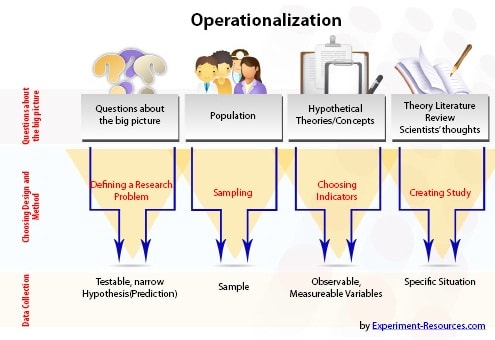
In the education example, the research group could test all of the schools in a city, or select one school in a few different cities. Of course, the process is not that easy, and the researchers must use a battery of statistical techniques, and a good research design, to ensure that this subset is as representative as possible. Failure to take into account all of the various experimental biases and errors that can creep into an experiment, if the sample group is chosen poorly, will inevitably lead to invalid results. The basic question that a researcher should be asking when selecting a sample group is: How many subjects will I need to complete a viable study, and how will I select them? The Advantages of Sampling
The Disadvantages of Sampling
Selecting Sample Groups and Extrapolating ResultsWhen sampling, a researcher has two distinct choices:
For example, a study that needs to ask for volunteers is never representative of a population. In such cases, the researcher needs to be aware that they cannot extrapolate the findings to represent an entire population. A study into heart disease that only looks at middle aged men, between 40 and 60, will say very little about heart disease in women or younger men, although it can always be a basis for future research involving other groups. However robust the research design, there is always an inherent inaccuracy with any sample-based experiment, due to chance fluctuations and natural variety. Most statistical tests take this into account, and this is why results are judged to a significance level, or given a margin of error. Sampling is an essential part of most research, and researchers must know how to choose sample groups that are as free from bias as possible, and also be aware of the extent to which they can extrapolate their results back to the general population. Full reference: Martyn Shuttleworth (Feb 21, 2009). What is Sampling?. Retrieved Oct 28, 2026 from Explorable.com: https://explorable.com/what-is-sampling You Are Allowed To Copy The TextThe text in this article is licensed under the Creative Commons-License Attribution 4.0 International (CC BY 4.0). This means you're free to copy, share and adapt any parts (or all) of the text in the article, as long as you give appropriate credit and provide a link/reference to this page. That is it. You don't need our permission to copy the article; just include a link/reference back to this page. You can use it freely (with some kind of link), and we're also okay with people reprinting in publications like books, blogs, newsletters, course-material, papers, wikipedia and presentations (with clear attribution). This article is a part of the guide:Discover 23 more articles on this topic Don't miss these related articles: Browse Full OutlineThank you to... This project has received funding from the European Union's Horizon 2020 research and innovation programme under grant agreement No 827736.
 Explorable.com - 2008-2026 You are free to copy, share and adapt any text in the article, as long as you give appropriate credit and provide a link/reference to this page. This website uses cookiesThis website uses cookies. By agreeing you consent to all cookies on this website in accordance with our Cookie Policy. Read more |
| You are visitor 01402503 — GeezerVison does not store the pages you look up. Best viewed with Netscape Navigator 4.7 or Internet Explorer 6 at 800×600. No cookies required. |