Selection Sort Program in Python
This article is created to cover some programs in Python, based on selection sort technique. Here are the list of
programs covered in this article:
- Selection sort program based on limited elements in list
- Selection sort program based on n elements
- Selection sort program to sort elements of list in descending order
But before going through these programs, if you're not aware about the algorithm or technique used in
selection sort, refer to Selection Sort Algorithm
and Example to get every required things about it. Now let's move on and create these selection sort programs.
Selection Sort Program
The question is, write a Python program to sort all elements of a list using selection sort. The
program given below is answer to this question:
nums = []
print("Enter 10 Elements for the List: ")
for i in range(10):
  nums.append(int(input()))

for i in range(9):
    chk = 0
    small = nums[i]
    for j in range(i+1, 10):
        if small > nums[j]:
            small = nums[j]
            chk = chk + 1
            index = j
    if chk != 0:
        temp = nums[i]
        nums[i] = small
        nums[index] = temp

print("\nSorted List is: ")
for i in range(10):
    print(nums[i])
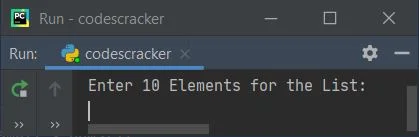
Here is its sample run. The snapshot given below shows the initial output produced by above Python program:
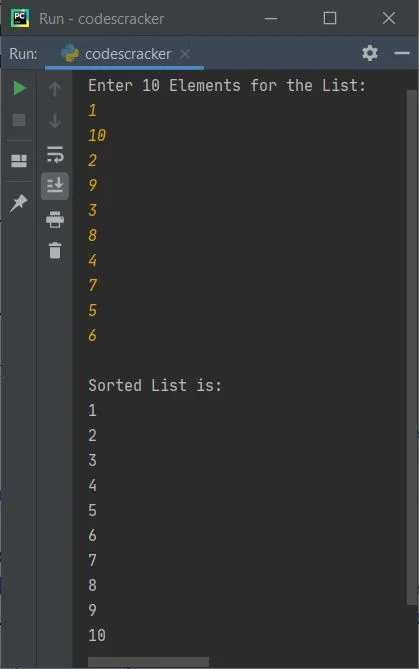
Now provide the input say 1, 10, 2, 9, 3, 8, 4, 7, 5, 6 as ten randomly ordered elements for the list, and
press ENTER key to sort all these elements in ascending order using selection sort technique.
The snapshot given below shows the output produced by above program after providing exactly same inputs:
Selection Sort based on n Elements
This program allows user to define the size of list along with its elements. So we can say, this is basically
the modified version of previous program. Rest of the things are almost similar to previous program.
nums = []
print("Enter the size of list: ", end="")
tot = int(input())
print("Enter", tot, "numbers for the list: ", end="")
for i in range(tot):
  nums.append(int(input()))

for i in range(tot-1):
    chk = 0
    small = nums[i]
    for j in range(i+1, tot):
        if small > nums[j]:
            small = nums[j]
            chk = chk + 1
            index = j
    if chk != 0:
        temp = nums[i]
        nums[i] = small
        nums[index] = temp

print("\nSorted List is: ", end="")
for i in range(tot):
    print(nums[i], end=" ")
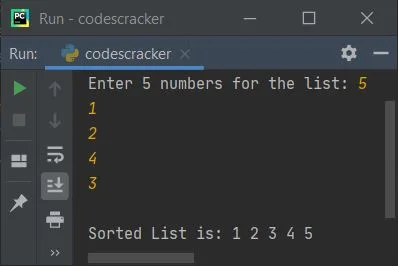
Here is its sample run with user inputs, 5 as size and 5, 1, 2, 4, 3 as five elements:
Selection Sort in Descending Order
To sort list items in descending order using selection sort technique, just replace the following if:
from above program, that sorts list items in ascending order using selection sort technique, with following if:
As you can see, only a matter of less than (<) and greater than (>) sign, the whole program gets reversed. Here is the complete version of the program:
nums = []
print("Enter the size of list: ", end="")
tot = int(input())

print("Enter", tot, "numbers for the list in random order: ", end="")
for i in range(tot):
  nums.append(int(input()))

for i in range(tot-1):
    chk = 0
    small = nums[i]
    for j in range(i+1, tot):
        if small < nums[j]:
            small = nums[j]
            chk = chk + 1
            index = j
    if chk != 0:
        temp = nums[i]
        nums[i] = small
        nums[index] = temp

print("\nSorted List in Descending Order is: ", end="")
for i in range(tot):
    print(nums[i], end=" ")
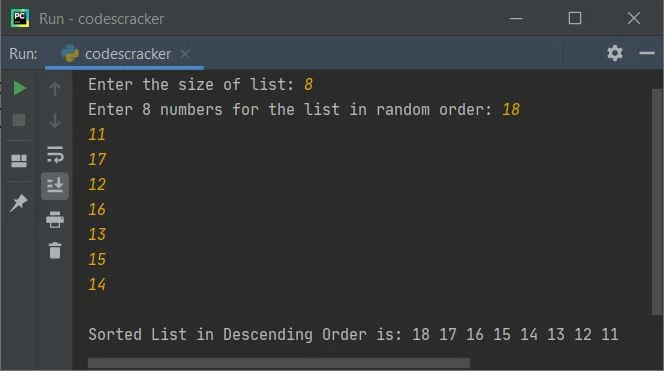
Here is its sample run with user input, 8 as size and 18, 11, 17, 12, 16, 13, 15, 14 as eight elements or numbers:
Python Online Test
« Previous Program
Next Program »